
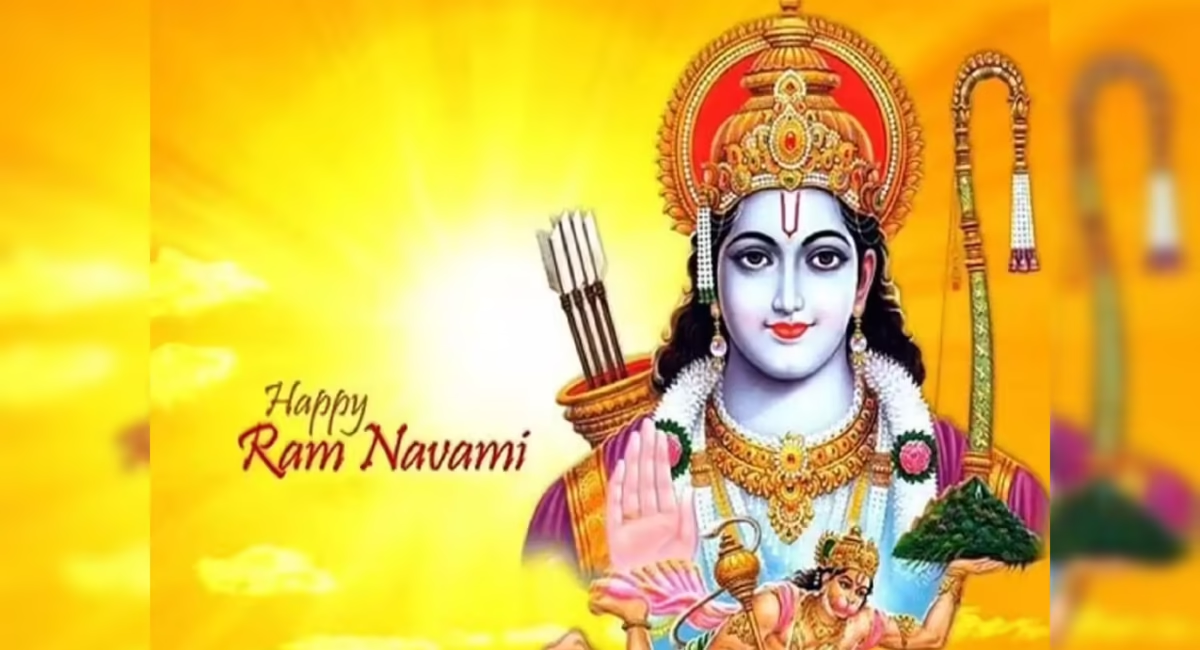
Ram Navami 2026: Date, History, Why It Is Celebrated & Complete Festival Guide
Ram Navami is one of the most sacred and joyfully celebrated Hindu festivals in India and around the world. Observed every year on the ninth day (Navami) of the Shukla Paksha (bright fortnight) in the month of Chaitra, this auspicious occasion marks the birth of Lord Rama the seventh avatar of Lord Vishnu. Millions of devotees across India celebrate Ram Navami with great devotion, prayers, fasting, and community gatherings to honor the divine birth of one of Hinduism’s most beloved deities.
Whether you are a longtime devotee or someone wanting to learn more about this beautiful festival, this guide covers everything from Ram Navami 2026 date and timings, to the history, significance, rituals, and ways to celebrate. Read on to discover why Ram Navami holds such a special place in the hearts of billions.
When Is Ram Navami 2026? Date, Day & Muhurat
Ram Navami 2026 falls on Saturday, March 28, 2026. The festival follows the Hindu lunisolar calendar, so its Gregorian date changes every year. In 2026, the Navami tithi (ninth lunar day) aligns on this date, making it the most auspicious time for devotees to observe fasts and perform puja.
| Detail | Information |
| Festival Name | Ram Navami (Shri Ram Navami) |
| Ram Navami 2026 Date | Saturday, March 28, 2026 |
| Hindu Month | Chaitra Shukla Paksha |
| Tithi | Navami (9th Day) |
| Navami Tithi Begins | March 27, 2026 (evening) |
| Navami Tithi Ends | March 28, 2026 (evening) |
| Madhyahna Muhurat | Midday (approx. 11:00 AM – 1:30 PM) |
| Day of Week | Saturday |
Why Is Ram Navami Celebrated? The Sacred Story Behind the Festival
The central reason why Ram Navami is celebrated is to honor the birth of Lord Rama, the ideal king, devoted husband, and loving son. According to the ancient Hindu scripture Valmiki Ramayana, Lord Rama was born to King Dasharatha and Queen Kaushalya in the kingdom of Ayodhya. His birth took place at exactly noon which is why the Madhyahna (midday) period is considered the most sacred time to worship on Ram Navami.
Lord Rama is revered as Maryada Purushottam the Supreme Being who embodied righteousness, truth, compassion, and duty. His life as described in the Ramayana serves as a moral compass for millions of Hindus. Celebrating Ram Navami is therefore not just a religious ritual but also a reaffirmation of these timeless values.
The Divine Birth of Lord Rama: A Story from the Ramayana
The Ramayana tells us that King Dasharatha of Ayodhya had three queens but was childless for many years. On the advice of sage Vashishtha, he performed the grand Putrakameshti Yajna (a fire ritual for a child). The gods were pleased, and a divine figure emerged from the sacred fire with a bowl of kheer (sweet rice pudding) to be distributed among the queens. As a result, four sons were born — Rama (to Queen Kaushalya), Bharata (to Queen Kaikeyi), and the twins Lakshmana and Shatrughna (to Queen Sumitra).
Lord Rama, born as the eldest, was the avatar of Lord Vishnu who descended on Earth to destroy the demon king Ravana and restore dharma (righteousness) to the world. His life from his years of exile, to the rescue of Sita, and finally his coronation as king is a timeless epic of love, sacrifice, loyalty, and triumph of good over evil.
Ram Navami Significance: Religious, Cultural & Spiritual Importance
Ram Navami holds deep significance on multiple levels spiritual, cultural, and social. It is not merely a birthday celebration but a festival that renews faith, strengthens communities, and reminds us of the eternal values of truth and righteousness.
Key Significance of Ram Navami:
- Spiritual Significance: Ram Navami marks the descent of the Divine onto Earth in human form. Devotees believe that worshipping Lord Rama on this day cleanses sins, grants moksha (liberation), and brings peace and prosperity.
- Cultural Significance: The festival is a celebration of India’s rich literary and philosophical tradition. The Ramayana, in its hundreds of regional versions, is read and recited during Ram Navami in temples, homes, and public gatherings.
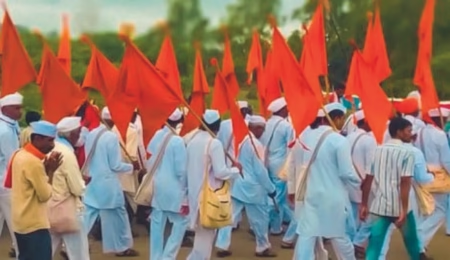
- Social Significance: Large-scale community events called Ram Navami processions (Shobha Yatras) promote unity, brotherhood, and collective devotion among Hindus of all backgrounds.
- Victory of Good Over Evil: Ram Navami reminds us that truth, dharma, and righteousness always triumph over evil and injustice a universal message that transcends religion.
- Connection to Ayodhya: Since Ayodhya is the birthplace of Lord Rama, Ram Navami celebrations there are especially grand, drawing millions of pilgrims from across India and abroad.
How Is Ram Navami Celebrated? Rituals, Puja & Traditions
Celebrations of Ram Navami vary by region but share a common spirit of devotion, prayer, and community joy. Here is how families and communities typically observe this holy festival:
Ram Navami Puja Vidhi (Step-by-Step Worship Guide)
- Wake up early, take a bath, and wear clean clothes ideally yellow or orange, which are considered auspicious.
- Set up a clean altar with an idol or image of Lord Rama, Sita, Lakshmana, and Hanuman.
- Light a lamp (diya) and incense sticks (agarbatti) before the deity.
- Perform Abhishek bathe the idol with panchamrit (a mixture of milk, honey, curd, ghee, and sugar).
- Offer tulsi (holy basil) leaves, fresh flowers, fruits, and sweets especially kheer.
- Recite the Ram Raksha Stotra, Ram Chalisa, or passages from the Ramayana.
- Perform aarti with a lamp, singing devotional songs (bhajans) in praise of Lord Rama.
- At midday (Madhyahna Muhurat), the main puja is performed as noon represents Lord Rama’s exact birth time.
- Break the fast in the evening after sunset by consuming sattvic (pure) food and prasad.
- Visit a nearby Ram temple with family to seek blessings.
Ram Navami Fasting (Vrat): Rules and Food to Eat
Fasting on Ram Navami is a widely followed tradition. Devotees observe a nirjala vrat (waterless fast) or a phalahar vrat (fruit-based fast) throughout the day. Here are the common fasting rules and permitted foods:
- Grains, lentils, and regular salt are typically avoided.
- Permitted foods include: fruits, milk, curd, sabudana (sago), singhara flour (water chestnut flour), kuttu flour (buckwheat), and sendha namak (rock salt).
- Popular Ram Navami fasting recipes: sabudana khichdi, kuttu ki puri, fruit salad, and kheer.
- Children, the elderly, and those with health issues may follow a lighter version of the fast.
- The fast is broken in the evening after performing aarti and distributing prasad.
Ram Navami Celebrations Across India: From Ayodhya to the South
India is a land of diverse cultures, and Ram Navami is celebrated with unique regional flavors across the country. Here is a glimpse of how different parts of India mark this special occasion:
- Ayodhya, Uttar Pradesh: The birthplace of Lord Rama sees the grandest celebrations with massive processions, elaborate temple decorations, and thousands of devotees taking a holy dip in the Saryu River. The Ram Janmabhoomi temple witnesses record-breaking footfall.
- Varanasi, Uttar Pradesh: In Kashi, the city of Lord Shiva and equally sacred to Vaishnavas, Ram Navami is marked with grand Ram Katha recitations, bhajan sessions, and processions through the famous ghats.
- Rameswaram, Tamil Nadu: Since Lord Rama is believed to have worshipped Lord Shiva at Rameswaram before his battle with Ravana, this coastal town celebrates Ram Navami with immense devotion, including special puja at the Ramanathaswamy temple.
- Bhadrachalam, Telangana: The famous Sita Ramachandra Swamy temple at Bhadrachalam is one of the most iconic Ram temples in South India. The Sita Rama Kalyanam (divine marriage) ceremony is the highlight of Ram Navami here.
- Madhya Pradesh & Maharashtra: Large-scale Shobha Yatras (processions) featuring tableaux of scenes from the Ramayana, chanting of ‘Jai Shri Ram’, and communal havans are common throughout central and western India.
Ram Navami and Chaitra Navratri: What Is the Connection?
Ram Navami falls on the final day of Chaitra Navratri the nine-night festival dedicated to Goddess Durga and her nine divine forms (Navadurga). This overlap creates a beautiful spiritual synergy:
- Chaitra Navratri begins on Pratipada (1st day) and ends on Navami (9th day) which is Ram Navami.
- Devotees who observe the nine-day Navratri fast often conclude it with Ram Navami puja.
- The festival season thus beautifully bridges Shakti (goddess worship) and Bhakti (devotional worship of Lord Rama).
- In many households, both the Navratri kalash (sacred pot) and the Ram idol are worshipped side by side during this period.
Ram Navami Beyond India: A Global Hindu Celebration
Ram Navami is not limited to India. The Hindu diaspora around the world celebrates this sacred festival with equal fervor. Temples in countries including the United States, United Kingdom, Canada, Australia, Mauritius, Trinidad and Tobago, Fiji, and South Africa organize special Ram Navami events, Ramayana recitations, and satsangs. The universal message of Lord Rama’s life of love, duty, and the victory of good over evil resonates with people of all backgrounds and cultures.
Frequently Asked Questions (FAQs) About Ram Navami
Q1. What is Ram Navami and why is it celebrated?
Ram Navami is a Hindu festival celebrating the birth of Lord Rama, the seventh avatar of Lord Vishnu, who was born to King Dasharatha and Queen Kaushalya in Ayodhya. It is celebrated because Lord Rama is revered as the ideal human being a perfect son, husband, king, and warrior whose life teaches the values of righteousness (dharma), truth, and compassion. Devotees celebrate his divine birth to seek his blessings and renew their commitment to these values.
Q2. When is Ram Navami 2026?
Ram Navami 2026 falls on Saturday, March 28, 2026. The festival follows the Hindu lunisolar calendar and is observed on the Navami tithi (ninth day) of the Shukla Paksha (bright fortnight) of the month of Chaitra. The most auspicious time for worship is the Madhyahna Muhurat (midday period), which commemorates the exact time of Lord Rama’s birth.
Q3. What do people eat and avoid during Ram Navami fasting?
During Ram Navami vrat, devotees avoid grains, lentils, onion, garlic, and regular salt. They typically consume fruits, milk, curd, sabudana (sago), kuttu (buckwheat) flour dishes, singhara (water chestnut) flour dishes, and use sendha namak (rock salt) for cooking. Popular fasting recipes include sabudana khichdi, kuttu ki puri, fruit chaat, and kheer. The fast is typically broken after the evening aarti.
Q4. Is Ram Navami a public holiday in India?
Yes, Ram Navami is a gazetted public holiday in several Indian states, particularly in Uttar Pradesh, Jharkhand, Bihar, Chhattisgarh, Odisha, Madhya Pradesh, and others with a significant Hindu population. On this day, schools, government offices, and many businesses in these regions may remain closed. In states where it is not a gazetted holiday, many people still take a personal day off to observe the festival.
Q5. What is the importance of the Madhyahna Muhurat on Ram Navami?
The Madhyahna Muhurat (midday auspicious period) on Ram Navami is considered the holiest time to perform puja and worship. According to the Ramayana and Hindu tradition, Lord Rama was born exactly at noon. Therefore, offering prayers, performing abhishek, and conducting the main puja during this midday window is believed to be the most spiritually powerful and meritorious. This is also when major temples perform the official Ram Janmotsav (birth celebration) ceremony.
Q6. What is Sita Ram Kalyanam and where is it celebrated?
Sita Ram Kalyanam is a ceremonial re-enactment of the divine wedding between Lord Rama and Goddess Sita. It is one of the most spectacular events associated with Ram Navami celebrations. The most famous Sita Ram Kalyanam is held at the Sita Ramachandra Swamy Temple in Bhadrachalam, Telangana, where it is organized by the state government itself with great pomp and spiritual ceremony. The event draws thousands of pilgrims and is broadcast live across the country.
Conclusion: Celebrate Ram Navami with Devotion and Joy
Ram Navami is far more than just a birthday celebration it is a spiritual journey back to the timeless values that Lord Rama embodied: love, duty, truth, courage, and compassion. Whether you are observing your first Ram Navami or have celebrated it all your life, this festival offers a beautiful opportunity to pause, reflect, pray, and connect with the divine.
As Ram Navami 2026 approaches on March 28, plan your celebrations early prepare your puja essentials, plan your fasting menu, and if possible, visit a nearby Ram temple or organize a bhajan session at home with family and friends. Let the spirit of Jai Shri Ram fill your home and heart with peace, prosperity, and divine blessings.
Jai Shri Ram! May this Ram Navami bring light, love, and happiness to you and your loved ones.

Leave a Comment