
Kotilingeshwara Temple: The Complete Travel & Pilgrimage Guide
Nestled in the quiet village of Kammasandra in Karnataka’s Kolar district, Kotilingeshwara Temple is one of the most extraordinary spiritual destinations in India a place where collective devotion has quite literally reshaped the landscape. Whether you are a devoted Shiva bhakta, a curious traveller, or someone looking for a meaningful one-day trip from Bangalore, this guide covers everything you need to know before visiting Kotilingeshwara Temple.
What is Kotilingeshwara Temple?
Kotilingeshwara Temple is a Hindu temple dedicated to Lord Shiva, located in Kammasandra village, Kolar district, Karnataka, India. The name “Kotilingeshwara” is derived from three Kannada words:
- Koti: meaning crore (ten million)
- Linga: the sacred symbol of Lord Shiva
- Eshwara: another name for Lord Shiva
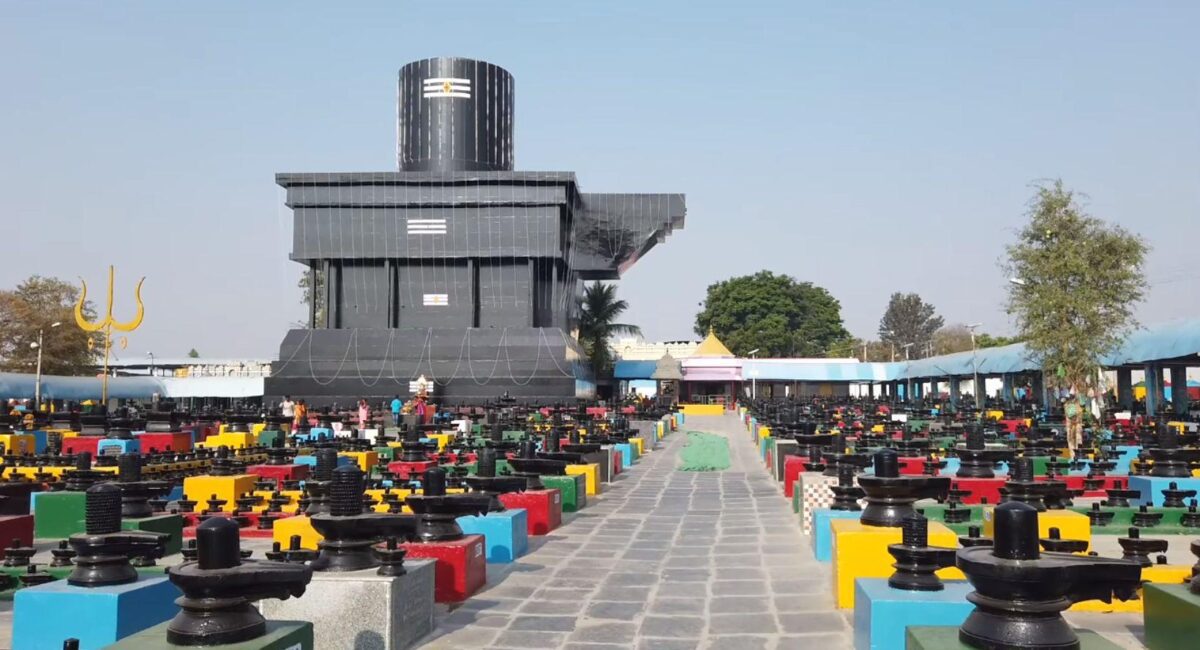
The temple’s defining mission is to install one crore (10 million) Shivalingas on its premises making it arguably the largest congregation of Shivalingas anywhere in the world. As of today, the complex houses over 90 lakh (9 million) lingas spread across a sprawling 15-acre campus, with the target of one crore lingas still in progress.
The centrepiece is a 108-foot (33-metre) Shivalinga the tallest in Asia visible from miles around and an awe-inspiring sight for any visitor.
History and Origin of Kotilingeshwara Temple
The Vision of Swami Sambha Shiva Murthy
The temple’s modern story begins in 1980, when a devout follower named Swami Sambha Shiva Murthy had a dream in which Lord Shiva appeared to him with a divine blessing. Inspired by this vision, he installed the very first Shivalinga on 8th October 1980, setting in motion a project of devotion that has grown for over four decades. Since that first installation, lakhs of devotees have contributed lingas of varying sizes each one embedded with the donor’s name turning the temple into a living monument to collective faith.
The Legend of Bhakta Manjunatha
The spiritual roots of this site reach back to the 8th century CE during the era of the Rashtrakuta Empire. The village of Kammasandra was once known as Dharmasthali, where a Brahmin named Bhakta Manjunatha (CE 788–827) lived. Born into a Shaivite family, Manjunatha began life as an atheist but underwent a profound transformation, becoming an ardent devotee of Lord Rudra (Shiva). His vow to install ten million lingas as an act of devotion and penance is considered the ancient spiritual foundation of Kotilingeshwara Temple.
Ancient legend also speaks of Sage Gautama, who, after being cursed by Indra, installed a Shivalinga and anointed it with the water of ten million rivers to seek liberation. That original linga is said to still reside within the temple premises.
Kotilingeshwara Temple: Architecture & Main Attractions
The 108-Foot Shivalinga Asia’s Tallest
The unmistakable crown jewel of the temple is its 108-foot (33-metre) Shivalinga the tallest in Asia and one of the largest in the world. The number 108 holds immense sacred significance in Hindu tradition. Standing before this structure, even the most casual visitor feels the weight of devotion that built it.
The 35-Foot Nandi (Basava) Statue
Adjacent to the great Shivalinga stands an 11-metre (35-foot) Nandi (the sacred bull, Shiva’s vehicle), installed on a platform measuring 60 feet in length, 40 feet in width, and 4 feet in height. The Nandi gazes at the Shivalinga in perpetual devotion a powerful image symbolising the eternal relationship between the devotee and the divine.
The Sea of Small Shivalingas
Surrounding these two towering structures is the most visually stunning aspect of the temple a seemingly endless sea of small Shivalingas, each measuring between 1 foot and 3 feet in height, arranged across 15 acres of land. Walking through this landscape is unlike any other religious experience in India.
The 11 Smaller Temples Within the Complex
Beyond the main shrine, the complex houses 11 smaller temples dedicated to various deities, including:
- Lord Brahma, Vishnu, and Maheshwara
- Goddess Annapoorneshwari
- Goddess Karumaari Amma
- Lord Venkataramani Swamy
- Lord Panduranga Swamy
- Lord Rama, Sita, and Lakshmana
- Lord Panchamukha Ganapathy
- Lord Anjaneya
- Goddess Kannika Parameshwari
The Sacred Flowering Trees
Two remarkable flowering trees named Nagalinga and Cannon Ball stand within the temple premises. Unmarried women traditionally pray at these trees for a blessed married life, while childless couples tie cradles to the branches praying for progeny. Devotees also tie yellow threads to the trees to pray for wishes to be fulfilled.
Rituals, Poojas & Spiritual Practices
Priests conduct Abhishekam (sacred bathing of the linga) and Aarti every morning at 6:00 AM and every evening at 6:00 PM. Mondays hold special religious significance and draw larger crowds. Throughout the day, priests recite mantras while performing poojas at all the installed Shivalingas — accompanied by music, drums, and chanting.
Devotees can participate directly by donating and installing their own Shivalinga, which is then worshipped regularly by priests. The donor’s name is permanently embedded on the linga a deeply personal way to leave a spiritual legacy at this sacred site.
The temple also performs free mass marriages for the poor around twenty weddings per week making it a centre of community service as well as spiritual devotion.
Festivals at Kotilingeshwara Temple
Maha Shivaratri is the biggest celebration at Kotilingeshwara Temple. Held in February or March, this festival draws crowds of up to 2 lakh (200,000) devotees in a single day. The atmosphere is electric with non-stop chanting, special abhishekams, and an all-night vigil.
Other notable celebrations include Karthika Masa (November), marked by lamp-lighting and prayers, and Navaratri, honoured with special poojas at the goddess shrines. Every Monday is considered an auspicious day for Shiva worship and attracts a steady stream of devotees.
Kotilingeshwara Temple Timings & Entry Fee
| Detail | Information |
| Opening Time | 6:00 AM |
| Closing Time | 9:00 PM |
| Days Open | All 7 days |
| Abhishekam / Aarti | 6:00 AM & 6:00 PM daily |
| Entry Fee | Approximately ₹30 |
| Special Poojas | Available (advance booking may be required) |
How to Reach Kotilingeshwara Temple
Address: Koti Linga Temple Road, Ghattakamadenahalli, Kolar – 563121, Karnataka, India
By Road (from Bangalore)
Kotilingeshwara Temple is approximately 90–100 km from Bangalore, making it an ideal one-day trip. The drive takes around 2.5 to 3 hours via Kolar. The road is well-maintained and passes through scenic green farmlands. State buses and private cabs both service this route.
By Rail
The nearest railway station is Koramandal Railway Station, approximately 8 km from the temple. Kolar Railway Station (6 km away) also connects to Bangalore, Mangalore, Hassan, and Hubli. Auto-rickshaws and taxis are available from both stations.
By Air
The nearest international airport is Bengaluru Kempegowda International Airport, approximately 100 km from the temple. Cabs can be hired directly from the airport. The nearest bus stop (Kammasandra Gram Panchayat) is just 0.5 km from the temple entrance.
Best Time to Visit Kotilingeshwara Temple
- October to March: Best weather cool and pleasant for exploring the open-air complex
- To avoid crowds: Arrive early (by 8:00 AM) on weekdays
- Maha Shivaratri (Feb/March): Vibrant festival experience plan accommodation in advance
- Avoid April to June: High temperatures in Kolar can make outdoor visits uncomfortable
Facilities for Devotees
- Guest house / rest houses within the temple premises
- Marriage hall for mass and private weddings
- Meditation hall for quiet reflection
- Exhibition centre within the complex
- Washrooms and water taps at multiple points
- Ample parking space
- Food stalls and a small market just outside the temple
- Wheelchair accessibility available
Nearby Attractions
| Attraction | Distance | Highlights |
| Antaragange | ~12 km | Trekking, cave temple, Shathashrunga range |
| Kolaramma Temple | 5 mins | Important Shakti temple in Kolar city |
| Shri Someshwara Swamy Temple | 4 mins | Ancient temple in Kolar |
| Bhoga Nandeeshwara Temple | ~30 km | Ancient temple near Nandi Hills |
| Kolar Gold Fields (KGF) | ~12 km | Historic gold mining heritage area |
| Markandeya Hill | ~8 miles | Scenic viewpoint |
Visitor Tips & Things to Know
- Dress modestly — traditional Indian attire is recommended and respectful
- Remove footwear before entering the temple complex
- Photography is generally allowed in outdoor areas — check with authorities near the main linga
- Carry cash — small vendors and donation counters may not accept digital payments
- The temple gets very crowded on Mondays and weekends — plan accordingly
- You can donate and install your own Shivalinga on any day — ask at the temple office for details
- Local eateries near the temple serve vegetarian meals and South Indian snacks
FAQ — Kotilingeshwara Temple
Q1: What are the timings of Kotilingeshwara Temple?
The temple is open daily from 6:00 AM to 9:00 PM. Abhishekam and Aarti are performed at 6:00 AM and 6:00 PM.
Q2: Is there an entry fee?
Yes, a nominal entry fee of approximately ₹30 is charged. Special poojas may require advance booking.
Q3: How far is Kotilingeshwara Temple from Bangalore?
It is approximately 90–100 km from Bangalore — about a 2.5 to 3-hour drive. It is also 12 km from Kolar Gold Fields (KGF).
Q4: What is special about Kotilingeshwara Temple?
The temple is home to the tallest Shivalinga in Asia at 108 feet (33 metres) and aims to house one crore (10 million) Shivalingas. It currently has over 90 lakh lingas spread across 15 acres.
Q5: Can I install a Shivalinga at the temple?
Yes. The temple welcomes donations and the installation of Shivalingas in any size. Your name will be embedded on the linga, and regular poojas will be performed on it by temple priests.
Q6: What is the best time to visit?
October to March offers the most pleasant weather. Arrive on a weekday morning (by 8 AM) for a peaceful, crowd-free experience.
Q7: Is accommodation available near the temple?
Yes. The temple has its own rest houses / guest houses within the complex. Several lodges and hotels are also available nearby, including Hotel Saanvi Grand and Sri Kotilingeshwara Residency Lodge.

Leave a Comment