
The Divine Flow of Coorg: A Complete Guide to the Lakshmana Tirtha River

The Western Ghats of India are not just a biodiversity hotspot; they are a cradle of stories, spirituality, and life-giving waters. Among the many streams that slice through the emerald landscapes of Kodagu (Coorg), the Lakshmana Tirtha River stands out as a unique blend of divine legend and ecological splendor.
Far more than just a tributary of the mighty Kaveri, the Lakshmana Tirtha carries the weight of the epic Ramayana in its currents. Whether you are a trekker seeking the adrenaline of the Brahmagiri hills, a pilgrim looking for salvation at Iruppu Falls, or a nature lover tracing the biodiversity of Nagarahole, this river offers a journey like no other.
In this extensive guide, we will explore every bend of the river, navigating through the Lakshmana Tirtha River map, its mythological origins, and its vital role in the ecosystem of Karnataka.
The Mythological Origin: Born from an Arrow
To understand the soul of the Lakshmana Tirtha, one must look beyond geology and into mythology. The river’s name itself Lakshmana (the brother of Lord Rama) and Tirtha (holy water) tells the story of its birth.
The Ramayana Connection
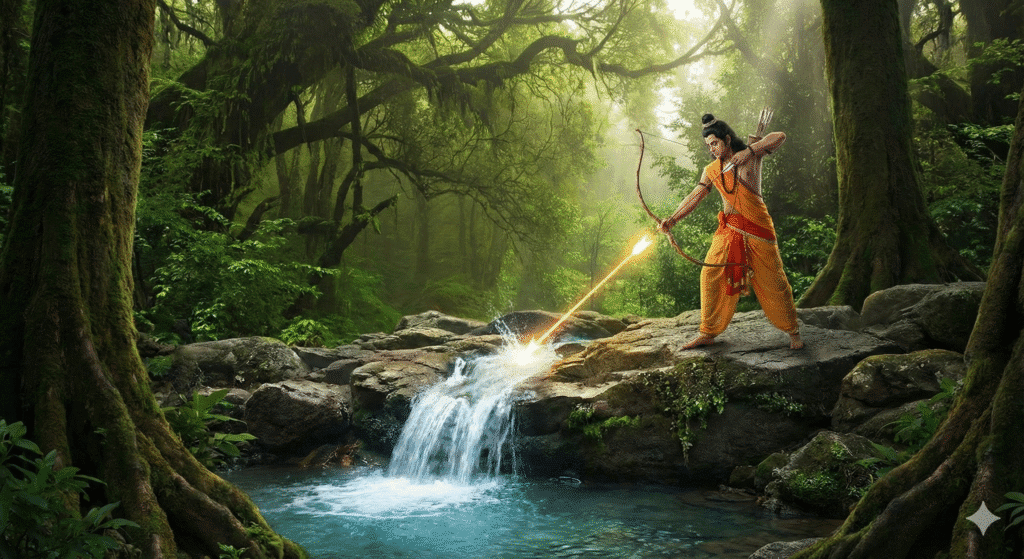
According to local legend, the origins of the river date back to the Treta Yuga, during the exile of Lord Rama and his devoted brother Lakshmana. While traversing the Brahmagiri range in search of the abducted Sita, Rama became exhausted and thirsty. He asked his brother to fetch some water.
Finding no water source nearby, the valiant Lakshmana notched an arrow to his bow and shot it into the Brahmagiri hills. Miraculously, a crystal-clear stream sprang forth from the spot where the arrow struck. Rama quenched his thirst, and the stream was forever named the Lakshmana Tirtha.
This divine origin story is why the river is considered sacred. Locals believe that the waters possess the power to cleanse sins, drawing thousands of devotees to its banks, particularly during the festival of Shivaratri.
Geography and Course: Tracing the Lakshmana Tirtha River Map
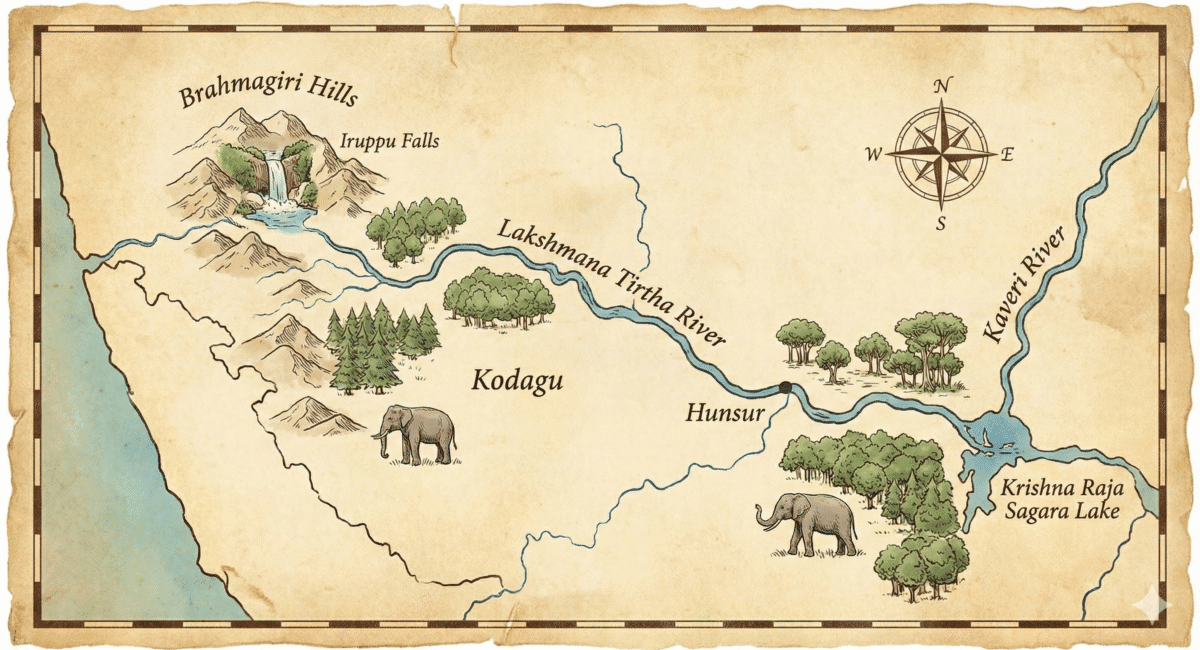
For geographers and travelers alike, understanding the physical path of the river is essential. If you were to trace a Lakshmana Tirtha River map, you would see a journey that begins in the high altitudes of the Western Ghats and ends in the plains of Mysore.
Origin and Flow
- Source: The river rises in the dense forests of the Brahmagiri Wildlife Sanctuary in the Kodagu district of Karnataka, at an elevation of approximately 1,450 meters (4,760 ft).
- The Route: Unlike the Kaveri, which takes a more winding path initially, the Lakshmana Tirtha flows roughly eastward. It tumbles down the hills to form the spectacular Iruppu Falls before meandering through the flat terrains of South Kodagu.
- Key Towns: The river is a lifeline for the town of Hunsur in the Mysore district, providing drinking water and irrigation for the vast agricultural lands surrounding it.
The Confluence
After a journey of nearly 180 kilometers, the Lakshmana Tirtha meets its destiny at the Krishna Raja Sagara (KRS) Lake. Here, it merges with the river Kaveri (Cauvery). This confluence is significant, as the Lakshmana Tirtha is one of the major tributaries that swells the volume of the Kaveri before it continues its journey toward Tamil Nadu.
Traveler’s Note: When viewing a Lakshmana Tirtha River map for trekking, look for the “Iruppu Falls” landmark near the Kerala-Karnataka border. This is the most accessible point of the river for tourists.
The Jewel of the River: Iruppu Falls
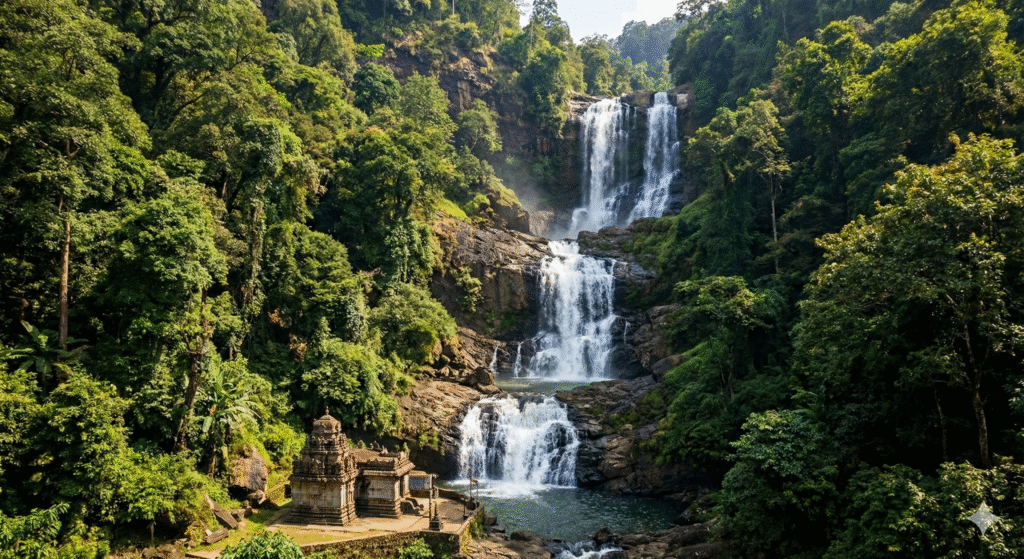
No article on the Lakshmana Tirtha River is complete without detailing its most famous landmark: the Iruppu Falls. Often referred to as the “Lakshmana Tirtha Falls,” this cascade is a visual spectacle and a spiritual haven.
The Cascade
The river plunges about 170 feet in two distinct stages amidst the roar of the forest. During the monsoon (July to September), the falls are a thunderous force of nature, creating a mist that blankets the surrounding canopy. Post-monsoon, the water settles into a serene, crystal-clear curtain that invites photographers and nature enthusiasts.
The Rameshwara Temple
At the base of the falls, on the banks of the river, stands the ancient Rameshwara Temple. Legend holds that this Shiva Linga was consecrated by Lord Rama himself to atone for the sin of killing Ravana (a Brahmin). Before trekking up to the falls, it is customary for visitors to pay their respects here.
- Location: The falls are located about 48 km from Virajpet and 20 km from Nagarahole National Park.
- Entry Fee: A nominal fee is charged by the Forest Department for entry and maintenance.
Ecological Significance and Biodiversity
The Lakshmana Tirtha is not just water; it is a biological corridor. As it flows from the Brahmagiri Sanctuary and skirts the edges of Nagarahole National Park (Rajiv Gandhi National Park), it supports a thriving ecosystem.
Flora
The riverbanks are lined with moist deciduous forests. You will find towering trees such as:
- Rosewood (Dalbergia latifolia)
- Teak (Tectona grandis)
- Sandalwood
- Mathi (Terminalia tomentosa)
The dense canopy provides shade that keeps the river cool, although recent deforestation in coffee estates has reduced this cover in some areas.
Fauna
The river serves as a critical watering hole for the wildlife of the region. If you take a safari in the Nagarahole region near the river’s course, you might spot:
- Asian Elephants: Herds are often seen bathing in the river during the summer.
- Tigers and Leopards: The high density of prey animals near the river attracts these apex predators.
- Birdlife: The river ecosystem supports Malabar Pied Hornbills, Kingfishers, and the endemic Blue-winged Parakeet.
Tourism and Adventure: Things to Do
The region surrounding the Lakshmana Tirtha River offers a diverse range of activities for every type of traveler.
Trekking the Brahmagiri Hills
For adventure seekers, the river serves as a starting point for the trek to Brahmagiri Peak. The trail takes you through shola forests and open grasslands.
- Permits: You must obtain permission from the Forest Department at Srimangala or the Iruppu Falls checkpoint.
- Difficulty: Moderate.
Wildlife Safaris
Since the river flows near the Nagarahole Tiger Reserve, staying at a jungle lodge in Kutta or Gonikoppal allows you to book jeep safaris. The early morning safaris offer the best chance to see the river shrouded in mist and wildlife on the prowl.
Spiritual Tourism
Visit the Rameshwara Temple during Maha Shivaratri. The fair held here is vibrant, and seeing thousands of devotees take a holy dip in the Lakshmana Tirtha is a moving cultural experience.
Whitewater Rafting (Seasonal)
While not as famous as the Dubare rafting on the Kaveri, during peak monsoons, certain lower sections of the Lakshmana Tirtha (near the confluence) see high water levels suitable for local coracle rides or mild rafting, though this is less organized than in Coorg’s main hubs.
Environmental Challenges: A River in Peril
Despite its beauty, the Lakshmana Tirtha faces severe environmental threats. Recent years, particularly the summer of 2024, have seen the river dry up almost completely in sections that were once perennial.
The Drying Crisis
The river’s flow has become erratic due to:
- Climate Change: Erratic rainfall patterns in the catchment area of Brahmagiri.
- Deforestation: The conversion of native shade trees in coffee plantations to silver oak (which provides less shade and retains less groundwater) leads to higher evaporation rates.
- Illegal Sand Mining: Excessive sand extraction destabilizes the riverbed, lowering the water table.
Pollution
A major concern is the discharge of pollutants. The river receives untreated sewage from towns like Hunsur. Additionally, during the coffee harvest season, “coffee pulp water” (effluents from processing berries) is sometimes discharged into the tributaries, increasing the acidity and biological oxygen demand (BOD) of the river, which harms aquatic life.
Conservation Efforts: The Karnataka State Human Rights Commission and various NGOs have recently stepped in, ordering local administrations to check pollution and prevent the dumping of waste. Reviving the Lakshmana Tirtha is crucial not just for tourism, but for the farmers of Hunsur who rely on it for survival.
Best Time to Visit
To get the most out of your trip to the Lakshmana Tirtha River region, timing is key:
- For Waterfalls (Iruppu): August to October (Peak Monsoon & Post-Monsoon). The roar of the water is deafening and majestic.
- For Trekking: November to February. The weather is cool, the leeches are fewer, and the skies are clear.
- For Wildlife: March to May. As smaller water holes dry up, animals congregate near the main river channels, making sightings easier (though the river level will be low).
How to Reach the Lakshmana Tirtha (Iruppu Falls)
By Road:
- From Bangalore: 260 km via Mysore -> Hunsur -> Nagarhole -> Kutta.
- From Mysore: 120 km.
- From Madikeri: 80 km via Virajpet.
By Rail: The nearest railway station is Mysore Junction. From there, you can hire a cab or take a KSRTC bus to Kutta or Srimangala.
By Air: The nearest airport is Kannur International Airport (CNN) in Kerala (about 60 km away), followed by Mysore Airport.
FAQ: The Lakshmana Tirtha River
Q1: Where does the Lakshmana Tirtha River originate? A: It originates in the Brahmagiri hills of the Kodagu (Coorg) district in Karnataka.
Q2: Which river does the Lakshmana Tirtha join? A: It is a tributary of the Kaveri (Cauvery) River and joins it at the Krishna Raja Sagara (KRS) Lake.
Q3: Is there a map of the Lakshmana Tirtha River available for tourists? A: While physical tourist maps are available at the Iruppu Falls ticket counter, you can easily trace the Lakshmana Tirtha River map on Google Maps by searching for “Iruppu Falls” and following the stream eastward toward Hunsur.
Q4: Can we swim in the Lakshmana Tirtha River? A: Swimming is generally allowed in the designated shallow areas near Iruppu Falls (downstream), but it is dangerous during the monsoon. Always follow the instructions of the forest guards.
Q5: Why is the river called Lakshmana Tirtha? A: It is named after Lakshmana, the brother of Lord Rama, who legend says shot an arrow into the ground to create the river and quench Rama’s thirst.
Conclusion
The Lakshmana Tirtha River is a testament to the magic of the Western Ghats. It is a place where the divine arrow of a mythical hero meets the harsh realities of modern ecology. To visit this river is to walk a path that balances between the spiritual and the natural world.
Whether you are staring in awe at the Iruppu Falls or observing a herd of elephants on its banks, the Lakshmana Tirtha offers a profound connection to nature. However, it also asks something of us: to travel responsibly. As we enjoy the beauty of this river, let us also advocate for its preservation, ensuring that the stream born of Lakshmana’s arrow continues to flow for generations to come.
Leave a Comment