
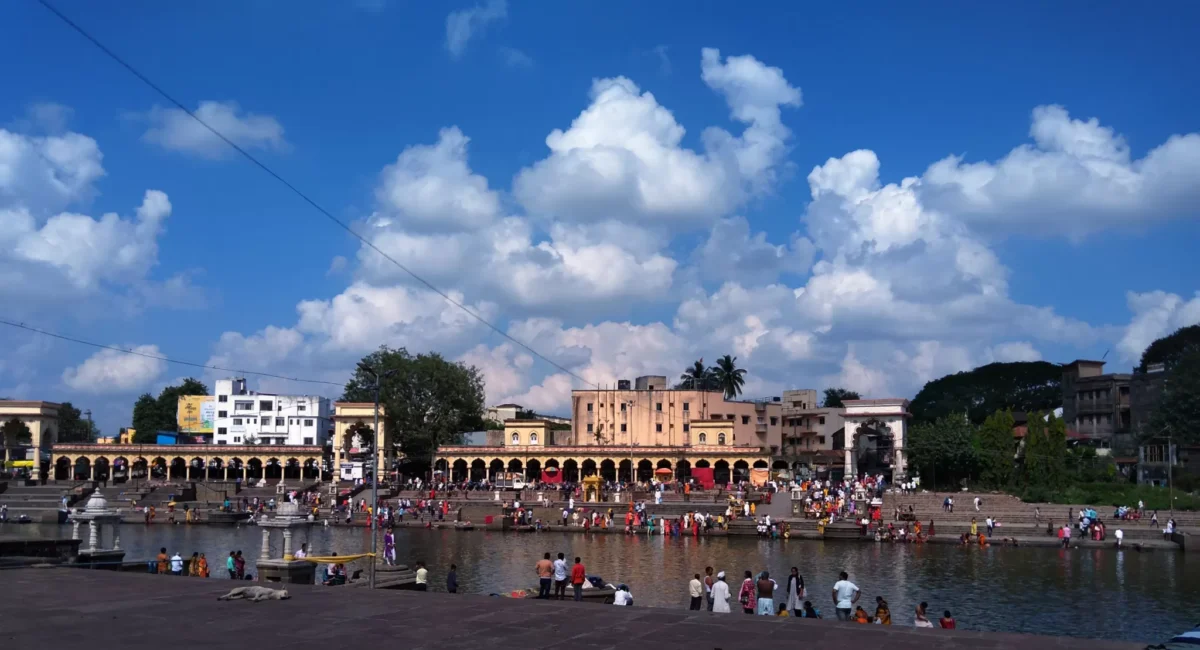
Indrayani River Ghat Alandi – Complete Spiritual & Visitor Guide
The Indrayani River Ghat in Alandi is one of Maharashtra’s most sacred riverfront pilgrimage sites. Nestled in the holy town of Alandi, Pune district, these ghats (stone steps leading to the river) hold deep spiritual significance for millions of Hindus across Maharashtra and beyond. Whether you come to take a holy dip, perform Asthi Visarjan, or simply sit in quiet contemplation by the flowing waters, the Indrayani River Ghat offers an experience that touches the soul.
This comprehensive guide covers the history, religious significance, key rituals, what to expect during your visit, nearby temples, and everything you need to plan your pilgrimage to the Indrayani River Ghat
What is Indrayani River Ghat?
The Indrayani River originates in Kurvande village near Lonavala in the Sahyadri mountains of Maharashtra. It is a rain-fed river that flows east through the Hindu pilgrimage centers of Dehu and Alandi before meeting the Bhima River. Along this sacred course, the river ghats particularly those at Alandi serve as the primary point of contact between devotees and the divine.
The stretch of the Indrayani River at Alandi has been designated a sanctuary by tradition, and no fishing takes place there. This acts as a natural refuge for river fish such as the Deccan Mahseer. Pilgrims visiting Alandi consider a bath at these ghats to be an essential first step before proceeding to the famous Sant Dnyaneshwar Samadhi Mandir.
Religious and Spiritual Significance
A River Blessed by Saints
The Indrayani River is revered as a holy river by Hindus and is associated with great religious figures such as Sant Tukaram and Sant Dnyaneshwar. The very waters that flow past Alandi are considered sacred because they touch the land where Sant Dnyaneshwar, the 13th-century saint-philosopher, lived, composed the immortal Dnyaneshwari, and ultimately took sanjeevan samadhi at just 21 years of age.
The Indrayani is not merely a backdrop to the region’s spiritual life it is an active participant. During the great annual Wari pilgrimage, hundreds of thousands of Varkaris travel from Alandi and Dehu to Pandharpur, and the Dnyaneshwar Palkhi and Tukaram Palkhi are ceremonially carried across the river at specific points. These crossings are moments of intense emotion, devotion, and community spirit, accompanied by ecstatic chanting of “Vitthal! Vitthal!” and Abhangas.
The Ghat as a Gateway to Moksha
For devout Hindus, the Indrayani River Ghat at Alandi is not merely a place to bathe it is a gateway to spiritual liberation. The Indrayani River Ghats witness thousands of pilgrims taking a holy dip, believing in its power of spiritual purification. The act of bathing here is believed to cleanse sins accumulated across lifetimes and bring the devotee closer to Lord Vitthal.
Key Ghats at Alandi
1. Main Pilgrimage Ghat (Alandi Ghat)
This is the primary ghat where the majority of pilgrims take their holy bath before visiting the Samadhi Mandir. Many people bring the ashes of their relatives to be ceremoniously immersed in the river at this ghat. The steps lead directly down to the Indrayani, and the atmosphere here especially at dawn is profoundly serene and spiritually charged.
2. Siddhabet Ghat
The Siddhabet Ghat is where Sant Dnyaneshwar is said to have written his Dnyaneshwari on the banks of the Indrayani River. It is said that the saint sat on a stone slab under a banyan tree and dictated this commentary to his disciple Sachchidanand, who wrote it on palm leaves. The ghat features an inscribed stone slab and a banyan tree believed to be descended from the original one, along with a small shrine where devotees may offer prayers.
3. Ram Mandir Ghat
Ram Mandir, located near the banks of the Indrayani River to the south of the Samadhi Mandir, is one of the many large temples in Alandi, and the ghat adjacent to it is another popular spot for bathing rituals and morning prayers.
Rituals Performed at Indrayani River Ghat
Holy Dip (Snan)
The most common ritual performed at the Indrayani River Ghat is the pavitra snan the sacred bath. Devotees believe that bathing in the river before entering the Samadhi Mandir purifies the mind and body, making their prayers more potent. The pre-dawn hours are considered the most auspicious time for this bath.
Asthi Visarjan (Immersion of Ashes)
The Indrayani River Ghat at Alandi is one of Maharashtra’s most significant locations for Asthi Visarjan the ritual immersion of a deceased person’s ashes and bone remains. According to Hindu sacred traditions, Asthi Visarjan in Alandi is performed by submerging and scattering the cremated ashes and bones of a deceased family member into the sacred Indrayani River. It is believed that by immersing the ashes in the Indrayani, the soul can attain moksha or liberation from the cycle of birth and death.
This ritual also provides the grieving family with a sense of closure and emotional healing, knowing that their loved one’s remains have been offered to a holy river blessed by saints. Local priests (pandits) are readily available at the ghat to assist families in conducting the ceremony with the proper Vedic mantras and procedures.
Parikrama (Circumambulation)
Pilgrims perform Parikrama around the town of Alandi during their visit. The Indrayani River Ghat is an important stop in this circumambulation route, with many pilgrims pausing to bathe and pray at multiple points along the riverbank.
Pind Daan and Shraddha Rituals
The Indrayani Ghat is also used for Pind Daan and Shraddha ceremonies ancestral rites performed to bring peace to the souls of departed family members. The presence of sanctified water and resident priests makes the ghat a convenient and spiritually powerful location for these observances.
Best Time to Visit Indrayani River Ghat
| Season | Time | Experience |
|---|---|---|
| Early Morning (5–7 AM) | Daily | Most serene; ideal for holy dip |
| Ashadhi Ekadashi (June–July) | Annual | Massive Wari pilgrimage; high devotion |
| Kartiki Ekadashi (Oct–Nov) | Annual | Grand celebrations; kirtans all night |
| October to March | Seasonal | Best weather for pilgrimage |
The most spiritually immersive experience at the ghat is during the Ashadhi Ekadashi and Kartiki Ekadashi festivals, when hundreds of thousands of Varkari pilgrims converge on Alandi as part of the Pandharpur Wari. The energy, devotion, and communal singing at these times are unlike anything else in Maharashtra.
Note: Avoid visiting during peak monsoon (July–August) as the river levels can be high and conditions at the ghat may be unsafe.
Nearby Temples and Attractions
A visit to the Indrayani River Ghat is best combined with the other sacred sites of Alandi:
- Sant Dnyaneshwar Samadhi Mandir – The primary reason most pilgrims come to Alandi; the mahasamadhi of the great saint.
- Siddheshwar Temple – Located within the Samadhi complex; an ancient Shiva temple of great sanctity.
- Laxmi Narayan Mandir – Located south of the Samadhi Mandir, adjacent to the Ram Mandir, near the River Ghat.
- Vitthal-Rukmini Temple – A temple central to the Varkari tradition, dedicated to Lord Vitthal and his consort Rukmini.
- Dnyaneshwari Mandir – A modern multi-storey temple run by the Govind Maharaj organization, housing religious exhibits and texts.
- Gajanan Maharaj Mandir – A sacred temple in Alandi dedicated to Sant Gajanan Maharaj, a perfect addition to any pilgrim’s itinerary.
Visitor Information
| Detail | Info |
|---|---|
| Location | Alandi, Pune District, Maharashtra |
| Ghat Access | Open 24 hours |
| Best Bathing Time | 5:00 AM – 8:00 AM |
| Entry Fee | Free |
| Priests Available | Yes, for rituals at the ghat |
| Nearest City | Pune (~25 km) |
How to Reach Indrayani River Ghat Alandi
By Road: Alandi is located 25 km from Pune city along the Indrayani River. MSRTC buses run regularly from Pune’s Shivajinagar and Swargate bus stands. Private cabs and autos are also available. Once in Alandi, the ghat is within easy walking distance of the main temple complex.
By Train: The nearest railway station is Pune Junction. From there, take a bus or cab to Alandi the journey takes approximately 45–60 minutes depending on traffic.
By Air: The nearest airport is Pune International Airport, located about 35 kilometers from Alandi. Taxis and app-based cabs are available from the airport.
Within Alandi: The town is compact and walkable. Most pilgrims walk from the entry points of the town to the ghat and temple complex. Shared rickshaws are also available for those who prefer.
Frequently Asked Questions (FAQs)
Q1. What is Indrayani River Ghat? The Indrayani River Ghat refers to the sacred stone steps and riverbank areas along the Indrayani River in Alandi, Maharashtra. These ghats are used by pilgrims for holy bathing, Asthi Visarjan, and other religious rituals.
Q2. What rituals can be performed at Indrayani River Ghat? Key rituals include the holy dip (snan), Asthi Visarjan (immersion of ashes), Pind Daan, Shraddha puja, and Parikrama. Priests are available at the ghat to guide families through these ceremonies.
Q3. Is Asthi Visarjan performed at Indrayani Ghat Alandi? Yes, the Indrayani River Ghat at Alandi is one of Maharashtra’s most important sites for Asthi Visarjan. The river’s sacred status, combined with the town’s connection to Sant Dnyaneshwar, makes it a deeply meaningful location for this final rite.
Q4. What is the best time to visit Indrayani River Ghat? Early morning (5–7 AM) is the best time for a peaceful and spiritually immersive experience. For a grander atmosphere, plan your visit during Ashadhi Ekadashi or Kartiki Ekadashi when lakhs of Varkari pilgrims gather at Alandi.
Q5. How far is Indrayani River Ghat from Pune? It is approximately 25 km from Pune city and can be reached in about 45–60 minutes by road.
Q6. Is there any entry fee at the Indrayani River Ghat? No, there is no entry fee. The ghat is open and accessible to all devotees free of charge.
Q7. Can I visit both the Indrayani River Ghat and Sant Dnyaneshwar Samadhi Mandir in one day? Yes, absolutely. Both are located within the same small town of Alandi and most pilgrims visit them together, along with other temples like Gajanan Maharaj Mandir and Vitthal-Rukmini Temple, all within a single day trip.
Q8. What is the significance of the Indrayani River in Hinduism? The Indrayani River is considered a holy river in the Varkari tradition of Maharashtra. It is associated with two of Maharashtra’s greatest saints Sant Dnyaneshwar (Alandi) and Sant Tukaram (Dehu) and is revered as a spiritually purifying river capable of cleansing sins and aiding in the attainment of moksha.
Conclusion
The Indrayani River Ghat at Alandi is far more than a riverbank it is a living, breathing center of Maharashtra’s Bhakti tradition. Every stone step leads into waters made holy by centuries of devotion, by the footsteps of saints, and by the prayers of countless pilgrims. Whether you come to fulfill a ritual obligation, to seek spiritual peace, or simply to witness the timeless faith of Maharashtra’s people, the Indrayani River Ghat will leave an indelible mark on your heart.
Plan your visit to Alandi, take the sacred dip, and let the currents of the Indrayani carry your prayers forward.


Leave a Comment