
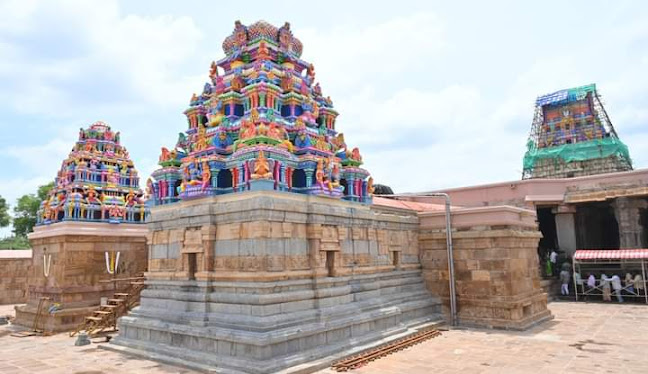
Ahobilam Temple, Andhra Pradesh
Ahobilam, Andhra Pradesh — The Living Geography of Lord Narasimha
Introduction: Ahobilam as a Manifestation of Geography
Ahobilam, Andhra Pradesh, is not a pilgrimage defined by temple walls alone. It is a place where divinity erupted into the natural world. Among all sacred Narasimha kshetras of India, Ahobilam’s position is unparalleled. Here, the Lord revealed Himself in multiple forms: across hills, caves, forests, and riverbanks.
Here, Narasimha is not remembered He is encountered. The terrain itself is the scripture. The rocks, pillars, and caves are not symbolic backdrops but living witnesses to the moment when Vishnu transcended cosmic law to protect Prahlada and annihilate adharma. This is why Ahobilam is revered not as a tourist destination but as a primary Narasimha Kshetram, approached with reverence, physical effort, and surrender.
Unlike other Narasimha temples that enshrine a single iconographic form, Ahobilam reveals Narasimha in nine distinct manifestations, collectively known as the Nava Narasimha Kshetram. Each form emerges from a specific natural setting, expressing a unique theological state from unrestrained fury to serene yogic composure.
Sacred Geography & Terrain Analysis
The Nallamala Hills: Where Divinity Chooses Seclusion
Ahobilam temple complex lies deep within the Nallamala Hills, a rugged extension of the Eastern Ghats. This region is characterized by steep escarpments, thick forest cover, quartzite rock formations, and hidden water streams. The terrain is demanding, intentionally inaccessible, and spiritually charged.
In Hindu sacred geography, such landscapes are chosen for ugra devatas—deities whose power is intense and transformative. Narasimha, embodying both ferocity and grace, manifests naturally in this wild environment, far removed from urban comfort.
Key geographical elements include:
- Caves and rock clefts associated with divine emergence
- Natural stone pillars (stambhas) recalling Hiranyakashipu’s cosmic loophole
- Sacred streams like Bhavanasini and Papanasini are used for ritual purification.
Ahobilam as a Swayambhu Kshetra
Ahobilam is revered as a Swayambhu Kshetra, meaning the deity manifested of His own will, without human installation. Several Narasimha forms here are not carved idols but self-manifested shapes within rock, identified and preserved through lineage memory and scriptural testimony.
In Vaishnava theology, swayambhu kshetras hold supreme sanctity because the land itself becomes the altar.
Scriptural & Puranic Foundations
Puranic Sources Affirming Ahobilam
Ahobilam’s sanctity is firmly grounded in scripture, particularly in:
- Skanda Purana (Ahobilam Mahatyam)
- Narasimha Purana
- Brahmanda Purana
These texts describe Ahobilam as the precise region where Narasimha emerged to fulfill Vishnu’s promise to Prahlada. Unlike later commemorative temples, Ahobilam is presented as the actual stage of divine intervention.
Prahlada, Hiranyakashipu & the Pillar Theology
The theological heart of Ahobilam lies in the Narasimha narrative:
- Prahlada represents absolute bhakti, immune to fear.
- Hiranyakashipu embodies cosmic arrogance armed with logic.
- The pillar (stambha) represents the collapse of conditional reality.
Ahobilam’s rock pillars are not symbolic constructs; they are theological statements in stone, affirming that the Divine is not confined by categories of time, space, or form.
Meaning & Etymology of “Ahobilam.”
The word Ahobilam is derived from:
- “Aho” – an exclamation of awe, terror, and astonishment
- “Bilam” – cave, hollow, or deep crevice
Together, Ahobilam signifies “the cave of awe” a place where even celestial beings were overwhelmed by Narasimha’s fierce theophany. The name captures the emotional spectrum of the kshetra: fear for the wicked, assurance for the devotee.
Nava Narasimha Kshetram: The Ninefold Revelation
The Nava Narasimha temples of Ahobilam are not repetitive shrines; they represent progressive stages of divine consciousness that unfold across the sacred terrain.
1. Jwala Narasimha
- Location: Upper Ahobilam (deep cave)
- Iconography: Ten-armed Narasimha emerging from a rock
- Theology: Absolute fury at the climax of adharma
2. Ugra Narasimha
- Location: Near Jwala Narasimha
- Iconography: Fierce seated form
- Theology: Sustained protective rage, guarding cosmic order
3. Malola Narasimha
- Location: Lower Ahobilam
- Iconography: Narasimha with Goddess Lakshmi
- Theology: Transformation from wrath to compassion (Ma + Lola)
4. Kroda (Varaha) Narasimha
- Location: Forested Hill route
- Iconography: Boar-faced Narasimha
- Theology: Integration of avatars; restoration of balance
5. Bhargava Narasimha
- Location: Remote elevated terrain
- Iconography: Weapon-bearing form
- Theology: Enforcement of righteous force
6. Yogananda Narasimha
- Location: Near Upper Ahobilam
- Iconography: Meditative posture
- Theology: Inner mastery following cosmic action
7. Chatravata Narasimha
- Location: Beneath a sacred banyan
- Iconography: Serene standing form
- Theology: Royal protection and shelter
8. Karanja Narasimha
- Location: Grove of Karanja trees
- Iconography: Subtle manifestation
- Theology: Divine accessibility in nature
9. Pavana Narasimha
- Location: Riverbank shrine
- Iconography: Purifying presence
- Theology: Liberation through surrender
Together, these forms map a spiritual ascent, from cosmic intervention to inner liberation.
Lower Ahobilam: Architecture & Ritual System
Malola Narasimha Swamy Temple
Lower Ahobilam houses the principal temple dedicated to Malola Narasimha Swamy, the most compassionate aspect of the Lord. This temple follows the Pancharatra Agama, preserved meticulously by the Ahobilam Mutt.
Key features include:
- Traditional dwajasthambam and prakaram
- Daily rituals such as Suprabhata Seva, Abhishekam, and Sahasranama Archana
- Emphasis on ritual purity over architectural ornamentation
Historically patronized by Vijayanagara rulers, the temple remains a center of orthodox Vaishnava worship.
Upper Ahobilam: Pilgrimage as Tapasya
Upper Ahobilam is accessible only through steep forest trekking routes, regulated by temple and forest authorities. This physical challenge is not incidental—it is integral to the pilgrimage.
Traditional discipline includes:
- Early morning ascent
- Minimal possessions
- Mental focus and silence
The journey mirrors Prahlada’s endurance, preparing the pilgrim for darshan through effort and humility.
Ahobilam Mutt & Vaishnava Lineage
The Ahobilam Mutt, established in the 14th century by Adivan Satakopa Jeeyar, institutionalized Narasimha worship within the Sri Vaishnava tradition.
The Mutt’s role includes:
- Preservation of Pancharatra rituals
- Scriptural education and commentary
- Protection of Ahobilam’s sacred traditions
The Jeeyars are regarded as direct servitors of Lord Narasimha, sustaining the kshetra’s spiritual continuity.
Festivals & Ritual Calendar
Major observances include:
- Narasimha Jayanti (Vaishakha Shukla Chaturdashi)
- Brahmotsavam
- Chandanotsavam
During these festivals, the kshetra resonates with heightened spiritual intensity through special homas, abhishekams, and processions.
Spiritual Beliefs & Devotee Experiences
Devotees seek Ahobilam during moments of crisis, injustice, or fear. Narasimha here is worshipped as:
- Protector from danger
- Upholder of justice
- Giver of inner courage
Many devotees affirm that the Ahobilam pilgrimage instills fearlessness and moral clarity, echoing Prahlada’s spirit.
Practical Pilgrimage Guide (Brief & Authentic)
- Best Time: October–March; Narasimha Jayanti
- How to Reach: Via Nandyal or Allagadda
- Accommodation: Temple guesthouses and basic lodges
- Preparation: Physical fitness, patience, and a devotional mindset
Conservation & Sacred Discipline
Ahobilam lies within a protected forest zone. Pilgrims are expected to:
- Avoid plastic and noise.
- Respect restricted routes
- Preserve the natural sanctity.
Minimal commercialization is a spiritual strength, maintaining Ahobilam’s primal sacredness.
Comparative Perspective
Ahobilam stands distinct from:
- Simhachalam (urban temple-centric worship)
- Yadadri (royal and architectural emphasis)
- Sholingur (Divya Desam focus)
Only Ahobilam presents multiple Narasimha manifestations within one sacred terrain, making it unique among all Narasimha kshetras.
Conclusion: Ahobilam as Transformational Pilgrimage
Ahobilam, Andhra Pradesh, is not conquered by convenience. It transforms the pilgrim through effort, awe, and surrender. Lord Narasimha here is not merely worshipped—He is experienced as protector, purifier, and guide.
Those who return from Ahobilam do not return unchanged.
FAQ
Why is Ahobilam considered the most powerful Narasimha kshetra?
Because it is the original manifestation geography where Narasimha appeared in nine forms.
Are all Nava Narasimha temples man-made?
No. Many are swayambhu manifestations within natural rock formations.
Is trekking compulsory in Ahobilam pilgrimage?
Yes, for Upper Ahobilam shrines, as part of spiritual discipline.
Which Agama is followed at Ahobilam temple?
Pancharatra Agama.
When is the best time to visit Ahobilam?
During Narasimha Jayanti and winter months.


Leave a Comment