
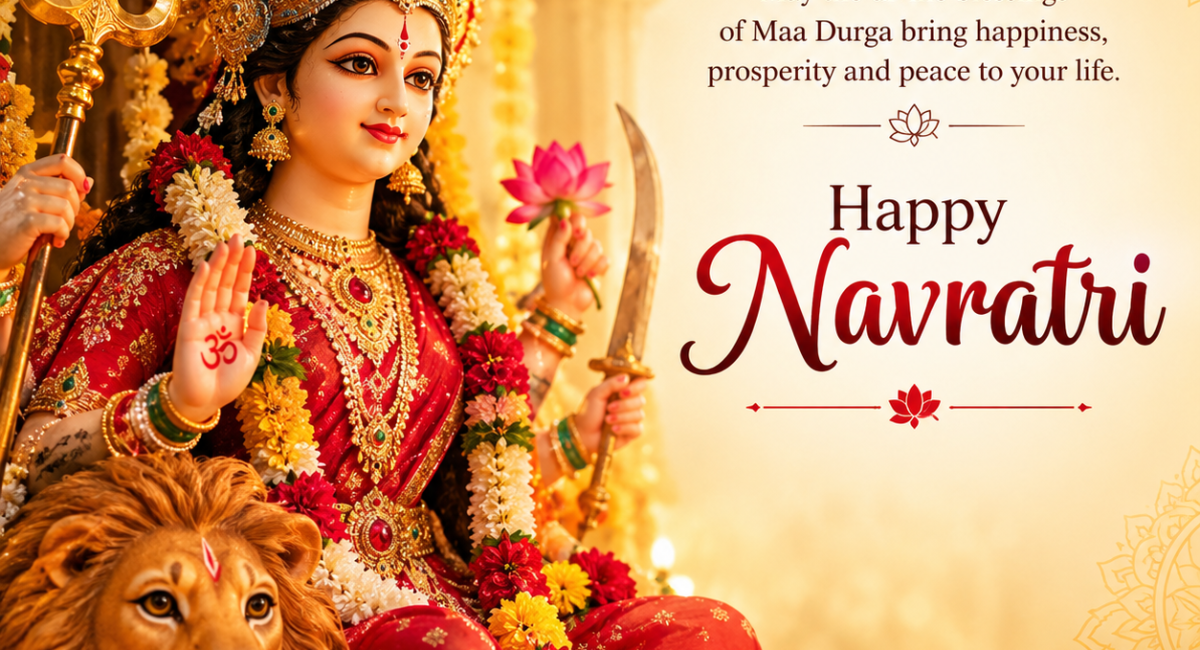
Navratri 2026: Dates, Ghatasthapana Muhurat, 9 Colours, Puja Vidhi and Complete Guide
Quick answer: Sharad Navratri 2026 begins on Sunday, 11 October 2026 and runs for nine days until Monday, 19 October 2026. Vijayadashami (Dussehra) follows on Tuesday, 20 October 2026. Ghatasthapana (Kalash Sthapana) is performed on 11 October during the morning muhurat.
Navratri 2026 is only a few days away, so here is everything you need in one place: the exact dates, the Ghatasthapana muhurat, the nine goddesses and their colours, fasting rules, the puja vidhi, Kanya Pujan, and where Navratri is celebrated most grandly. Everything below follows the Ashwin Shukla Paksha panchang.
Last updated: 7 October 2026.
Navratri 2026 Dates at a Glance
| Detail | Navratri 2026 |
|---|---|
| Festival | Sharad (Shardiya) Navratri |
| Hindu month and paksha | Ashwin, Shukla Paksha |
| First day (Pratipada) | Sunday, 11 October 2026 |
| Last day of Navratri (Navami) | Monday, 19 October 2026 |
| Vijayadashami / Dussehra | Tuesday, 20 October 2026 |
| Duration | 9 nights (10 days including Dussehra) |
| Ghatasthapana | 11 October 2026, morning |
The Pratipada tithi begins late on the evening of 10 October and continues until the evening of 11 October, so Ghatasthapana is done on the morning of 11 October.
Why this year’s date feels late: In 2025, Sharad Navratri began on 22 September. In 2026 it begins about 19 days later because the Hindu calendar follows lunar months and 2026 contains an Adhik Maas (extra month), which pushes festivals later.
Ghatasthapana Muhurat 2026
Ghatasthapana, also called Kalash Sthapana, is the most important ritual of day one. It symbolically invites the Goddess into your home for nine days.
- Best time: the morning (Pratah Kaal) of 11 October 2026.
- Approximate window for Delhi: around 6:20 AM to 10:15 AM. Panchang sites differ by a few minutes.
- Timings vary by city. Mumbai, Pune, Solapur, Kolkata and other cities have slightly different sunrise times, so check your local panchang or temple announcement for the exact minute.
Tip: If you miss the morning window for a genuine reason, many families perform Ghatasthapana during Abhijit Muhurat around midday. Confirm with your family pandit or a trusted panchang.
3. Navratri 2026 Day-Wise Calendar (Date, Tithi, Goddess, Colour)
| Day | Date | Tithi | Goddess | Colour |
|---|---|---|---|---|
| Day 1 | Sun, 11 Oct | Pratipada (Ghatasthapana) | Shailaputri | Orange |
| Day 2 | Mon, 12 Oct | Dwitiya | Brahmacharini | White |
| Day 3 | Tue, 13 Oct | Tritiya | Chandraghanta | Red |
| Day 4 | Wed, 14 Oct | Chaturthi | Kushmanda | Royal Blue |
| Day 5 | Thu, 15 Oct | Panchami | Skandamata | Yellow |
| Day 6 | Fri, 16 Oct | Shashthi | Katyayani | Green |
| Day 7 | Sat, 17 Oct | Saptami | Kalaratri | Grey |
| Day 8 | Sun, 18 Oct | Ashtami (see note below) | Mahagauri | Purple |
| Day 9 | Mon, 19 Oct | Navami (see note below) | Siddhidatri | Peacock Green |
| Day 10 | Tue, 20 Oct | Dashami | Vijayadashami (Dussehra) | none |
A note on colours: The goddess for each day is fixed by scripture, but the colour of each day is a regional and cultural custom. Maharashtra, Gujarat and other regions follow slightly different colour lists, and some calendars assign colours by weekday. Use the table above as a widely followed guide and follow your own family or community tradition.
Ashtami and Navami 2026: Which Day?
Some panchangs treat the tithis of Ashtami and Navami slightly differently in 2026. A few calendars, including some Delhi-based panchangs, show both Durga Ashtami and Maha Navami falling on 19 October 2026, because of how the tithis overlap. Others list Ashtami on 18 October and Navami on 19 October.
- Safe approach: Plan Kanya Pujan and Havan for 18 or 19 October based on your local panchang or family priest.
- Dussehra is 20 October 2026 in all major calendars.
The Nine Forms of Maa Durga (Navadurga)
- Shailaputri (Day 1): Daughter of the Himalayas. Rides a bull and carries a trident and a lotus. Worshipped for stability and a firm foundation.
- Brahmacharini (Day 2): The goddess of penance and discipline. Worshipped for patience, focus and perseverance.
- Chandraghanta (Day 3): Has a crescent moon on her forehead shaped like a bell. Worshipped for courage and the removal of fear.
- Kushmanda (Day 4): Believed to have created the universe with her smile. Worshipped for health, energy and prosperity.
- Skandamata (Day 5): Mother of Kartikeya (Skanda). Worshipped for motherly love, wisdom and wellbeing of children.
- Katyayani (Day 6): The warrior form who slayed Mahishasura. Worshipped for strength and, in tradition, for a harmonious married life.
- Kalaratri (Day 7): The fiercest form, who destroys ignorance and negativity. Worshipped for protection from fear and evil.
- Mahagauri (Day 8): Fair and serene, a symbol of purity and forgiveness. Worshipped for peace and cleansing of sins.
- Siddhidatri (Day 9): The giver of siddhis (spiritual powers). Worshipped for wisdom, fulfilment and spiritual attainment.
Ghatasthapana Puja Vidhi Step by Step
Items needed (puja samagri): clay or copper kalash, clean soil, barley (jau) or wheat seeds, Ganga jal or clean water, mango leaves, a coconut wrapped in red cloth (chunri), kalava (mauli), roli, akshat (rice), flowers, incense, a diya, supari, a coin, and an idol or picture of Maa Durga.
Steps:
- Clean the puja space and the home in the early morning. Bathe and wear clean clothes.
- Take a wide shallow pot, spread a layer of clean soil and sow barley seeds. This will sprout during Navratri and symbolises growth and prosperity.
- Fill the kalash with clean water (add a little Ganga jal if you have it), a coin, supari, and akshat.
- Tie kalava around the neck of the kalash and place five mango leaves at the mouth.
- Place the coconut wrapped in red cloth on top of the leaves.
- Set the kalash on the soil bed, on a clean platform facing the correct direction (east or north-east is commonly preferred).
- Light a diya and, if you follow the tradition, keep an Akhand Jyot (a lamp that burns continuously) for nine days.
- Invoke the Goddess with a simple prayer, offer flowers, roli and incense, and recite the Durga mantra or Durga Chalisa.
- Offer bhog (fruit, sweets or a simple prasad) and perform aarti.
Common mantra: Om Dum Durgayei Namaha.
Daily Navratri Puja Vidhi
- Wake early and bathe before puja.
- Offer fresh flowers, kumkum, incense and a diya to the day’s goddess.
- Offer the favourite bhog of the day (many families follow a traditional bhog list for each form).
- Recite Durga Saptashati, Durga Chalisa or the Devi Mahatmya if you can. Even a short chant or aarti is valid.
- Perform evening aarti and keep the diya lit.
- Water the barley sprouts daily so they grow green.
Navratri Fasting Rules and What to Eat
Fasting is optional and personal. Some devotees fast all nine days, some only on the first and last day, and many do a partial fast. Do what suits your health.
Foods commonly eaten during Navratri vrat:
- Sabudana (sago) khichdi, vada or kheer
- Kuttu atta (buckwheat flour) puris and rotis
- Singhara atta (water chestnut flour)
- Samak rice (barnyard millet)
- Rajgira (amaranth)
- Potatoes, sweet potatoes, pumpkin, bottle gourd
- Fruits, makhana, dry fruits, milk, curd and paneer
- Sendha namak (rock salt) instead of regular salt
Foods usually avoided: onion, garlic, grains such as wheat and rice, regular salt, non-vegetarian food and alcohol.
Health tip: Drink plenty of water, do not skip meals if you have diabetes, blood pressure or any medical condition, and consult your doctor if you are unsure. Pregnant women, the elderly and children should not fast strictly.
Kanya Pujan 2026
Kanya Pujan, the worship of young girls as living forms of the Goddess, is done on Ashtami or Navami.
How it is done:
- Invite nine girls (and often one young boy, called Langur or Batuk) to your home.
- Wash their feet respectfully, apply tilak and tie kalava.
- Offer a meal. A traditional menu is puri, halwa and kala chana.
- Give small gifts, such as a chunri, fruits or a little money, and seek their blessings.
Why Is Navratri Celebrated? Story and Significance
There are two widely told stories:
- Durga and Mahishasura: The buffalo demon Mahishasura had received a boon that made him nearly invincible and began to terrorise the world. The gods combined their powers to create Goddess Durga, who fought him for nine nights and defeated him on the tenth day. This is why Vijayadashami is celebrated as the victory of good over evil.
- Rama and Ravana: In many parts of North India, Navratri is linked with Lord Rama, who worshipped the Goddess before going into battle with Ravana. Dussehra marks Ravana’s defeat, and effigies of Ravana, Meghnad and Kumbhakarna are burned.
Spiritual meaning: Navratri is a time of self-discipline, reflection and worship of Shakti, the divine feminine energy. Many people see it as a period of inner cleansing as the season changes from monsoon to autumn.
How Navratri Is Celebrated Across India
- Gujarat: Garba and Dandiya Raas nights, with colourful chaniya cholis and kediyu outfits.
- West Bengal, Odisha, Assam and Bihar: Durga Puja with large artistic pandals, celebrated most grandly from Shashthi to Dashami.
- North India: Fasting, Ramlila performances and Kanya Pujan, ending with Dussehra effigy burning.
- Maharashtra: Ghatasthapana, daily colour wearing, devi darshan, bhondla and Dussehra “sone” (apta leaf) exchange.
- South India: Golu (Bommai Kolu) doll displays in Tamil Nadu, Andhra Pradesh and Telangana, Bathukamma in Telangana, and Mysuru Dasara in Karnataka.
- Himachal Pradesh: The famous Kullu Dussehra begins on Vijayadashami.
Navratri in Maharashtra: Shakti Peethas You Can Visit
Maharashtra is home to the “Three and a Half Shakti Peethas”, which see huge crowds during Navratri:
- Tulja Bhavani Temple, Tuljapur (Dharashiv district): The family deity of many Maharashtrian families.
- Mahalakshmi (Ambabai) Temple, Kolhapur: One of the most revered Shakti Peethas in India.
- Renuka Devi Temple, Mahur (Nanded district).
- Saptashrungi Devi, Vani (Nashik district): Considered the “half” Peetha.
Travel tip: Expect heavy crowds during Navratri, especially on Ashtami and Navami. Book transport and stay in advance and check the temple trust’s official darshan timings.
All Navratri Dates in 2026
| Navratri | Dates 2026 |
|---|---|
| Chaitra Navratri | 19 March to 27 March 2026 |
| Sharad Navratri | 11 October to 19 October 2026 |
| Dussehra (Vijayadashami) | 20 October 2026 |
Sharad Navratri is the most widely celebrated of the four Navratris in a year (Chaitra, Ashadha, Sharad and Magha).
14. Frequently Asked Questions (FAQs) About Navratri 2026
When does Navratri start in 2026? Sharad Navratri 2026 starts on Sunday, 11 October 2026.
When does Navratri 2026 end? The nine days end on Monday, 19 October 2026, and Dussehra is celebrated on Tuesday, 20 October 2026.
What is the Ghatasthapana muhurat in 2026? It is performed on the morning of 11 October 2026. In Delhi, the window is roughly 6:20 AM to 10:15 AM, with small differences by city. Check your local panchang for your exact time.
What is the first colour of Navratri 2026? Many calendars list Orange for Day 1 (11 October). Colour lists vary by region and tradition.
Which goddess is worshipped on the first day? Maa Shailaputri.
When is Durga Ashtami 2026? It falls on 18 or 19 October 2026, depending on the panchang you follow. Check your local calendar.
When is Maha Navami 2026? 19 October 2026.
When is Dussehra 2026? Tuesday, 20 October 2026.
How many days is Navratri? Nine nights and nine days, followed by Vijayadashami on the tenth day.
What can I eat during Navratri fasting? Sabudana, kuttu atta, singhara atta, samak rice, fruits, makhana, potatoes and dairy, all prepared with rock salt (sendha namak).
What is the difference between Chaitra and Sharad Navratri? Chaitra Navratri is in spring (March-April) and marks the Hindu New Year in many regions. Sharad Navratri falls in autumn (September-October) and ends with Dussehra.
What is Kanya Pujan and when should it be done? It is the worship of young girls as forms of the Goddess, done on Ashtami or Navami.
Conclusion
Navratri 2026 begins on 11 October and brings nine days of devotion, discipline and celebration, ending with Dussehra on 20 October. Whether you fast, perform Ghatasthapana at home, dance Garba or visit a Shakti Peetha, the heart of the festival is gratitude and the victory of good over evil.
Shubh Navratri 2026 to you and your family! Jai Mata Di!
Disclaimer: Dates and muhurat timings follow popular panchang calculations and can vary by region and calendar. Please confirm exact timings with your local panchang or family priest.
Leave a Comment