
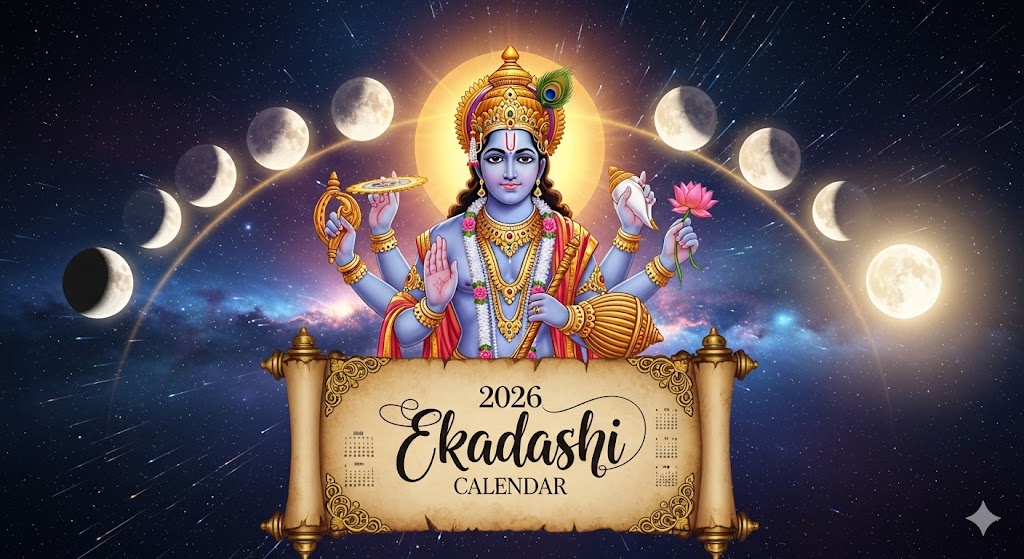
Ekadashi in 2026 – Complete List of Ekadashi Dates, Names & Significance
Introduction: The Celestial Rhythm of Deliverance
In the grand and intricate tapestry of Sanatana Dharma, few observances command the reverence, scriptural authority, and transformative potential of the Ekadashi Vrat. Known as the Hari-vasara (the Day of Lord Hari), this bi-monthly observance is not merely a ritual of abstinence but a cosmic alignment of the human physiology with the lunar cycle, designed to elevate consciousness, purify karma, and secure the grace of Lord Narayana. As we approach the year Ekadashi in 2026, the spiritual calendar presents a unique and potent configuration that demands the attention of every devout Vaishnava and spiritual seeker.
The year 2026 is celestial in its significance because it is graced by the phenomenon of Adhik Maas (the intercalary or extra month), specifically occurring as Adhik Jyeshtha. Unlike a standard lunar year which comprises 24 Ekadashis, the calendar for Ekadashi in 2026 expands to include 26 distinct fasting days. This occurrence, happening roughly once every three years, offers a rare window of intensified sadhana (spiritual practice) and the double accumulation of punya (merit). For the practitioner, this means the year 2026 is not just a passage of time but a pilgrimage through time, offering extended opportunities for redemption and spiritual advancement.
The observance of Ekadashi falling on the eleventh day of both the waxing (Shukla Paksha) and waning (Krishna Paksha) phases of the moon is rooted deeply in the ancient Puranic texts, particularly the Padma Purana and the Skanda Purana. It is said that the Ekadashi Tithi itself is a personification of the protective energy of Lord Vishnu, manifested to vanquish the demon Mura. Thus, observing the Ekadashi vrat 2026 is not a mere denial of food; it is an act of taking shelter under the divine protection of Narayana, transcending the demands of the body to nourish the soul. The physiological basis of this fast is equally profound; ancient Indian sages (Rishis) identified that on the eleventh day of the lunar cycle, the atmospheric pressure and the body’s internal water retention are at a specific threshold, making it the ideal time to rest the digestive system and focus the mind inward.
This comprehensive report serves as an exhaustive, expert-level guide to Ekadashi in 2026. Meticulously compiled using the authoritative Kalnirnay and BAPS calendar systems to ensure precise alignment with the Tithi calculations revered in the Indian subcontinent, this document goes beyond a simple list. It explores the deep theological significance, the specific Vrat Kathas (narratives), and the scientifically backed benefits of each fasting day. Whether you are a seasoned practitioner of the Nirjala fast or a curious novice seeking to understand the “Day of Lord Hari,” this report provides the definitive roadmap for your spiritual journey through the Ekadashi fasting dates 2026.
The Science and Theology of the Eleventh Day
To fully appreciate the gravity of Ekadashi in 2026, one must understand the mechanism that makes this day so potent. The moon exerts a profound gravitational pull on the earth, influencing the tides and, by extension, the biological fluids in the human body, which is composed largely of water.
The Lunar Connection
The Tithi system of the Hindu calendar is a sophisticated method of timekeeping based on the longitudinal angle between the moon and the sun. An Ekadashi tithi begins when the moon is 120 degrees away from the sun. At this specific juncture, the body’s physiological cycles are believed to be in a state of natural detox. The Vishnu Purana suggests that the mind, which is ruled by the moon (Chandrama manaso jata), is most agitated during the full and new moons. By fasting on the eleventh day three days prior to the peak lunar phases the devotee effectively dampens the erratic influence of the moon on the mind, allowing for heightened mental clarity and reduced lethargy during meditation.
The Legend of Papa Purusha
Theologically, the necessity of fasting from grains is explained through the legend of the Papa Purusha (the personification of sin). The Padma Purana narrates that at the beginning of creation, the Supreme Lord created a being composed of all sinful activities to punish the wicked. However, to liberate the conditioned souls, the Lord also manifested the Ekadashi lunar day. Seeing that the living entities were attaining liberation (Moksha) simply by observing Ekadashi, the Papa Purusha feared for his existence and begged the Lord for a shelter. The Lord, in His mysterious play, granted the Papa Purusha residence in grains and cereals (rice, wheat, beans) on the day of Ekadashi. Therefore, eating grains on this day is metaphysically equated to consuming sin itself, which binds the soul further to the cycle of birth and death. This narrative underscores why Ekadashi vrat 2026 is treated with such rigor in Vaishnava communities.
2026: The Year of the Purushottam Maas (Adhik Jyeshtha)
The defining feature of the Ekadashi dates 2026 is the occurrence of the Adhik Maas, or the “Extra Month.” The Hindu calendar is lunisolar, meaning it tracks both the moon’s phases (approx. 354 days a year) and the sun’s position (approx. 365 days a year). This discrepancy of about 11 days per year accumulates, and to realign the lunar months with the solar seasons, an extra month is added roughly every 32.5 months.
In 2026, this extra month is inserted during the month of Jyeshtha (May–June). Consequently, devotees will observe two distinct Jyeshtha months:
- Nija Jyeshtha: The natural/standard month.
- Adhik Jyeshtha: The intercalary month, also known as Purushottam Maas.
This results in the inclusion of two rare and highly meritorious Ekadashis Padmini and Parama bringing the total count to 26. The Adhik Maas is technically a “void” month for material activities (like weddings or housewarmings) but is considered the “golden month” for spiritual activities. It is dedicated exclusively to Lord Purushottam (a name for Krishna), and any penance performed during this month, especially the observance of its two Ekadashis, is said to yield results a thousand times greater than usual.
Complete List of Ekadashi in 2026
The following table serves as the primary reference for all Ekadashi dates 2026. These dates have been verified against the Kalnirnay 2026 calendar and cross-referenced with BAPS data to ensure accuracy for the Indian Standard Time (IST) zone. Note that Parana (breaking of the fast) is strictly done on the following day (Dwadashi).
| Month | Ekadashi Name | Marathi Name | Date | Day | Tithi Timing (Start – End) |
| Jan | Shattila Ekadashi | षटतिला एकादशी | Jan 14 | Wed | Jan 13, 03:17 PM – Jan 14, 05:52 PM |
| Jaya Ekadashi | जया एकादशी | Jan 29 | Thu | Jan 28, 04:35 PM – Jan 29, 01:55 PM | |
| Feb | Vijaya Ekadashi | विजया एकादशी | Feb 13 | Fri | Feb 12, 12:22 PM – Feb 13, 02:25 PM |
| Amalaki Ekadashi | आमलकी एकादशी | Feb 27 | Fri | Feb 27, 12:33 AM – Feb 27, 10:32 PM | |
| Mar | Papmochani Ekadashi | पापमोचिनी एकादशी | Mar 15 | Sun | Mar 14, 08:10 AM – Mar 15, 09:16 AM |
| Kamada Ekadashi | कामदा एकादशी | Mar 29 | Sun | Mar 28, 08:45 AM – Mar 29, 07:46 AM | |
| Apr | Varuthini Ekadashi | वरुथिनी एकादशी | Apr 13 | Mon | Apr 13, 01:16 AM – Apr 14, 01:08 AM |
| Mohini Ekadashi | मोहिनी एकादशी | Apr 27 | Mon | Apr 26, 06:06 PM – Apr 27, 06:15 PM | |
| May | Apara Ekadashi | अपरा एकादशी | May 13 | Wed | May 12, 02:52 PM – May 13, 01:29 PM |
| Padmini Ekadashi (Adhik) | पद्मिनी (अधिक) एकादशी | May 27 | Wed | May 26, 05:10 AM – May 27, 06:21 AM | |
| Jun | Parama Ekadashi (Adhik) | परमा (अधिक) एकादशी | Jun 11 | Thu | Jun 11, 12:57 AM – Jun 11, 10:36 PM |
| Nirjala Ekadashi | निर्जला एकादशी | Jun 25 | Thu | Jun 24, 06:12 PM – Jun 25, 08:09 PM | |
| Jul | Yogini Ekadashi | योगिनी एकादशी | Jul 11* | Sat | Jul 10, 08:16 AM – Jul 11, 05:22 AM |
| Devshayani (Ashadhi) | आषाढी (देवशयनी) | Jul 25 | Sat | Jul 24, 09:12 AM – Jul 25, 11:34 AM | |
| Aug | Kamika Ekadashi | कामिका एकादशी | Aug 9 | Sun | Aug 08, 01:59 PM – Aug 09, 11:04 AM |
| Putrada Ekadashi | पुत्रदा एकादशी | Aug 24* | Mon | Aug 23, 02:00 AM – Aug 24, 04:18 AM | |
| Sep | Aja Ekadashi | अजा एकादशी | Sep 7 | Mon | Sep 06, 07:29 PM – Sep 07, 05:03 PM |
| Parivartini Ekadashi | परिवर्तिनी एकादशी | Sep 22 | Tue | Sep 21, 08:00 PM – Sep 22, 09:43 PM | |
| Oct | Indira Ekadashi | इंदिरा एकादशी | Oct 6 | Tue | Oct 06, 02:07 AM – Oct 07, 12:34 AM |
| Papankusha Ekadashi | पापांकुशा एकादशी | Oct 22 | Thu | Oct 21, 02:11 PM – Oct 22, 02:47 PM | |
| Nov | Rama Ekadashi | रमा एकादशी | Nov 5 | Thu | Nov 04, 11:03 AM – Nov 05, 10:35 AM |
| Devutthana (Kartiki) | कार्तिकी (प्रबोधिनी) | Nov 21* | Sat | Nov 20, 07:15 AM – Nov 21, 06:31 AM | |
| Dec | Utpanna Ekadashi | उत्पन्ना एकादशी | Dec 4 | Fri | Dec 03, 11:03 PM – Dec 04, 11:44 PM |
| Mokshada Ekadashi | मोक्षदा एकादशी | Dec 20 | Sun | Dec 19, 10:09 PM – Dec 20, 08:14 PM |
Detailed Narrative: The 26 Ekadashis of 2026
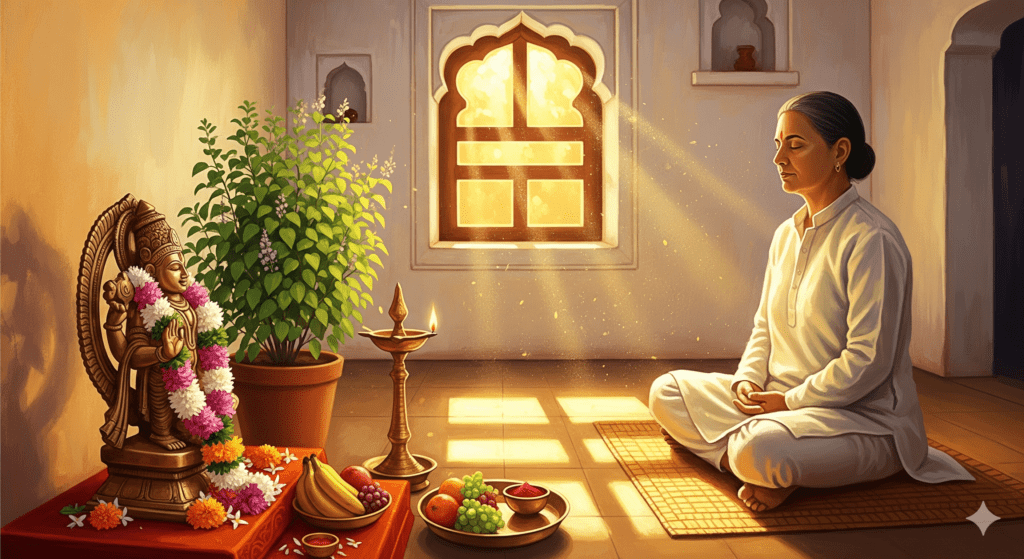
To truly engage with the spirit of Ekadashi in 2026, one must understand the unique story (Katha) and ritualistic nuance of each day. The following analysis provides a deep dive into the specific significance of each observance, arranged chronologically.
January 2026: The Month of Sanctification
1. Shattila Ekadashi (January 14, Wednesday)
The year begins with Shattila Ekadashi, falling in the dark fortnight of the Pausha month. The name is derived from Shat (six) and Tila (sesame seeds). According to the Bhavishya Purana, Sage Pulastya recounted to Sage Dalbhya that utilizing sesame seeds in six specific ways on this day destroys poverty and spiritual impurity.
These six ways are
- Bathing in water mixed with sesame seeds,
- Applying sesame paste to the body,
- Offering sesame seeds in the sacrificial fire (Havan),
- Offering water mixed with sesame to the ancestors (Tarpan),
- Donating sesame seeds to Brahmins, and
- Consuming sesame seeds.
Significance in 2026: Falling in mid-January, this aligns with the harvest season in India (Makar Sankranti). The spiritual imperative here is charity. The story goes that a wealthy Brahmin woman, who was pious but miserly, gave a mud ball to a beggar (Lord Krishna in disguise). Upon reaching heaven, she received a palace made of mud but empty of food. This fast teaches that material wealth without charity leads to spiritual starvation.
2. Jaya Ekadashi (January 29, Thursday)
Occurring in the bright fortnight of Magha, Jaya Ekadashi is renowned for its potency in liberating souls from the Pisach Yoni (ghostly existence). The Padma Purana narrates the story of Malyavan, a Gandharva, and Pushpavati, an Apsara, who were cursed by Lord Indra to become goblins living in a frozen hell due to their lustful disruption of a celestial assembly. By unknowingly observing a fast on this day starving due to the cold and staying awake they were instantly liberated and restored to their celestial forms.
- Significance in 2026: This is a powerful day for those seeking to rectify past mistakes or help deceased relatives who may be suffering. It is a day of unintentional grace becoming intentional salvation.
February 2026: Victory and Health
3. Vijaya Ekadashi (February 13, Friday)
As the name implies, Vijaya means victory. This fast, falling in the dark fortnight of Magha, is historically associated with Lord Rama. Before crossing the ocean to Lanka to battle Ravana, Lord Rama felt dismay at the vastness of the sea and the might of the opposing army. Sage Bakadalbhya advised Him to observe Vijaya Ekadashi to secure success. Rama, along with Lakshmana and the Vanara Sena, observed this fast, leading to their subsequent triumph.
- Significance in 2026: Devotees observe this Ekadashi vrat 2026 to overcome insurmountable obstacles in litigation, career, or personal conflicts. It is the “Success Ekadashi.”
4. Amalaki Ekadashi (February 27, Friday)
Celebrated in the bright fortnight of Phalguna, this day venerates the Amalaki (Indian Gooseberry) tree, which is believed to be the residence of Lord Vishnu and Goddess Lakshmi. The creation mythology suggests that Lord Brahma manifested from the lotus of Vishnu’s navel and, in his awe, shed a tear which became the Amla tree.
- Significance in 2026: This observance combines environmental reverence with spiritual devotion. Rituals involve watering the Amla tree and offering incense. It is believed to grant health and longevity, acknowledging the potent medicinal properties of the Amla fruit.
March 2026: Cleansing the Karmic Slate
5. Papmochani Ekadashi (March 15, Sunday)
Falling in the dark fortnight of Phalguna (or Chaitra in Purnimanta calendars), Papmochani is the “Liberator from Sin.” The legend associated with this day is a cautionary tale of Sage Medhavi and the Apsara Manjughosha. The sage, seduced by the Apsara, lost the merit of years of penance. Upon realizing his fall, he cursed her to become a witch. Later, his father, Sage Chyavana, advised both of them to observe Papmochani Ekadashi. The fast restored the Apsara to heaven and restored the sage’s spiritual status.
- Significance in 2026: This is the ultimate “reset button” for the devotee’s conscience, particularly for sins committed due to lust or lapse in judgment.
6. Kamada Ekadashi (March 29, Sunday)
The first Ekadashi of the Hindu New Year (Chaitra Shukla Paksha), Kamada means “that which fulfills desires.” The narrative involves a Gandharva named Lalit who was turned into a demon for singing incorrectly in Indra’s court, distracted by thoughts of his wife. His wife, Lalita, observed this fast and transferred the merit to him, instantly curing his curse.
- Significance in 2026: This fast highlights the concept of vicarious atonement fasting for the benefit of a loved one. It is observed to cure family curses and remove negative karma affecting relationships.
April 2026: Protection and Illusion
7. Varuthini Ekadashi (April 13, Monday)
Occurring in the dark fortnight of Chaitra, Varuthini translates to “protected” or “armored.” Lord Krishna explains to Yudhishthira that observing this fast protects the devotee from all evils and misfortunes in this life and the next. The merit obtained is said to be equal to donating gold at Kurukshetra during a solar eclipse or giving a cow in charity.
- Significance in 2026: A unique rule for this day is the prohibition of applying oil to the body. It is believed to heal the body of ailments and protect the devotee from fear.
8. Mohini Ekadashi (April 27, Monday)
This Ekadashi falls in the bright fortnight of Vaishakha. It celebrates the Mohini avatar of Lord Vishnu the enchantress form He assumed to distribute the Amrit (nectar of immortality) to the Devas while denying it to the Asuras. The story also links to Lord Rama observing this fast to locate Sita.
- Significance in 2026: Maya (illusion) is the Lord’s external energy. Fasting on this day helps the devotee pierce through the veil of material illusion and attachment, bringing emotional stability and clarity of purpose.
May 2026: The Gateway to the Extra Month
9. Apara Ekadashi (May 13, Wednesday)
Falling in the dark fortnight of Vaishakha, Apara translates to “limitless.” The Brahmanda Purana states that this fast bestows limitless fame and wealth. However, its deeper purpose is the annulment of sins related to speech and integrity, such as giving false testimony, reading false scriptures, or acting deceitfully.
- Significance in 2026: For those in public life or business, this fast is recommended to clear the karmic debris of professional interactions.
10. Padmini Ekadashi (May 27, Wednesday) – The Adhik Maas Special
Here enters the first of the rare Ekadashis of 2026. Falling in the Shukla Paksha of Adhik Jyeshtha, Padmini Ekadashi (also known as Kamala Ekadashi) occurs only once every three years. The legend recounts how King Kartavirya Arjuna, despite having 1,000 queens, had no son. He and his queen Padmini performed severe penance. Anasuya, the wife of Sage Atri, advised Queen Padmini to observe this specific Ekadashi in the extra month. The result was the birth of the mighty Kartavirya Arjuna.
- Significance in 2026: This is a highly meritorious day for couples seeking progeny and for devotees desiring rapid spiritual advancement. As it falls in the Purushottam Maas, it is dedicated to Lord Krishna, and the merit is said to be greater than performing 100 Ashwamedha Yagnas.
June 2026: The Pinnacle of Austerity
11. Parama Ekadashi (June 11, Thursday) – The Adhik Maas Finale
The second exclusive fast of 2026 falls in the Krishna Paksha of Adhik Jyeshtha. The narrative involves a Brahmin named Sumedha who lived in abject poverty. Sage Kaundinya advised him that his poverty was due to past karma and could be erased by observing Parama Ekadashi. Upon doing so, the couple was blessed with immense wealth and eventual liberation.
- Significance in 2026: Known as the “Prosperity Ekadashi” of the extra month, this day is specifically potent for removing financial difficulties and poverty. It marks the spiritual culmination of the Adhik Maas.
12. Nirjala Ekadashi (June 25, Thursday)
Following the Adhik Maas, we return to the standard calendar with the most rigorous fast of the year: Nirjala Ekadashi, falling in Nija Jyeshtha Shukla Paksha. Also known as Pandava Nirjala or Bhimseni Ekadashi, the legend features Bhima, the strongest Pandava. Possessing a voracious appetite (Vrikodara), Bhima could not tolerate hunger and felt guilty for not fasting like his brothers. Sage Vyasa advised him to observe this single, strict fast annually abstaining from both food and water to gain the merit of all 24 Ekadashis combined.
- Significance in 2026: This is the “King of Fasts.” Devotees abstain from water from sunrise on Ekadashi to sunrise on Dwadashi a supreme test of endurance in the Indian summer. It is believed that the messengers of death (Yamadutas) cannot touch a soul who has successfully completed this vrat.
July 2026: The Slumber of the Lord
13. Yogini Ekadashi (July 11, Saturday)
In the dark fortnight of Nija Jyeshtha (or Ashadha in Purnimanta), Yogini Ekadashi is famed for curing skin ailments. The story involves a gardener named Hemamali who, neglecting his duty of gathering flowers for Kubera’s puja due to lust for his wife, was cursed with leprosy. He was cured only after observing this fast under the guidance of Sage Markandeya.
- Significance in 2026: This emphasizes the link between duty (Dharma) and health. It is observed for the cure of chronic physical suffering.
14. Devshayani Ekadashi (July 25, Saturday)
Falling in Ashadha Shukla Paksha, this is a watershed moment in the Hindu calendar. Also known as Ashadhi Ekadashi or Maha Ekadashi, it marks the beginning of Chaturmas (the holy four-month period). The scripture states that Lord Vishnu enters Yoga Nidra (cosmic sleep) on the bed of Shesha Naga in the Ocean of Milk on this day.
- Significance in 2026: This day signals a shift in the spiritual atmosphere. Auspicious ceremonies like weddings are suspended for four months. In Maharashtra, this day witnesses the massive Pandharpur Yatra, where lakhs of Warkaris complete their walk to the temple of Lord Vithoba.
August 2026: Purification and Progeny
15. Kamika Ekadashi (August 9, Sunday)
Occurring in the dark fortnight of Shravana (Ashadha Krishna in Amanta), Kamika Ekadashi is dedicated to the worship of the Tulsi plant. Lord Brahma tells Narada that one who worships Lord Hari with Tulsi leaves on this day is freed from sins equivalent to killing a Brahmin (Brahma-hatya) and does not see the face of Yamaraj.
- Significance in 2026: A crucial day for Tulsi worship. Lighting a ghee lamp before a Tulsi plant on this day is said to be highly meritorious.
16. Putrada Ekadashi (August 24, Sunday)
In the bright fortnight of Shravana, this “Giver of Sons” Ekadashi is observed. The legend recounts King Mahijit, who was childless. The sages revealed that in his previous life, as a merchant, he had driven a thirsty cow away from a lake to drink water himself. This sin caused his childlessness. By observing Putrada Ekadashi, the King was blessed with a worthy heir.
- Significance in 2026: It is primarily observed by couples desiring children or for the health and well-being of their existing offspring.
September 2026: The Turning of the Lord
17. Aja Ekadashi (September 7, Monday)
In the dark fortnight of Bhadrapada, Aja Ekadashi is the remover of sorrow. The archetypal story is that of King Harishchandra, the emblem of truth, who lost his kingdom, wife, and child, and was forced to work as a crematorium guard. By observing this fast, he regained his lost sovereignty and family.
- Significance in 2026: This fast is observed to recover lost wealth, status, or separated family members.
18. Parivartini Ekadashi (September 22, Tuesday)
Falling in Bhadrapada Shukla Paksha, this day is also called Parsva Ekadashi. During His four-month slumber, Lord Vishnu is said to turn over from one side to the other (Parivartana) on this day, signifying a shift in cosmic energy.
- Significance in 2026: Devotees worship the Vamana avatar on this day. It is believed that observing this fast grants the merit of the Vajapeya sacrifice.
October 2026: Ancestors and Atonement
19. Indira Ekadashi (October 6, Tuesday)
Falling in the dark fortnight of Ashwina (during the Pitru Paksha or Fortnight of Ancestors), this is the only Ekadashi dedicated specifically to the salvation of ancestors. King Indrasena was told by Sage Narada that his father was suffering in Yamaloka due to past sins. By observing this fast and transferring the merit to his father, the King liberated his ancestor’s soul.
- Significance in 2026: This is a critical day for anyone performing Shraddha. Fasting here is believed to grant salvation to forefathers up to seven generations.
20. Papankusha Ekadashi (October 22, Thursday)
In the bright fortnight of Ashwina, Papankusha implies the “Elephant Goad” (Ankusha) that controls the wild elephant of sin (Pap). The fast is said to grant the merit of performing 100 Surya Yagnas and ensures the devotee enjoys heavenly pleasures before attaining liberation.
- Significance in 2026: Rituals include the worship of Lord Padmanabha. It is a fast for obtaining health, wealth, and a compatible spouse.
November 2026: The Awakening
21. Rama Ekadashi (November 5, Thursday)
Falling in the dark fortnight of Kartika, just days before Diwali, this Ekadashi is named Rama after Goddess Lakshmi. The story of Chandrabhaga, who observed this fast and was able to pull her husband Shobhana out of a subtle, unstable heavenly realm into a permanent divine abode, highlights the protective power of a wife’s devotion.
- Significance in 2026: Being associated with Lakshmi, it is traditionally observed to invoke prosperity and domestic harmony before the festival of lights.
22. Prabodhini Ekadashi (November 21, Saturday)
Also known as Devutthana Ekadashi, this day in Kartika Shukla Paksha marks the “Great Awakening.” Lord Vishnu wakes up from His four-month slumber, signaling the end of Chaturmas.
- Significance in 2026: The most joyous ritual of the day is Tulsi Vivah the ceremonial marriage of the Tulsi plant (representing Vrinda) to the Shaligram stone (representing Vishnu). This ritual signifies the union of the individual soul with the Divine and marks the reopening of the Hindu wedding season. It is essentially the “spiritual Diwali” for Vaishnavas.
December 2026: The Cycle Renews
23. Utpanna Ekadashi (December 4, Friday)
Falling in Kartika Krishna Paksha (or Margashirsha in Purnimanta), this day celebrates the origin of Ekadashi itself. Legend has it that when the demon Mura attacked the sleeping Lord Vishnu, a divine maiden manifested from the Lord’s body and slew the demon. Pleased, Vishnu named her “Ekadashi” and granted her the boon that anyone who fasts on her appearance day will be liberated.
- Significance in 2026: This is considered the ideal day for a beginner to start their journey of Ekadashi fasting.
24. Mokshada Ekadashi (December 20, Sunday)
The year concludes with Mokshada Ekadashi in Margashirsha Shukla Paksha.
- Gita Jayanti: This is the auspicious day on which Lord Krishna spoke the Bhagavad Gita to Arjuna on the battlefield of Kurukshetra.
- Vaikuntha Ekadashi: In South India (especially Srirangam and Tirupati), this is the most significant festival. The “Vaikuntha Dwara” (Gate to Heaven) is opened in temples, and passing through it is believed to guarantee liberation.
- Significance in 2026: It serves as a dual celebration of knowledge (Gita) and devotion (Vaikuntha), offering a powerful spiritual closure to the year.
The “Maha” Ekadashis of 2026: A Deeper Look
While all 26 Ekadashis in 2026 are sacred, four specific days hold supreme importance due to their festive magnitude, cultural impact, and theological weight. These are the pillars of the Vaishnava calendar.
1. Vaikuntha Ekadashi (December 20, 2026)
This is the “Power Day” for Vaishnavites, particularly in the Dravidian tradition. The festival commemorates Nammalvar (a prominent Alwar saint) entering the sanctum of the Lord.
- The Ritual of the Door: Temples like Srirangam Ranganathaswamy and Tirumala Venkateswara construct a special northern door known as the Paramapada Vasal. On this day, the deity is carried through this door, and throngs of devotees follow. This act dramatizes the soul’s transit from the material world (Prakriti) to the spiritual sky (Vaikuntha).
- The Fast: In South India, this fast is often observed Nirjala (without water) or with extreme austerity. It is believed that the gates of Vaikuntha remain open on this day, offering a direct path to salvation.
2. Nirjala Ekadashi (June 25, 2026)
Occurring in the peak of the Indian summer, this fast is an act of sheer willpower and devotion.
- The Science: Abstaining from water for 24 hours resets the body’s hydration mechanisms and acts as a powerful detox, flushing out deep-seated toxins upon rehydration.
- The “Insurance Policy”: The Brahma Vaivarta Purana states that if a devotee has missed any or all other Ekadashis in the year due to illness or negligence, observing Nirjala Ekadashi alone rectifies those omissions. It is a day of complete surrender, where the devotee tells the Lord, “For You, I can give up even the most basic necessity of life water”.
3. Devshayani Ekadashi (July 25, 2026)
This day marks a palpable shift in the atmospheric and spiritual climate of the subcontinent.
- Chaturmas Discipline: As the Lord “sleeps,” the devotee is expected to increase their own spiritual vigilance to compensate for the lack of divine protection. During the four months following this day, many refrain from specific foods (leafy greens in Shravan, yogurt in Bhadrapad, milk in Ashwin, pulses in Kartik) to control the senses.
- The Warkari Movement: The image of the “Ringan” (circle of horses) and the sea of white-clad Warkaris marching to Pandharpur is one of the most moving sights in Indian spirituality. They reach the feet of Lord Vithoba on this day, symbolizing the soul’s desperate journey to meet God.
4. Prabodhini Ekadashi (November 21, 2026)
The “Great Awakening” is a festival of joy.
- Tulsi Vivah: This lovely ritual involves marrying the Tulsi plant to the Lord. It is not just a ritual but a reaffirmation of the Bhakti sentiment that the Lord is not an abstract concept but a person who can be related to as a groom, a friend, or a master.
- Economic Signal: In India, this day marks the end of the hiatus on weddings. The markets flood with goods, and the social calendar fills up, making it a festival that bridges the spiritual and the social.
How to Observe Ekadashi Vrat: Rules & Guidelines
Observing Ekadashi vrat 2026 is not merely about starvation; it is a holistic discipline involving Ahara (food), Vihara (conduct), and Vichara (thought). The Hari-bhakti-vilasa, the standard guidebook for Vaishnava rituals, provides detailed instructions.
1. Levels of Fasting
Devotees can choose a level of fasting that suits their health and spiritual capacity:
- Nirjala: The highest level. No food, no water. (Mandatory for Nirjala Ekadashi; optional for others).
- Sajala: Water is permitted, but no food.
- Phalahar: Fruits, milk, nuts, and root vegetables (potatoes, sweet potatoes, tapioca, yam) are permitted. This is the most common form of observance.
- Naktabhoji: One single meal of non-grain food in the late afternoon. This is reserved for the elderly, children, or those with medical conditions.
2. Foods to Strictly Avoid
The “Papa Purusha” (sin) is said to reside in grains on this day. Therefore, the following are strictly prohibited:
- Grains: Rice, wheat, maize, barley, millet, oats, rye.
- Beans/Pulses: Dal (lentils), peas, chickpeas, soybeans, kidney beans, urad dal.
- Vegetables: Onions, garlic, mushrooms, eggplant (brinjal), cauliflower, broccoli.
- Spices/Additives: Asafoetida (Hing), sesame seeds (except on Shattila Ekadashi), mustard seeds, fenugreek.
- Salts: Standard table salt (iodized) is often avoided due to processing; Rock salt (Sendha Namak) is the prescribed alternative.
- Oils: Oils made from grains or seeds (corn oil, mustard oil) are avoided; Ghee, peanut oil, or sunflower oil are generally accepted.
3. The Ritual of Parana (Breaking the Fast)
The fast is not complete until it is broken at the correct time on the following day (Dwadashi). If Parana is missed, the fast is considered broken and the merit lost.
- The Window: Parana must be done after sunrise on Dwadashi but before the Dwadashi Tithi ends.
- Hari Vasara: The first one-fourth of the Dwadashi Tithi is called Hari Vasara. One must not break the fast during this period. The fast should only be broken after Hari Vasara ends.
- Method: Offer food to the Lord first (Prasadam). To break the fast, one can consume a single grain of rice or a sip of water, signifying the resumption of the normal diet.
4. Conduct and Mindset
- Brahmacharya: Complete celibacy is required on Ekadashi.
- No Daytime Sleep: Sleeping during the day is prohibited as it increases Tamo Guna (mode of ignorance) and negates the benefits of the fast.
- Jagran: Staying awake at night chanting Vishnu’s names (Vishnu Sahasranama or Hare Krishna mantra) is highly meritorious.
- Avoid: Shaving, cutting nails, applying oil to the body, and angry speech are to be avoided.
Spiritual Benefits: Why Fast in 2026?
In an era of high stress, digital distraction, and material consumption, Ekadashi in 2026 serves as a bi-monthly detox for the mind, body, and spirit.
- Karma Purification: Just as fire burns wood to ash, the fire of Tapasya (austerity) on Ekadashi burns the seeds of past sinful reactions (Papa). It is believed to destroy the reactions of sins committed in this life and previous ones.
- Mental Discipline: By saying “no” to the body’s primal urge for food, the intellect gains mastery over the senses (Indriya Nigraha). This strengthens willpower and aids in meditation.
- Vishnu Bhakti: It is the easiest and most direct way to please Lord Krishna. The scriptures say, “Those who observe Ekadashi are very dear to Me.” It creates a personal bond between the devotee and the Deity.
- Health & Autophagy: Modern science supports intermittent fasting. Fasting on Ekadashi triggers autophagy, a biological process where cells clean out damaged components, leading to cellular rejuvenation, improved insulin sensitivity, and longevity.
- Moksha (Liberation): Ultimately, the goal of Ekadashi is not just worldly gain but Moksha. The Skanda Purana asserts that one who strictly observes Ekadashi will not have to enter the womb of a mother again; they attain the eternal abode of Vaikuntha.
FAQ: Frequently Asked Questions about Ekadashi 2026
Q1: How many Ekadashis are there in 2026?
A: There are 26 Ekadashis in 2026. A standard Hindu lunar year has 24 Ekadashis, but due to the occurrence of Adhik Jyeshtha (the extra lunar month) in 2026, two additional Ekadashis (Padmini and Parama) are observed in May and June.
Q2: Which is the most important Ekadashi to fast in 2026?
A: While all are spiritually potent, Nirjala Ekadashi (June 25, 2026) is considered the most powerful. Observing this single waterless fast is said to bestow the benefits of all 24/26 Ekadashis combined. Additionally, Vaikuntha Ekadashi (Dec 20) is supreme for those seeking liberation.
Q3: Can I drink water on Ekadashi?
A: Yes, unless you have specifically taken a vow for Nirjala (waterless) fasting. The majority of devotees observe Phalahar fasting, which permits the consumption of water, milk, fruits, and nuts. The strictness of the fast depends on your health and spiritual resolve.
Q4: What happens if I accidentally eat grains on Ekadashi?
A: If grains are consumed unknowingly, one should immediately stop, chant “Om Namo Bhagavate Vasudevaya” to seek forgiveness, and continue the fast for the rest of the day. If done knowingly, the fast is broken. In such cases, one should observe the fast on the next day (Dwadashi) or double the chanting to atone.
Q5: Can Ekadashi dates differ by location (e.g., India vs. USA)?
A: Yes. The start and end of a Tithi depend on the sunrise time at a specific location. Therefore, Ekadashi in India might fall on a different calendar day than in the USA or UK. The dates provided in this report are based on Indian Standard Time (IST). Always consult a local Panchang for your specific city.
Q6: Why are there two Jyeshtha months in 2026?
A: This is due to the astronomical phenomenon of Adhik Maas (Leap Month). To align the lunar calendar (approx. 354 days) with the solar calendar (approx. 365 days), an extra month is added every 2-3 years. In 2026, this insertion happens in the month of Jyeshtha, creating “Adhik Jyeshtha” (Extra) and “Nija Jyeshtha” (Original).
Q7: Is Ekadashi fasting mandatory for all Hindus?
A: While it is highly recommended in the Puranas for all people between the ages of 8 and 80, it is strictly mandatory for Vaishnavas (devotees of Vishnu/Krishna). For others, it is a voluntary act of penance and merit-building. However, pregnant women, the very elderly, and the sick are exempt from strict fasting and can observe a simplified worship instead.
Conclusion
The year 2026 invites the devotee into a deeper, more profound engagement with time itself. With the addition of the Adhik Maas, the year transforms into an extended pilgrimage of the soul offering 26 specific opportunities to pause, reflect, and realign the self with the Divine will. From the winter austerities of Shattila to the waterless devotion of Nirjala, from the mystical extra month of Purushottam to the grand awakening of Prabodhini, each Ekadashi is a step on the ladder to Vaikuntha.
By following this Kalnirnay-aligned 2026 Ekadashi calendar, you ensure that your spiritual efforts are synchronized with the cosmic rhythm. May your fasts be steady, your devotion deep, and your attainment of Lord Hari’s grace be boundless.
Om Namo Bhagavate Vasudevaya.

Leave a Comment