
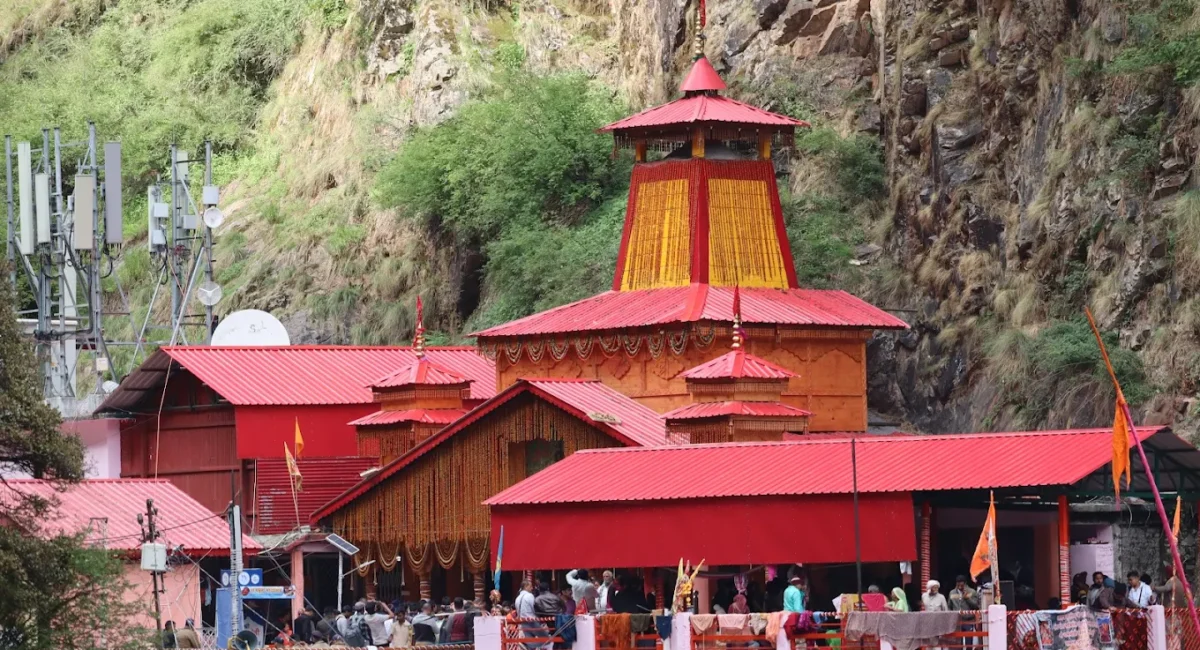
Yamunotri Temple (Yamunotri, Uttarakhand) – Pilgrimage Guide
The Yamunotri Temple, located in Yamunotri, Uttarakhand (Uttarkashi district), is a revered Hindu shrine perched at about 3,291 meters in the Garhwal Himalayas. It is one of the four sacred Chota Char Dham pilgrimage sites in Uttarakhand and is traditionally the first stop on the Char Dham Yatra. The temple is dedicated to Goddess Yamuna, the mythological daughter of Surya (the Sun God) and sister of Yama. Legend holds that bathing in the holy Yamuna water here can free devotees from untimely death. The Yamunotri Temple’s vibrant facade and high-altitude setting make it a popular subject of Yamunotri temple photos among pilgrims and photographers. For devotees, a visit to Yamunotri is often a lifetime goal, combining faith with the adventure of trekking through the Himalayas.
Historical and Mythological Significance of Yamunotri Temple
The current Yamunotri Temple structure was built in the 19th century by Maharaja Pratap Shah of Tehri Garhwal. Earlier temples at the site had been destroyed by avalanches and floods, underscoring the challenges of this high-altitude location. According to legend, the sage Jaya Muni performed penance at Yamunotri and caused the Goddess Yamuna to descend in the form of a radiant stone known as the Divya Shila. Devotees still pray at the Divya Shila before entering the temple. Another legend tells of Sage Asit Muni: when he became too old to travel to the Ganges, the Goddess Yamuna brought a stream of the Ganges waters to him at Yamunotri. These legends, along with the temple’s Char Dham status, make Yamunotri a deeply significant pilgrimage destination.
Location and Geography of Yamunotri Temple
Yamunotri Temple is situated in the Yamunotri Valley of Uttarkashi district in Uttarakhand, India. The shrine stands at roughly 3,293 meters (10,797 ft) above sea level, with the Himalaya’s Bandarpunch range towering nearby. Just above the temple lies the icy source of the Yamuna River – a glacial lake at about 4,421 m – but since that spot is inaccessible, the temple is built lower down on the hill. The remote mountain location gives Yamunotri a cool alpine climate (even summer days can be chilly) and lush pine and rhododendron forests. The village of Yamunotri itself is accessible only by a scenic mountain road and trail through deep forests and river gorges.
How to Reach Yamunotri Temple
Yamunotri Dham is remote but reachable by multiple modes of transport:
- By Air: The nearest airport is Jolly Grant Airport in Dehradun, about 199 km away. From there, private cabs or buses connect to Yamunotri’s base towns.
- By Rail: The closest railway station is Dehradun (approximately 173 km away) Trains from major cities arrive in Dehradun, from which road transport is arranged.
- By Road: Yamunotri can be reached via a motorable road through Barkot. State buses and private taxis run from Haridwar, Rishikesh, Uttarkashi or Dehradun to the villages of Hanuman Chatti and Janki Chatti.
- Trekking: The final access to the temple is by foot or pony. Pilgrims trek about 13 km from Hanuman Chatti or about 6 km from Janki Chatti to the Yamunotri Temple. These trails pass through forests, waterfalls and scenic valleys. Mules and palanquins are available for those who need assistance.
- Helicopter: For a faster journey, helicopter services operate (in season) from Dehradun to Kharsali (near Yamunotri). From Kharsali one still must trek a short distance to reach the temple.
Best Time to Visit Yamunotri Temple
Yamunotri is accessible only in the warmer months; the temple opens each spring and closes before winter. It typically opens on Akshaya Tritiya (April/May) and closes on Yama Dwitiya (around Diwali in October). For example, in 2025 Yamunotri Temple opened on April 30 and will close on October 23. May–June and September–October are considered the best months to plan a visit, as the weather is more stable and trails are clear. Monsoon rains (July–August) can bring landslides or muddy paths, while heavy winter snow completely blocks access.
Darshan and Temple Timings at Yamunotri Temple
During the pilgrimage season, Yamunotri Temple generally allows darshan (worship) from early morning until evening. The daily schedule is roughly 6:00–6:30 AM opening until about 8:00 PM closing. Daily rituals include the Mangala Aarti (pre-dawn morning prayer) and the Shayana Aarti (evening prayer) around 6:30 AM and 6:30 PM. Unique local rituals involve the hot springs: pilgrims cook rice and potatoes in the boiling Surya Kund and then offer the cooked food as prasadam at the temple. Because the site is at high altitude, the temple committee closely manages crowds and rest periods during peak season.
Local Attractions and Nearby Places
- Divya Shila: A large sacred rock pillar near Yamunotri where Goddess Yamuna is said to have first appeared. Pilgrims pray at Divya Shila before entering the main shrine.
- Surya Kund: A boiling hot spring at Yamunotri used by devotees to cook rice and potatoes. The cooked food (prasadam) is offered to the goddess in the temple.
- Janki Chatti: A village at 2,650 m (the last motorable stop) known for its own hot springs. It serves as the starting point of a 6 km trek to Yamunotri Temple.
- Hanuman Chatti: Located 13 km below Yamunotri at 2,400 m, this peaceful spot at the confluence of the Hanuman Ganga and Yamuna rivers offers lodging and rest facilities for pilgrims.
- Saptrishi Kund (Champasar Glacier): A glacial lake at about 4,421 m in the Bandarpunch range, considered the true source of the Yamuna River (reached by a difficult trek).
- Shani Dev Temple (Kharsali): In the winter months, the idol (murti) of Goddess Yamuna is brought down to this temple (about 15 km below Yamunotri) for worship, because Shani Dev, the god of Saturn, is considered Yamuna’s brother.
Nearby towns include Barkot (a scenic gateway town about 25 km before Yamunotri) and Uttarkashi (the district headquarters), both of which provide additional lodging and services for pilgrims.
Tips for Pilgrims Visiting Yamunotri Temple
Visiting Yamunotri requires careful planning due to the terrain and altitude. Key tips include:
- Wear sturdy trekking shoes and warm clothing. Temperatures can drop suddenly at altitude, so layers and a raincoat are essential.
- Carry water and high-energy snacks for the trek; there are very few shops beyond the trailhead.
- Acclimatize by taking rest breaks at Hanuman Chatti or Janki Chatti to avoid altitude sickness.
- Start early in the morning to ensure you reach the temple and return to the village before nightfall.
- Plan your visit outside the peak monsoon season (July–August), as heavy rains can trigger landslides and wash out paths.
- Book accommodations (guest houses or ashrams) well in advance, as lodging at Yamunotri itself is scarce.
- Respect local customs: remove your shoes and wash your feet before entering the temple, avoid using plastic bags, and keep the holy area clean.
By preparing properly and respecting local guidelines, pilgrims can safely enjoy the spiritual and natural beauty of Yamunotri.

Leave a Comment