
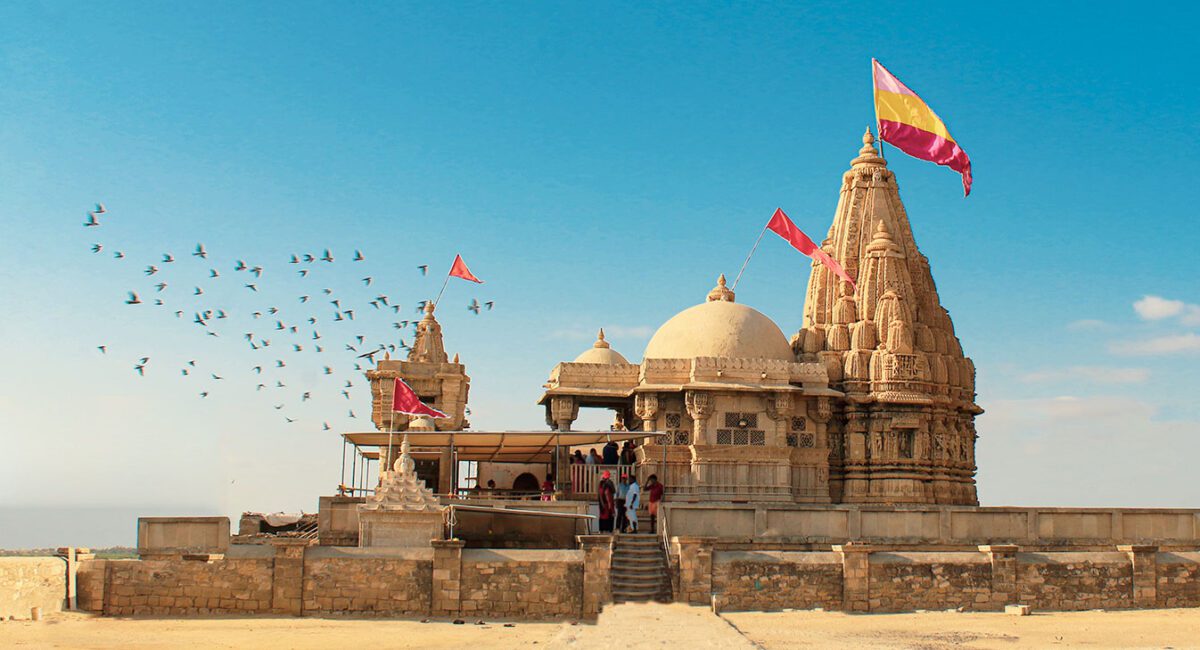
Rukmini Devi Mandir: Complete Guide to Dwarka’s Sacred Temple
Discover the Divine Abode of Lord Krishna’s Beloved Queen
Nestled in the sacred city of Dwarka, Gujarat, the Rukmini Devi Mandir stands as a testament to eternal love, divine devotion, and architectural brilliance. This ancient temple, dedicated to Goddess Rukmini the beloved consort of Lord Krishna attracts thousands of pilgrims and spiritual seekers annually. With its rich mythology, intricate carvings, and profound spiritual significance, the temple offers visitors a unique glimpse into India’s devotional heritage.
Located approximately 2 kilometers from the famous Dwarkadhish Temple, Rukmini Devi Mandir is considered an essential part of the Dwarka pilgrimage. Many devotees believe that the Dwarka yatra remains incomplete without seeking darshan at this sacred shrine, as Rukmini is revered as Dwarkeshwari the Queen of Dwarka and an incarnation of Goddess Lakshmi.
Historical Background and Antiquity
The Rukmini Devi Temple boasts a fascinating history spanning over two millennia. While the temple is believed to be more than 2,500 years old, the current structure dates back to the 12th century CE, making it contemporaneous with the main Dwarkadhish Temple. Historical evidence suggests that the temple has undergone multiple reconstructions throughout the centuries, with the present form representing the architectural style prevalent during medieval Gujarat.
The temple’s location outside Dwarka’s main city limits indicates it was originally situated in a more secluded, possibly forested area. This deliberate positioning away from the primary Krishna temple is intrinsically linked to the temple’s legendary backstory, adding layers of spiritual and mythological significance to its geographical placement.
The Captivating Legend of Sage Durvasa’s Curse
The most popular legend explaining the temple’s separation from Dwarkadhish Temple revolves around Sage Durvasa, renowned throughout Hindu mythology for his short temper and powerful curses. According to this ancient tale, Lord Krishna and Rukmini invited the sage to dine with them at their palace in Dwarka. The sage accepted their invitation but imposed an unusual condition: instead of horses or bulls, Krishna and Rukmini themselves would have to pull his chariot to Dwarka.
During the arduous journey, Rukmini became extremely thirsty under the scorching sun. Seeing his beloved wife’s distress, Lord Krishna struck the ground with his toe, causing the sacred River Ganges to spring forth from the earth. In her parched state, Rukmini immediately drank the holy water to quench her thirst. However, in her eagerness, she forgot to first offer water to Sage Durvasa, who was traveling with them.
This perceived breach of etiquette deeply offended the temperamental sage, who considered it a grave insult. In his anger, Durvasa cursed Rukmini to live separately from Lord Krishna. Some versions of the legend specify that they would be separated for twelve years, during which Rukmini would have to perform penance and meditation to overcome the curse. Additionally, the sage cursed the land of Dwarka to remain barren and devoid of sweet drinking water.
This mythological narrative explains why the Rukmini Temple stands apart from the Dwarkadhish Temple and why the Dwarka region lacks vegetation and freshwater sources, bearing only salty water even today. The curse’s lingering effect is commemorated through the temple’s unique ‘jal daan’ tradition, where devotees donate drinking water as a sacred offering.
Architectural Excellence: Nagara Style at Its Finest
The Rukmini Devi Temple exemplifies the Nagara architectural style, characterized by its tall, vertical shikhara (spire) that reaches toward the heavens. While more modest in scale compared to the grand Dwarkadhish Temple, it captivates visitors with its exquisite craftsmanship and intricate detailing.
Key Architectural Features:
- Exterior Carvings: The temple’s outer walls are adorned with elaborate sculptures depicting various Hindu deities, celestial beings, mythological scenes, and intricate geometric patterns. These carvings showcase the exceptional skill of medieval artisans.
- Base Panels: The platform foundation features beautifully carved naratharas (human figures) and gajatharas (elephants) in detailed relief panels, demonstrating the comprehensive sculptural program of the temple.
- Mandapa Design: The temple features a domed mandapa (pillared hall) with square latticed windows an unusual characteristic for Nagara-style architecture that adds unique aesthetic appeal and allows natural light to filter through.
- Sanctum Sanctorum: The inner sanctum houses a stunning marble idol of Goddess Rukmini depicted with four arms holding the Shankha (conch), Chakra (discus), Gada (mace), and Padma (lotus) symbols representing divine power, protection, strength, and purity. She is honored with the title Raj Rajeshwari (Queen of Queens).
Temple Timings and Visitor Information
Planning your visit to Rukmini Devi Mandir requires awareness of the temple’s operating schedule:
Daily Darshan Timings:
- Morning Session: 6:00 AM to 12:00 PM (Noon)
- Evening Session: 4:00 PM to 9:00 PM / 9:30 PM
The temple follows a mid-day closure pattern common to many Hindu temples, allowing for temple maintenance and deity rest periods. Timings may vary slightly during special festival days, particularly during major celebrations like Janmashtami.
Best Time to Visit:
- Early Morning (6:00-8:00 AM): Offers peaceful darshan with minimal crowds and cooler temperatures
- Late Evening (after 5:00 PM): The heat subsides, and the evening aarti creates a spiritually uplifting atmosphere
- Avoid midday visits (11:00 AM – 3:00 PM): The temple is closed, and Gujarat’s heat can be intense during these hours
Entry Fee and Donation Information
There is NO ENTRY FEE to visit the Rukmini Devi Temple. The temple welcomes all devotees free of charge, maintaining the traditional Hindu temple practice of open access for worship. However, voluntary donations are gratefully accepted and help maintain the temple premises, support daily rituals, and fund community services.
Special puja services and rituals can be arranged through temple authorities for a nominal fee, depending on the type of ceremony requested. Devotees are encouraged to participate in the unique ‘jal daan’ (water donation) tradition, contributing drinking water for temple use and for distribution to pilgrims a practice with deep mythological significance tied to Sage Durvasa’s curse.
Unique Temple Tradition: Jal Daan (Water Offering)
One of the most distinctive aspects of Rukmini Devi Temple is the sacred practice of jal daan (donation of water), which carries profound spiritual significance. Unlike most temples where prasad consists of food items like sweets or fruits, the primary prasad at Rukmini Devi Temple is water pure drinking water that has been offered to the goddess.
This unique tradition directly relates to the legend of Sage Durvasa’s curse, which rendered the Dwarka region barren with no accessible freshwater sources. The surrounding waters remain salty and infertile to this day. Devotees bring fresh drinking water as offerings, contributing according to their means, and this water is then blessed and distributed to visitors as sacred prasad.
When planning your temple visit, remember to bring bottled drinking water to offer to Goddess Rukmini. This act of devotion symbolizes participation in relieving the ancient curse and demonstrates care for fellow pilgrims in this arid region.
Major Festivals and Celebrations
The Rukmini Devi Temple comes alive with vibrant celebrations throughout the year, drawing thousands of devotees during major Hindu festivals:
Key Festival Calendar:
- Janmashtami (August/September): The most significant celebration marking Lord Krishna’s birth. The temple witnesses grand festivities with elaborate decorations, special pujas, devotional singing, and massive crowds of devotees.
- Rukmini Ashtami: A special day dedicated exclusively to Goddess Rukmini, celebrating her divine qualities and her eternal bond with Krishna.
- Rukmini Vivah (Rukmini Haran Ekadashi / Nirjala Ekadashi): Commemorates the divine marriage of Rukmini and Krishna, recreating their legendary elopement story with ceremonial enactments.
- Navratri: Nine nights of worship dedicated to the Divine Feminine, with special reverence for Rukmini as an incarnation of Goddess Lakshmi.
- Holi: The festival of colors celebrated with traditional fervor, marking spring’s arrival and Krishna’s playful pastimes.
- Other celebrations: Tulsi Vivah, Guru Purnima, Ram Navami, Vijayadashami, Makar Sankranti, Vasant Panchami, and Diwali are observed with traditional rituals and devotion.
How to Reach Rukmini Devi Mandir
By Air:
- Nearest Airport: Porbandar Airport (Approximately 105-115 km from Dwarka)
- Alternative: Jamnagar Airport (Approximately 130-137 km from Dwarka)
From either airport, taxis and private vehicles are readily available for hire. The scenic drive through Gujarat’s coastal landscape takes approximately 2-3 hours depending on traffic and road conditions.
By Train:
- Dwarka Railway Station (DWK): Located approximately 4-5 km from Rukmini Temple, well-connected to major cities including Okha, Rajkot, Ahmedabad, Jamnagar, Somnath, Bhavnagar, Vadodara, Surat, and other important destinations across India.
From Dwarka Railway Station, local auto-rickshaws, taxis, and app-based cab services provide convenient transportation to the temple. The journey takes approximately 10-15 minutes.
By Road:
Dwarka boasts excellent road connectivity with major Gujarat cities. The temple is positioned along the Dwarka-Okha Highway, making it easily accessible:
- State Transport Buses: Regular Gujarat State Road Transport Corporation (GSRTC) buses connect Dwarka with Rajkot, Ahmedabad, Jamnagar, Porbandar, Somnath, Bhuj, Gandhidham, Gandhinagar, and other cities.
- Private Vehicles: Well-maintained highways make self-driving a comfortable option for travelers preferring flexibility.
- Local Transport: Within Dwarka, auto-rickshaws and cycle-rickshaws provide economical transportation between the main Dwarkadhish Temple and Rukmini Temple.
Distance from Dwarkadhish Temple:
The temple is situated approximately 2-3 kilometers from the famous Dwarkadhish Temple (Jagat Mandir), making it convenient for pilgrims to visit both sacred sites in a single day. The journey takes about 5-10 minutes by vehicle.
Nearby Attractions and Places of Interest
A visit to Rukmini Devi Mandir can be combined with several other significant spiritual and tourist destinations in the Dwarka region:
- Dwarkadhish Temple (Jagat Mandir): The main Krishna temple and one of the four Char Dham pilgrimage sites, featuring magnificent architecture and daily rituals.
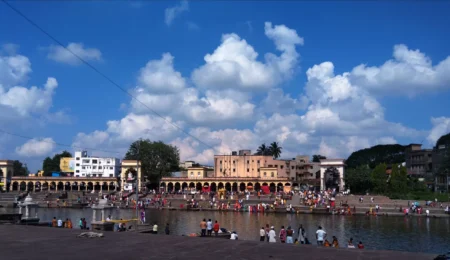
- Gomti Ghat: Sacred riverfront steps along the Gomti River where devotees perform religious ceremonies and take holy dips. The ghat offers peaceful views and houses smaller shrines.
- Bet Dwarka (Beyt Dwarka): An island believed to be Lord Krishna’s original residence, accessible by boat from Okha port, approximately 30 km from Dwarka.
- Nageshwar Jyotirlinga Temple: One of the twelve sacred Jyotirlingas of Lord Shiva, located about 17 km from Dwarka on the route to Bet Dwarka.
- Bhadkeshwar Mahadev Temple: A scenic temple dedicated to Lord Shiva, perched on a small rocky outcrop jutting into the Arabian Sea.
- Sudama Setu Bridge: A pedestrian bridge over the Gomti River offering panoramic views of the sea and surrounding landscape, named after Lord Krishna’s childhood friend.
- Gopi Talav: A sacred lake associated with Krishna’s divine pastimes with the gopis (cowherd maidens).
- Dwarka Beach and Shivrajpur Beach: Pristine coastal stretches perfect for relaxation, sunset viewing, and experiencing Gujarat’s Arabian Sea coastline. Shivrajpur holds India’s prestigious Blue Flag certification.
- Dwarka Lighthouse: Offers panoramic views of the city and coastline, especially beautiful during sunset.
- ISKCON Temple Dwarka and Shri Swaminarayan Mandir: Modern temples showcasing contemporary Hindu architecture and devotional practices.
Essential Visitor Guidelines and Etiquette
Dress Code:
While the Rukmini Temple doesn’t enforce a strict dress code, modest and respectful attire is strongly recommended as a mark of reverence:
- For Men: Traditional dhoti-kurta, pajama with upper garment, or formal trousers and shirts with covered shoulders
- For Women: Sarees, salwar kameez, churidars, or any traditional Indian attire that covers upper arms and legs
- Avoid: Mini-skirts, shorts, sleeveless tops, revealing clothing, and overly modern attire
Photography Rules:
- Exterior Photography: Generally permitted in the temple courtyard and outer areas
- Sanctum Sanctorum: Photography is strictly prohibited inside the main prayer hall and sanctum. Always look for signage and respect temple authorities’ instructions.
General Temple Etiquette:
- Remove footwear before entering the temple premises; designated shoe-keeping facilities are available
- Maintain silence and peaceful demeanor inside the temple
- Follow the queue system during peak hours and festivals
- Refrain from touching sculptures or temple artifacts
- Non-Hindus are generally welcome to visit, demonstrating the temple’s inclusive spiritual approach
- Carry drinking water bottles, sunscreen, and sunglasses for protection against Gujarat’s intense sun
Best Time to Visit Dwarka and Rukmini Temple
Seasonal Weather Guide:
- Winter (October to February): IDEAL TIME – Pleasant temperatures ranging from 15°C to 25°C, comfortable for sightseeing and temple visits. Clear skies and mild weather make this peak pilgrimage season.
- Summer (March to June): Hot and dry with temperatures soaring between 30°C to 40°C. Early morning and late evening visits recommended. Carry lightweight, breathable clothing, sunglasses, and high-SPF sunscreen.
- Monsoon (July to September): Moderate to heavy rainfall with high humidity. Temperatures range from 25°C to 30°C. Bring quick-drying clothes, umbrellas, and rain gear. The landscape becomes greener, though travel may be affected by weather.
Special Note: If you wish to experience the grand Janmashtami celebrations (August/September), book accommodations well in advance as the city experiences massive tourist influx during this period.
Recommended Visit Duration
- Quick Darshan: 30-45 minutes for basic temple visit and prayers
- Standard Visit: 1-1.5 hours including darshan, courtyard exploration, and architectural appreciation
- Comprehensive Experience: 1.5-2.5 hours for leisurely temple visit, meditation, detailed observation of carvings, and spiritual contemplation
- Complete Dwarka Pilgrimage: 1-2 days to cover Rukmini Temple, Dwarkadhish Temple, Bet Dwarka, Nageshwar Jyotirlinga, and other significant sites
Accommodation Options Near Rukmini Temple
Dwarka offers a wide range of accommodation options to suit various budgets and preferences:
- Budget Hotels and Guest Houses: Starting from ₹500-1,500 per night, offering basic amenities near temple areas
- Mid-Range Hotels: ₹2,000-5,000 per night with comfortable rooms, air conditioning, and dining facilities
- Premium Hotels and Resorts: ₹5,000-10,000+ per night featuring luxury amenities, sea views, swimming pools, and multi-cuisine restaurants
- Dharamshalas: Charitable pilgrim accommodations offering simple, clean rooms at minimal costs for devotees
- Temple Trust Accommodations: Some temple authorities provide basic lodging facilities for pilgrims
Booking Tip: Reserve accommodations at least 2-4 weeks in advance during peak seasons (October-February) and several months ahead for Janmashtami celebrations.
Spiritual Significance and Religious Importance
The Rukmini Devi Temple holds immense spiritual importance in Hindu philosophy and Vaishnava tradition. Rukmini, as Lord Krishna’s principal queen and beloved consort, represents the earthly dimension of divine love, complementing Radha who symbolizes spiritual, transcendental devotion.
Theological Significance:
- Incarnation of Lakshmi: Rukmini is revered as an incarnation of Goddess Lakshmi (Mahalakshmi) during the Dvapara Yuga, representing prosperity, fortune, and devotional excellence.
- Queen of Dwarka (Dwarkeshwari): As Krishna’s chief queen and the ruler’s consort in his earthly kingdom, she embodies royal dignity, dharmic conduct, and unwavering devotion.
- Complete Pilgrimage: Traditional belief holds that the Dwarka pilgrimage remains incomplete without seeking darshan at Rukmini Temple, emphasizing her integral role in Krishna worship.
- Devotional Blessings: Devotees visit seeking blessings for marital harmony, prosperity, spiritual growth, and material-spiritual balance in life.
The Story of Rukmini and Krishna: A Divine Romance
According to Hindu scriptures, particularly the Bhagavata Purana, Rukmini was the daughter of King Bhishmaka of Vidarbha. She possessed extraordinary beauty, intelligence, and spiritual wisdom. Despite her father’s approval, her brother Rukmi vehemently opposed her marriage to Krishna and instead arranged her betrothal to Shishupala, a powerful but wicked king who was Krishna’s enemy.
Rukmini, deeply devoted to Krishna and having heard of his divine qualities, secretly sent a message to him through a trusted brahmin, requesting that he come to Vidarbha and rescue her from the unwanted marriage. In her letter often celebrated as history’s first love letter she expressed her pure devotion and desire to marry only him.
Krishna, moved by her devotion and determination, arrived in Vidarbha on the wedding day. According to the plan, Rukmini would visit the temple of Goddess Parvati before the marriage ceremony. As she emerged from the temple, Krishna swept her onto his chariot and eloped with her, defeating the pursuing armies led by her brother Rukmi and other kings.
The divine couple was married at Madhavpur Ghed in Gujarat, which is celebrated annually during the Madhavpur Mela festival. This romantic tale of devotion, courage, and divine intervention remains one of Hinduism’s most beloved narratives, symbolizing the soul’s quest for union with the Supreme.
Practical Travel Tips for First-Time Visitors
- Language: Gujarati is the primary language, but Hindi and English are widely understood in tourist areas and temples.
- Currency: Indian Rupee (INR). ATMs are available in Dwarka city; carry sufficient cash for donations and small purchases.
- Local Cuisine: Gujarat is famous for vegetarian cuisine. Try local specialties like dhokla, thepla, fafda, Gujarati thali, and various sweets.
- Health Precautions: Stay hydrated in the hot climate, use sunscreen, and consume bottled or purified water only.
- Guided Tours: Consider hiring licensed tour guides who can provide detailed historical and mythological context about the temple.
- Mobile Connectivity: Major Indian telecom networks (Jio, Airtel, Vodafone-Idea) offer good coverage in Dwarka.
- Safety: Dwarka is generally safe for tourists. However, exercise standard precautions regarding belongings and avoid isolated areas after dark.
- Prasad and Offerings: Simple offerings like flowers, coconuts, and incense are available from shops near the temple entrance.
- Parking: Ample parking space is available near the temple for private vehicles and tour buses.
Frequently Asked Questions (FAQs)
Q1: Why is Rukmini Temple located away from Dwarkadhish Temple?
According to legend, Sage Durvasa cursed Rukmini to live separately from Krishna due to a perceived slight during their journey to Dwarka, explaining the geographical separation between their temples.
Q2: Is there an entry fee for Rukmini Devi Temple?
No, there is no entry fee. The temple welcomes all visitors free of charge, though voluntary donations are accepted.
Q3: What is the significance of water (jal daan) at this temple?
Water donation is a unique tradition linked to Sage Durvasa’s curse that made the Dwarka region water-scarce. Devotees offer drinking water to the goddess, which is then blessed and distributed as prasad.
Q4: Can non-Hindus visit Rukmini Devi Temple?
Yes, the temple generally welcomes visitors of all faiths who approach with respect and follow the temple’s guidelines and dress code.
Q5: What is the best time of day to visit?
Early morning (6:00-8:00 AM) offers peaceful darshan with fewer crowds. Late evening (after 5:00 PM) provides a cooler, spiritually uplifting atmosphere with evening aarti.
Q6: How far is Rukmini Temple from Dwarkadhish Temple?
Approximately 2-3 kilometers, easily reachable by auto-rickshaw, taxi, or local transport within 5-10 minutes.
Q7: Are photography and videography allowed?
Photography is generally allowed in exterior areas and the courtyard but strictly prohibited inside the main sanctum sanctorum. Always respect signage and instructions.
Q8: What should I wear when visiting the temple?
Modest, conservative clothing covering shoulders and legs is recommended. Traditional Indian attire is ideal. Avoid shorts, mini-skirts, and sleeveless tops.
Q9: Is the Dwarka pilgrimage complete without visiting Rukmini Temple?
According to traditional belief, no. Devotees consider darshan of Rukmini Maharani essential to completing the Dwarka pilgrimage, as she is revered as the city’s spiritual queen.
Q10: What are the major festivals celebrated at the temple?
Janmashtami, Rukmini Ashtami, Rukmini Vivah, Navratri, Holi, and other major Hindu festivals are celebrated with special pujas, decorations, and devotional activities.
Conclusion: A Journey of Faith and Heritage
The Rukmini Devi Mandir stands as a magnificent testament to India’s rich spiritual heritage, architectural excellence, and timeless devotional traditions. Beyond its religious significance, the temple offers visitors an opportunity to connect with ancient mythology, witness exquisite medieval craftsmanship, and experience the profound peace that permeates this sacred space.
Whether you are a devout pilgrim seeking spiritual blessings, a history enthusiast fascinated by ancient architecture, or a curious traveler exploring India’s cultural treasures, the Rukmini Devi Temple promises an enriching and memorable experience. The temple’s unique traditions, captivating legends, and serene atmosphere create an environment conducive to both worship and contemplation.
As you plan your visit to this divine abode, remember that you’re not just visiting a historical monument you’re stepping into a living tradition that has inspired devotion for centuries. The temple continues to serve as a beacon of faith, drawing seekers from across the globe to experience the eternal love story of Rukmini and Krishna.
May your journey to Rukmini Devi Mandir be filled with spiritual fulfillment, cultural discovery, and divine grace. Jai Shri Krishna! Jai Rukmini Maharani!
Leave a Comment