
The Divine Protection: 10 Must-Visit Lakshmi Narasimha Temples in 2026
10 Must-Visit Lakshmi Narasimha Temples in 2026
By Kirtankar Team | Pilgrimage & Heritage Guide
In the vast tapestry of Indian spirituality, few avatars invoke as much awe as Lord Narasimha the half-man, half-lion incarnation of Vishnu. He is the embodiment of Ugra (ferocity) against evil and Saumya (gentleness) towards his devotees. For the Varkari and Bhakti traditions, Narasimha represents the ultimate promise: that God will break through pillars of stone to protect his true Bhakta.
As we step into 2026, a year astrologically significant for spiritual renewal, pilgrimage tourism in South India is witnessing a golden era of renovation and accessibility. From the deep forests of the Nallamala hills to the renovated grandeur of Yadadri, here are the 10 most powerful Lakshmi Narasimha temples you must visit this year.
1. Ahobilam, Andhra Pradesh: The Birthplace of Fury
“Where the Pillar Split Open”
Ahobilam is not just a temple; it is the very coordinate on earth where Lord Narasimha is believed to have emerged from the pillar to slay Hiranyakashipu. Nestled in the Nallamala forests, it is unique because it houses nine forms (Nava Narasimha) of the Lord within a 5km radius.
- The Sacred Legend: The mountains here are said to be the physical manifestation of Adisesha (the divine serpent). The most potent spot is the Ugra Stambha, a massive rock cleft on the mountain peak believed to be the actual pillar from which the Lord emerged.
- Architectural Spotlight: Ahobilam is a mix of natural cave shrines and Vijayanagara-style mandapas. The Upper Ahobilam temple features intricate carvings from the 14th century, while the Lower Ahobilam temple boasts a massive gopuram and spacious courtyards.
- 2026 Travel Logistics:
- Best Time to Visit: February to March 2026 (especially during the Brahmotsavam). Avoid the monsoon (July-Sept) as trekking paths become slippery.
- Getting There: The nearest railway station is Kondapuram (10 km) or Nandyal (65 km). Most pilgrims hire a cab from Hyderabad (approx. 350 km).
- Pro-Tip: For the devout: Hire a local guide for the “Jwala Narasimha” trek; it is steep but spiritually electrifying. For photographers: Capture the waterfall near the Malola shrine in the early morning light.
2. Yadadri (Yadagirigutta), Telangana: The Golden Abode
“The Tirupati of Telangana”
Once a humble cave shrine, Yadadri has been transformed into a massive architectural marvel entirely made of Krishnashila (black granite), a feat unseen in the last century.
- The Sacred Legend: Sage Yadarishi, son of Rishyasringa, performed penance inside a cave here. Pleased, the Lord appeared in five forms: Jwala, Yogananda, Gandabherunda, Ugra, and Lakshmi Narasimha. These forms are still worshiped inside the natural cave sanctum.
- Architectural Spotlight: The new renovations are a masterpiece of the Kakatiya and Dravidian fusion styles. The Vimana Gopuram is gold-plated, and the outer walls feature 12 Alwars carved with intense precision. It is the only temple in modern India built without using cement, relying on lime mortar and interlocking stones.
- 2026 Travel Logistics:
- Best Time to Visit: October to March. The temple is crowd-controlled, so weekdays are best.
- Getting There: It is extremely accessible just 60 km from Hyderabad. You can take the MMTS train to Raigiri station or a direct bus.
- Pro-Tip: Don’t miss the “Mirror Hall” (Addala Mandapam). The reflection of the Lord here is mesmerizing and makes for a unique darshan experience.
3. Simhachalam, Andhra Pradesh: The Sandalwood Lord
“The Deity Hidden in Sandalwood”
Perched 800 meters above sea level near Visakhapatnam, this temple is famous for its deity, Varaha Narasimha, who combines the boar and lion avatars.
- The Sacred Legend: To cool the Lord’s “Ugra” (fiery) temper, the idol is covered in a thick layer of sandalwood paste (Chandanam) year-round. He resembles a Shiva Lingam more than a statue. The true form (Nijaroopa) is revealed for only 12 hours a year on Akshaya Tritiya.
- Architectural Spotlight: This is an architectural hybrid, blending Odia (Kalinga) style with Dravidian (Chola) influences. The 96-pillared Natya Mandapam features distinct carvings that differ from standard South Indian temples.
- 2026 Travel Logistics:
- Best Time to Visit: If you can brave the crowds, Akshaya Tritiya (May 2026) is the only time to see the Lord’s actual form. Otherwise, Nov-Feb is pleasant.
- Getting There: Just 20 km from Visakhapatnam Airport/Railway Station.
- Pro-Tip: The “Kappa Stambham” (Frog Pillar) in the mukha mandapam is believed to cure infertility. You will see devotees embracing it.
4. Mangalagiri, Andhra Pradesh: The Lord Who Drinks
“The Panakam Miracle”
Mangalagiri means “The Auspicious Hill.” It is one of the eight Mahakshetras (sacred sites) of Vishnu in India.
- The Sacred Legend: The Lord here is known as Panakala Narasimha. He resides in a cave on the hill and has a unique “diet”—he drinks Panakam (a jaggery and pepper drink). When priests pour the drink into the idol’s mouth, a distinct gurgling sound is heard. He drinks exactly half, and the rest is returned as prasadam. Remarkably, despite gallons of jaggery water, not a single ant is found on the hill.
- Architectural Spotlight: The temple at the foot of the hill boasts the highest Gopuram in Andhra Pradesh (11 stories/153 feet), built in the Vijayanagara style.
- 2026 Travel Logistics:
- Best Time to Visit: Early morning (before 12 PM) as the Panakala Swamy temple closes by noon.
- Getting There: Located 12 km from Vijayawada. It is a short auto-rickshaw ride from the city.
- Pro-Tip: Buy the Panakam ticket immediately upon arrival. The taste of the prasadam here is said to have medicinal properties.
5. Vadapally, Telangana: The Breathing Idol
“Where the Lamp Flickers”
Located at the confluence of the Krishna and Musi rivers, Vadapally is famous for a mysterious phenomenon that defies science.
- The Sacred Legend: The idol of Lord Narasimha is believed to be alive and breathing. To prove this, two oil lamps are kept in the sanctum: the one near the Lord’s feet burns steadily, while the one near his face flickers constantly, allegedly due to the Lord’s exhalation.
- Architectural Spotlight: The temple is smaller and more intimate, reflecting the Kakatiya style of the region. The idol itself is carved from red sandalwood (Rakta Chandana).
- 2026 Travel Logistics:
- Best Time to Visit: Saturdays are auspicious but crowded. Try a Friday evening for a peaceful experience.
- Getting There: Situated near Miryalaguda (25 km). The nearest major transport hub is Nalgonda.
- Pro-Tip: Ask the priest to show you the lamps closely during the Aarti. It is a spine-chilling experience for any believer.
6. Antarvedi, Andhra Pradesh: The Sea Confluence
“The Kashi of the South”
This temple stands where the mighty Godavari river meets the Bay of Bengal (Sagara Sangamam).
- The Sacred Legend: It is said that Sage Vasistha established this temple. The Lord here is facing the West (towards the sea), which is rare. Legend says Narasimha threw his weapons into the sea here after killing the demon Raktavilochana, calming the waters.
- Architectural Spotlight: The current structure is a 19th-century restoration with a 5-story Vimana. The temple’s proximity to the lighthouse and the sea gives it a distinct maritime spiritual aura.
- 2026 Travel Logistics:
- Best Time to Visit: February 2026 for the spectacular Kalyanotsavam, where the Lord’s chariot is pulled.
- Getting There: Accessible via Rajahmundry (100 km). You can take a boat ride to the confluence point.
- Pro-Tip: Take a boat to the small island formed at the river mouth. The sunset view from the temple arch is a photographer’s dream.
7. Sholingur, Tamil Nadu: The Yoga Teacher
Known as Ghatikachalam, this hill temple is famous for granting liberation quickly.
- The Sacred Legend: The name “Ghatika” means a duration of 24 minutes. It is believed that if a devotee prays here for just 24 minutes (one Ghatika) with sincere focus, they attain Moksha. The Lord is in a Yoga posture, teaching silence to the sages.
- Architectural Spotlight: This is a classic Dravidian hill temple. You must climb 1,305 steps to reach the main shrine. The hill opposite houses a famous Yoga Anjaneya (Hanuman) temple with four arms.
- 2026 Travel Logistics:
- Best Time to Visit: The Tamil month of Karthigai (Nov-Dec) is vibrant.
- Getting There: Nearest railway station is Arakkonam (30 km).
- Pro-Tip: beware of monkeys! They are aggressive here. Carry a stick (available at the foothills) but do not harm them. For those unable to climb, a ropeway is currently under development—check its status for 2026.
8. Melkote, Karnataka: The Philosopher’s Hill
“The Abode of Ramanujacharya”
Melkote is the spiritual heart of the Sri Vaishnava tradition in Karnataka, famously associated with the philosopher Saint Ramanujacharya.
- The Sacred Legend: The main deity on the hill, Yoga Narasimha, was installed by Prahlada himself. The town below houses the Cheluvanarayana Swamy temple, whose idol was recovered by Ramanujacharya from a Delhi Sultanate princess.
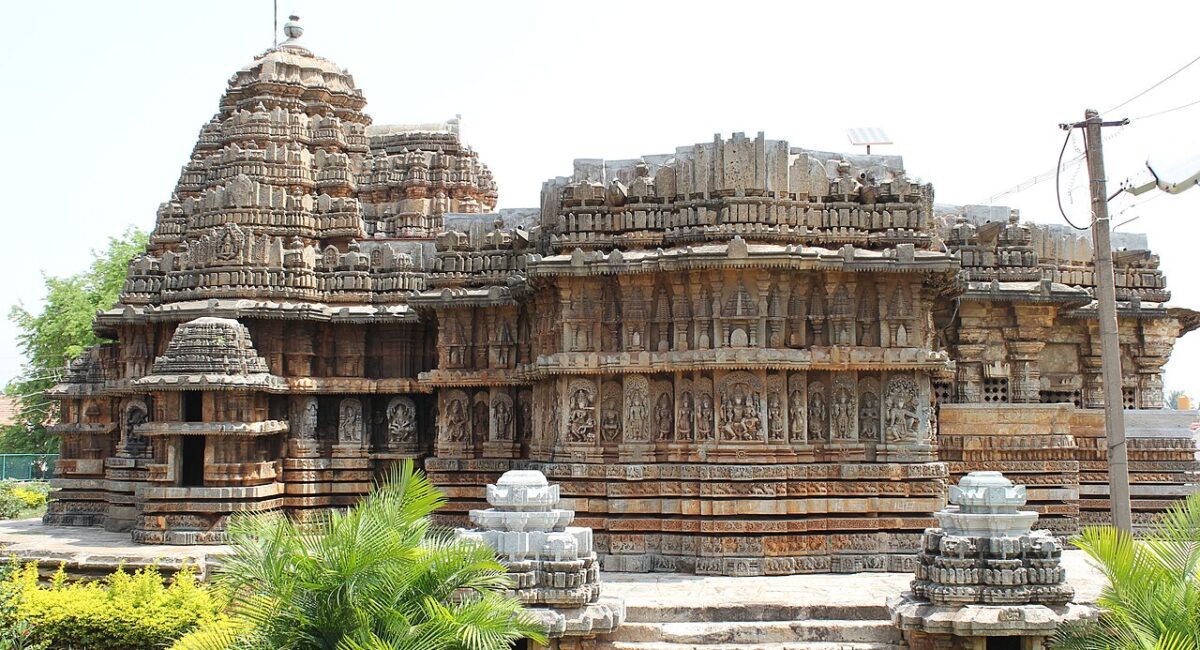
- Architectural Spotlight: A stunning example of Hoysala architecture. The pillar carvings in the unfinished Raya Gopura are iconic. The temple tank, Kalyani, is a geometric masterpiece of stone steps.
- 2026 Travel Logistics:
- Best Time to Visit: February 27, 2026, is the expected date for the famous Vairamudi Utsav (Diamond Crown Festival).
- Getting There: 50 km from Mysuru and 150 km from Bangalore.
- Pro-Tip: Visit the Kalyani tank at sunset. The reflection of the stone pillared corridors in the water is one of the most Instagrammable spots in Karnataka.
9. Mattapalli, Telangana: The Cave Healer
“The Cure for the Incurable”
Deep within the forests on the banks of the Krishna river lies this hidden gem.
- The Sacred Legend: The idol is not carved by human hands; it is Swayambhu (self-manifested) inside a cave. It is believed that those suffering from chronic illnesses or black magic are cured by staying here for 11 days and bathing in the Krishna river.
- Architectural Spotlight: The sanctum is a natural cave. The grandeur here is not in man-made towers but in the raw, primal energy of the rock formations.
- 2026 Travel Logistics:
- Best Time to Visit: January 2026 (Vaikunta Ekadasi).
- Getting There: 25 km from Huzurnagar.
- Pro-Tip: If you plan to perform the traditional Pradakshina (circumambulation), wear comfortable clothes as the cave path is narrow and rocky.
10. Nuggehalli, Karnataka: The Stone Poem
“The Hoysala Masterpiece”
While others are famous for power, Nuggehalli is famous for beauty. It is a hidden art gallery in stone.
- The Sacred Legend: Built by a commander of the Hoysala army, this temple is dedicated to Lakshmi Narasimha but is peaceful (Saumya).
- Architectural Spotlight: This is a Trikuta (three-shrined) temple built in 1246 AD. The outer walls are adorned with 120 intricate panels depicting the Mahabharata and Ramayana. It is considered one of the most ornate examples of Hoysala craftsmanship surviving today.
- 2026 Travel Logistics:
- Best Time to Visit: September to March. It is off the beaten path, so it is rarely crowded.
- Getting There: Located on the Bangalore-Hassan highway, near Channarayapatna.
- Pro-Tip: Bring a zoom lens or binoculars. The jewelry carved on the dancers on the outer walls is so detailed you can count the beads.
Quick Comparison: Plan Your 2026 Yatra
| Temple Name | State | Primary Architecture Style | Best For… |
| Ahobilam | AP | Vijayanagara / Natural Cave | Trekking & Adventure |
| Yadadri | TG | Kakatiya-Dravidian Fusion | Grandeur & Facilities |
| Simhachalam | AP | Kalinga / Odia | Rare Rituals (Sandalwood) |
| Mangalagiri | AP | Vijayanagara (Gopuram) | The Panakam Miracle |
| Vadapally | TG | Kakatiya | Mystical Experiences |
| Antarvedi | AP | Dravidian | Beach & Spirituality |
| Sholingur | TN | Dravidian Hill Architecture | Meditation (Yoga) |
| Melkote | KA | Hoysala | History & Photography |
| Mattapalli | TG | Cave Shrine | Healing & Solitude |
| Nuggehalli | KA | Classic Hoysala | Art & Sculpture Lovers |
Conclusion
Whether you are a Varkari seeking the grace of God in his most protective form, or a traveler chasing the echoes of ancient chisels, these ten temples offer a journey like no other. In 2026, let the roar of Narasimha destroy your obstacles and the grace of Lakshmi bring you peace.
“Ugram Veeram Maha Vishnum, Jwalantam Sarvato Mukham…”
May your pilgrimage be blessed.
Leave a Comment