


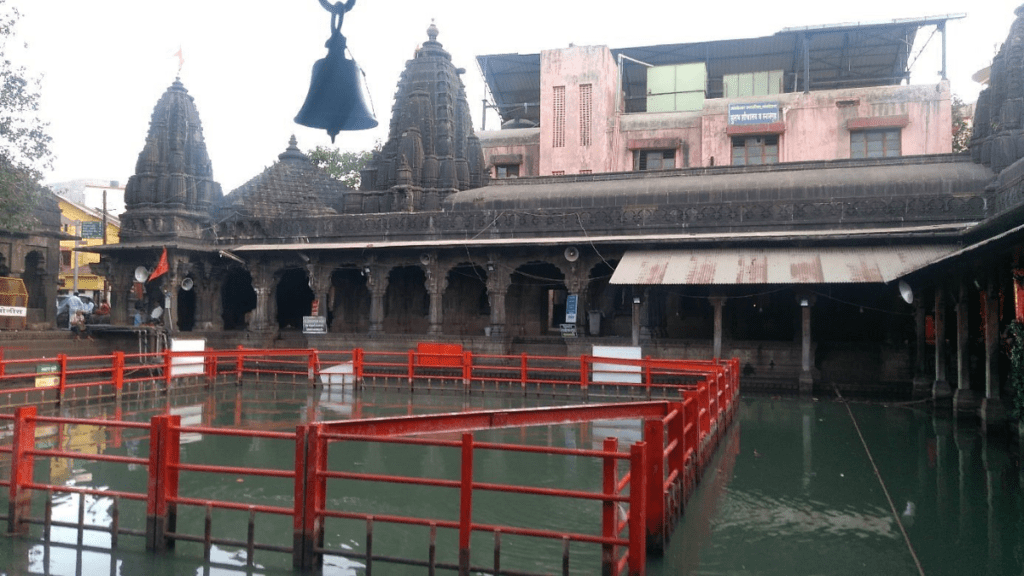


Standing at Kushavarta Kund in Trimbakeshwar feels different. This isn’t just another temple pond you’d find across India. This small, ancient water tank marks the exact spot where the Godavari River – India’s second-longest river and the lifeline of millions – begins its 1,465-kilometer journey to the Bay of Bengal.
Located about 30 kilometers from Nashik in Maharashtra, Kushavarta Kund isn’t your typical tourist spot. It’s where mythology meets geography, where the spiritual and physical origins of the Dakshin Ganga (Southern Ganges) converge.
What is Kushavarta? Understanding the Sacred Source
Kushavarta Kund is a rectangular sacred water tank situated in Trimbakeshwar, near the famous Trimbakeshwar Jyotirlinga Temple. Built in 1750 on permeable rock with natural aquifers, this 21-feet deep kund is considered the symbolic origin point of the Godavari River.
The name “Kushavarta” comes from two Sanskrit words: “Kusha” (sacred grass) and “Avarta” (whirlpool or deep pool). According to Hindu scriptures, this is where Lord Shiva released the Ganges from his matted hair at the request of Sage Gautama.
The Godavari’s Journey from Kushavarta
While the Godavari River technically originates from the Brahmagiri Hills of the Western Ghats, Kushavarta is where the water resurfaces after disappearing from the mountain. From this humble 15-20 feet rectangular tank, the river flows eastward across Maharashtra, Telangana, Andhra Pradesh, Chhattisgarh, and Odisha before emptying into the Bay of Bengal.
The river’s total basin covers 312,812 square kilometers – nearly 10% of India’s total geographical area, making it one of the most important water sources in peninsular India.
The Mythological Story Behind Kushavarta
The origin story of Kushavarta is deeply woven into Hindu mythology and gives the place its sacred status.
Sage Gautama and the Divine Blessing
Thousands of years ago, Sage Gautama lived on these hills with his wife Ahilya. When a severe 12-year drought struck the region, everyone suffered except Gautama’s ashram. Lord Varuna had blessed him with an inexhaustible supply of water and food.
Other sages grew envious. Through trickery, they managed to implicate Gautama in the sin of killing a cow – one of the gravest sins in Hindu tradition. Devastated, Gautama prayed intensely to Lord Shiva for redemption.
Moved by his devotion, Shiva appeared and commanded Ganga to descend from his matted locks. But instead of Ganga, the water took the form of Godavari – equally powerful in washing away sins. The water flowed into a sacred pool that Gautama had prepared with kusha grass, creating what we now know as Kushavarta Kund.
This is why Godavari is often called “Dakshin Ganga” (Southern Ganges) and is revered across India as one of the seven sacred rivers.
Kushavarta Kund: Architecture and Layout
The kund itself is modest compared to the grandeur of nearby Trimbakeshwar Temple. It’s a rectangular stone tank with six corners (giving it the alternate name “Teerthraj”) and cement pavements added by Shreemant Rao Sahib Parnekar.
Temples Surrounding the Kund
At each corner of Kushavarta stands a small temple:
- Southeast corner: Kedareshwar Mahadev Temple, where Lord Shiva (disguised as Kedarbatta) helped Gautama perform his penance
- Southwest corner: Sakshi Vinayak Temple, with Ganesha as the eternal witness to all devotees
- Northeast corner: Godavari Mata Temple, dedicated to the river goddess herself
- Northwest corner: Kusheshwar Mahadev Temple
You’ll also find the Ganga Mandir, Jwareshwar Mahadev, Kancheshwar Temple, and statues of 30 deities including the Dashavatara (ten incarnations of Vishnu) around the premises.
The Sacred Water Source
The water in Kushavarta Kund comes from natural underground aquifers connected to the Brahmagiri mountain springs. What makes it fascinating is that while you can see water entering the kund, nobody knows exactly where it leaves to form the river – adding to its mystical reputation.
Trimbakeshwar Temple and Kushavarta: The Sacred Connection
Kushavarta is located just 400 meters behind the main Trimbakeshwar Jyotirlinga Temple, one of the twelve most sacred Shiva temples in India. The two sites are spiritually inseparable.
The Trimbakeshwar Jyotirlinga is unique because it has three faces representing Brahma, Vishnu, and Shiva – the Hindu trinity. The entire temple is built with black stone in the traditional Hemadpanthi architectural style, and it’s covered by a jeweled crown believed to date back to the Pandava era.
Most pilgrims visit both locations on the same day, taking a holy dip in Kushavarta before entering the main temple for darshan.
Religious Significance: Why Pilgrims Visit Kushavarta
Taking the Holy Dip (Snan)
Bathing in Kushavarta Kund is considered highly auspicious. Devotees believe that since this is the source point of the Godavari, the water here is at its purest and most sacred. Many perform this ritual before visiting the Trimbakeshwar temple.
According to Hindu beliefs, a dip in Kushavarta can:
- Wash away sins and negative karma
- Provide spiritual purification
- Grant blessings equivalent to bathing in the Ganges
- Bring peace and mental clarity
Rituals for Ancestors (Pitru Tarpan)
Many people come to Kushavarta specifically to perform Pitru Tarpan and Shraddh ceremonies for their deceased ancestors. The belief is that water from the source of Godavari carries these prayers and offerings directly to the ancestors, making the rituals more powerful.
Kumbh Mela at Trimbakeshwar
Every 12 years, Trimbakeshwar hosts the Simhastha Kumbh Mela, one of the four major Kumbh gatherings in India. During this time, Kushavarta transforms from a peaceful pond into a center of intense spiritual activity, with millions of devotees taking the holy dip.
The most recent Kumbh Mela was held in 2015, and the next one is scheduled for 2027.
How to Visit Kushavarta Kund: Complete Travel Guide
Location and How to Reach
Address: Kushavarta Kund is located in Trimbakeshwar town (also spelled Trimbak), Nashik District, Maharashtra – 422212
Distance from Major Cities:
- From Nashik: 30 km (approximately 1 hour drive)
- From Mumbai: 180 km (approximately 4-5 hours)
- From Pune: 200 km (approximately 4 hours)
By Air: The nearest airport is Nashik (Ozar) Airport, located 31 km away. From the airport, you can hire a taxi or take a bus to Trimbakeshwar.
By Train: Nashik Road Railway Station is the closest major railway station, about 35-40 km from Trimbakeshwar. Regular taxis and buses connect the station to Trimbakeshwar.
By Road: Trimbakeshwar is well-connected by road. Maharashtra State Road Transport Corporation (MSRTC) operates regular buses from Nashik, Mumbai, and Pune. Private taxis and cab services are also easily available.
Best Time to Visit Kushavarta
Ideal Months: October to March (winter and post-monsoon)
- The weather is pleasant with temperatures between 15-30°C
- The kund is full with fresh water
- Less crowded on weekdays
Monsoon (July-September): The water level is at its peak, and the surrounding hills are lush green. However, expect larger crowds.
Summer (April-June): Can be quite hot (35-40°C), and water levels may drop. Visit early morning if traveling during summer.
Special Festival Times: During Maha Shivaratri, Shravan month (July-August), and Kumbh Mela, expect massive crowds.
Kushavarta Kund Timings and Entry
Opening Hours: 5:00 AM to 9:00 PM (daily) Entry Fee: No entry fee for Kushavarta Kund Photography: Generally allowed in the kund area (restrictions apply inside the main temple)
What to Wear and Etiquette
- Dress modestly and conservatively
- Remove shoes before entering the kund area
- Men can wear dhoti or comfortable pants with shirt
- Women should wear sarees, salwar kameez, or long skirts
- Maintain silence and respect ongoing rituals
- Follow instructions from temple authorities
Nearby Attractions to Explore
Brahmagiri Hill Trek: The actual source of Godavari is on this hill. It’s a moderately difficult 4-5 hour trek offering spectacular views. The Gangadwar Temple at the hilltop marks where the river first emerges.
Anjaneri Fort: About 20 km away, believed to be the birthplace of Lord Hanuman. Great for trekking enthusiasts.
Neel Parbat: Another spiritually significant hill near Trimbakeshwar.
Coin Museum: A small museum in Trimbakeshwar displaying ancient coins.
Nashik City: Famous for Panchavati area, Sula Vineyards, and Kala Ram Temple.
Current Environmental Concerns
While the mythological Godavari flowed eternally from Shiva’s locks, the real river faces modern challenges. During severe droughts, Kushavarta’s water levels drop significantly. Climate change, deforestation in the Western Ghats, and excessive water extraction have affected the river’s perennial nature.
Local authorities and environmental groups are working on:
- Watershed protection programs in Brahmagiri hills
- Water conservation initiatives
- Improved sewage management to keep the kund clean
- Afforestation projects in the catchment area
Many devotees have expressed concerns about the cleanliness of the kund water in recent years. While the spiritual significance remains unchanged, practical hygiene considerations have led some visitors to perform symbolic rituals rather than full immersion.
Practical Tips for First-Time Visitors
- Visit early morning (6-8 AM) for a more peaceful experience and to avoid crowds
- Combine with Trimbakeshwar temple visit – most people do both on the same day
- Hire a local priest (pandas) if you want to perform specific rituals – negotiate prices beforehand
- Carry towels and change of clothes if planning to take a holy dip
- Respect local customs – this is an active religious site, not a tourist attraction
- Book accommodation in advance during festival seasons
- Keep valuables secure – use locker facilities if available at your hotel
- Try local Maharashtrian food in Trimbakeshwar town
- Stay hydrated – carry water bottles, especially in summer
- Photography inside the main temple is prohibited – respect this rule
Accommodation Options Near Kushavarta
Trimbakeshwar has several accommodation options ranging from budget dharamshalas to decent hotels:
- Dharamshalas and Ashrams: Budget-friendly (₹200-500 per night)
- Budget Hotels: Basic amenities (₹800-1,500 per night)
- Mid-range Hotels: Comfortable stay (₹2,000-4,000 per night)
- Premium Options: Better facilities in Nashik city
Most visitors prefer staying in Nashik and making a day trip to Trimbakeshwar.
Kushavarta and Godavari: The Larger Meaning
Kushavarta represents more than just a geographical point. It symbolizes beginnings, purity, and the power of devotion. The story of how Sage Gautama’s prayers brought Godavari to earth resonates with millions who believe in the redemptive power of faith.
The river that starts from this modest pool eventually becomes the Dakshin Ganga – supporting agriculture across 312,812 square kilometers, providing drinking water to millions, generating hydroelectric power, and serving as a cultural and spiritual anchor for countless communities.
Standing at Kushavarta, you’re at the origin of all this. It’s a reminder that great journeys begin from humble sources, and that the sacred often resides in the simple.
Whether you’re a devotee seeking spiritual purification, a traveler exploring Maharashtra’s heritage, or someone fascinated by the confluence of mythology and geography, Kushavarta Kund offers a unique experience. It’s where ancient stories flow into modern rivers, where faith meets landscape, and where millions find their connection to the divine.
Frequently Asked Questions (FAQs)
Q: What is the origin of Godavari River?
The Godavari River originates from Brahmagiri Hill in the Western Ghats near Trimbakeshwar, Nashik district, Maharashtra. The water resurfaces at Kushavarta Kund, which is considddddddd’/ddered the symbolic origin point.
Q: Is Kushavarta Kund the same as Trimbakeshwar Temple?
No, they are two separate but nearby locations. Kushavarta Kund is located about 400-500 meters behind the main Trimbakeshwar Jyotirlinga Temple. Most pilgrims visit both during the same trip.
Q: Can I take a bath in Kushavarta Kund?
Yes, devotees are allowed to take holy dips in Kushavarta Kund. However, concerns about water quality have led some visitors to perform symbolic rituals instead. It’s advisable to assess the water condition when you visit.
Q: What is the best time to visit Kushavarta?
The best time to visit is between October and March when the weather is pleasant. Early morning visits (6-8 AM) offer a more peaceful experience with fewer crowds.
Q: Is there an entry fee for Kushavarta Kund?
No, there is no entry fee to visit Kushavarta Kund. The site is open to all visitors from 5:00 AM to 9:00 PM daily.
Q: How far is Kushavarta from Nashik?
Kushavarta Kund is approximately 30 kilometers from Nashik city, taking about 1 hour by road.
Q: Can non-Hindus visit Kushavarta Kund?
Yes, Kushavarta Kund is generally open to visitors of all faiths. However, the main Trimbakeshwar temple has restrictions for non-Hindus in certain inner sanctums.
Q: What rituals can be performed at Kushavarta?
Common rituals include holy bath (snan), Pitru Tarpan (offerings to ancestors), Shraddh ceremonies, and various pujas. Local priests (pandas) are available to help perform these rituals.
Q: Is Kushavarta Kund safe to visit alone?
Yes, Kushavarta is generally safe for solo visitors. However, it’s advisable to visit during daylight hours and be cautious with your belongings, especially during crowded festival days.
Q: What is the significance of taking a dip in Kushavarta?
According to Hindu beliefs, bathing in Kushavarta purifies one from sins, provides spiritual blessings, and is considered as sacred as bathing in the Ganges itself.
Have you visited Kushavarta Kund or the Godavari River? Share your experiences in the comments below. What was the most memorable part of your pilgrimage to this sacred source?
Also Read:
12 Jyotirlingas in India
10 Unique Things about the Trimbakeshwar Temple