

Nestled in the scenic town of Trimbak, Maharashtra, the Trimbakeshwar Temple stands as a majestic testament to India’s rich spiritual and historical heritage. Dedicated to Lord Shiva, this ancient sanctuary holds profound reverence for Hindus worldwide. Beyond its role as a pivotal pilgrimage site, the temple captivates visitors with its breathtaking architecture and a palpable, mystical atmosphere that transcends time.
1. Trimbakeshwar Temple’s Unique Location

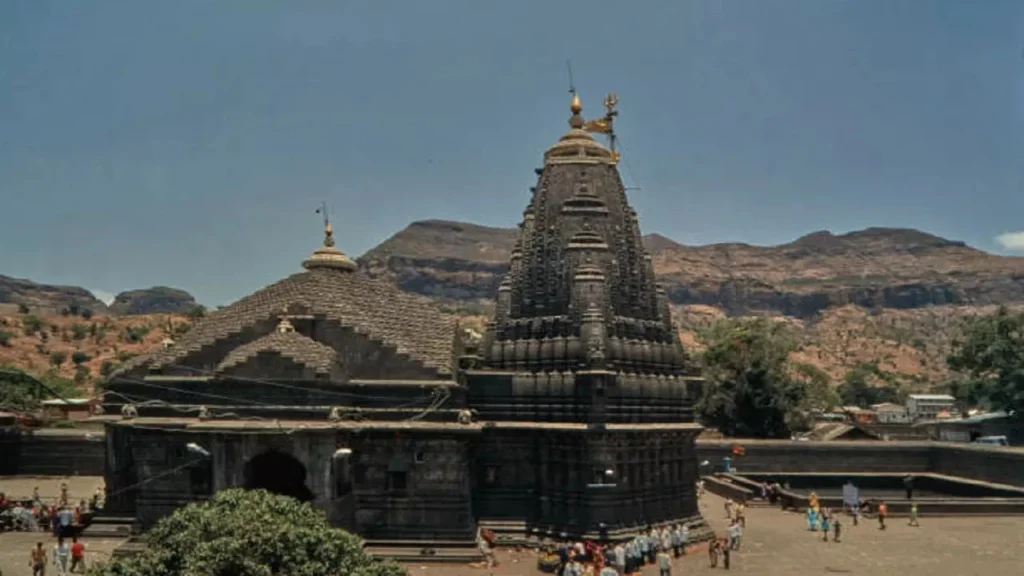
Resting at the base of the majestic Brahmagiri mountain, Trimbakeshwar Temple is steeped in profound symbolism. The mountain itself is believed to represent the sacred Triveni Sangam—the spiritual confluence of three holy waters: the river Godavari, the river Saraswati, and the mystical, invisible river known as “Kushavarta.”
2. Jyotirlinga – The Essence of Trimbakeshwar
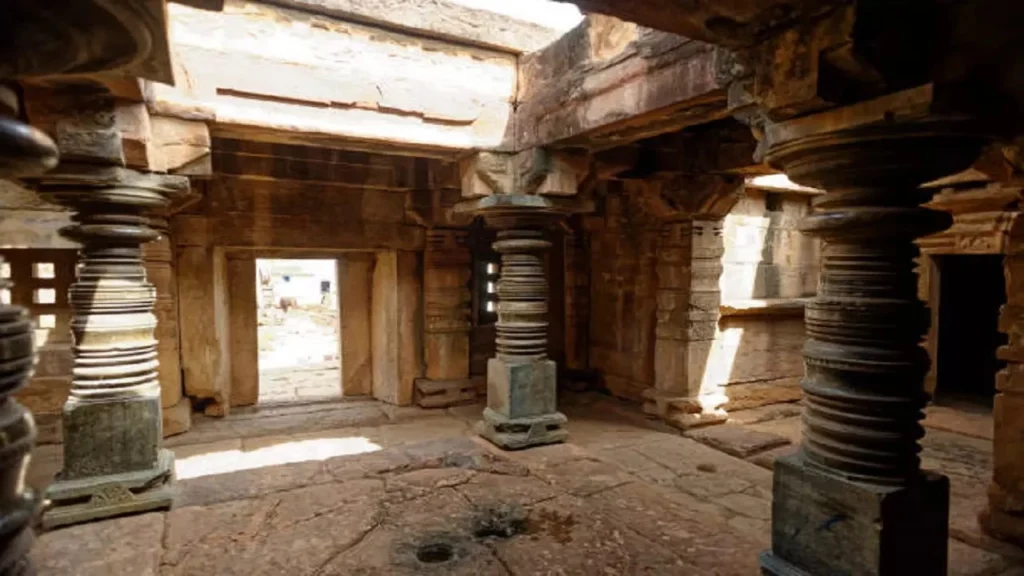
The temple enshrines one of the twelve prominent Jyotirlingas, revered as the supreme and sacred abodes of Lord Shiva. Uniquely, the Trimbakeshwar Jyotirlinga serves as a manifestation of the deity’s formless and eternal power, symbolizing the infinite nature of the divine.
3. The Enigmatic “Nandi Statue”
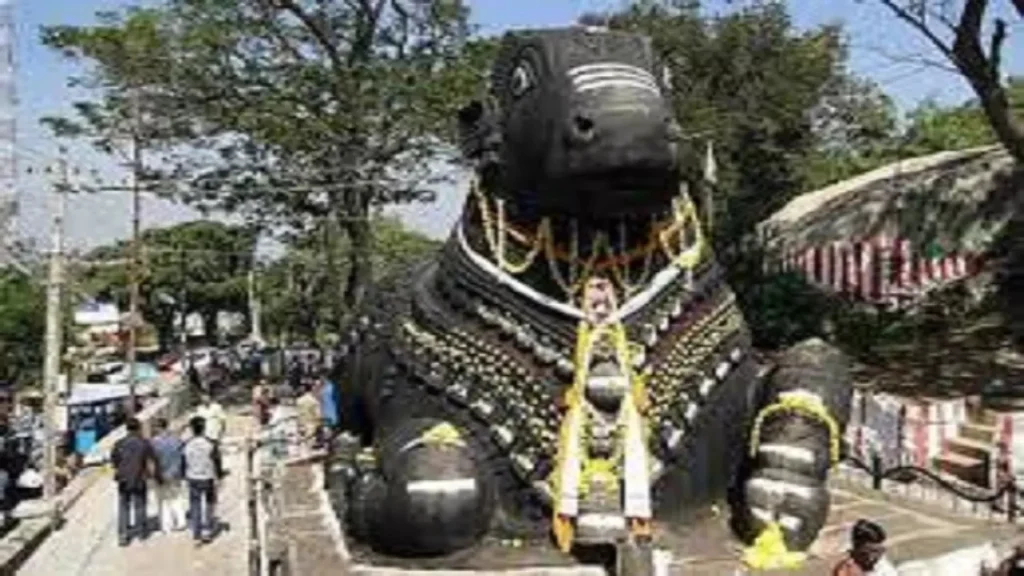
Guarding the temple entrance is a striking statue of Nandi, the sacred bull, masterfully carved from black stone. With its gaze fixed eternally upon the Jyotirlinga, the statue stands as a powerful symbol of unwavering focus, believed to be perpetually offering its devotion to Lord Shiva.
4. A Unique Linga with Three Faces
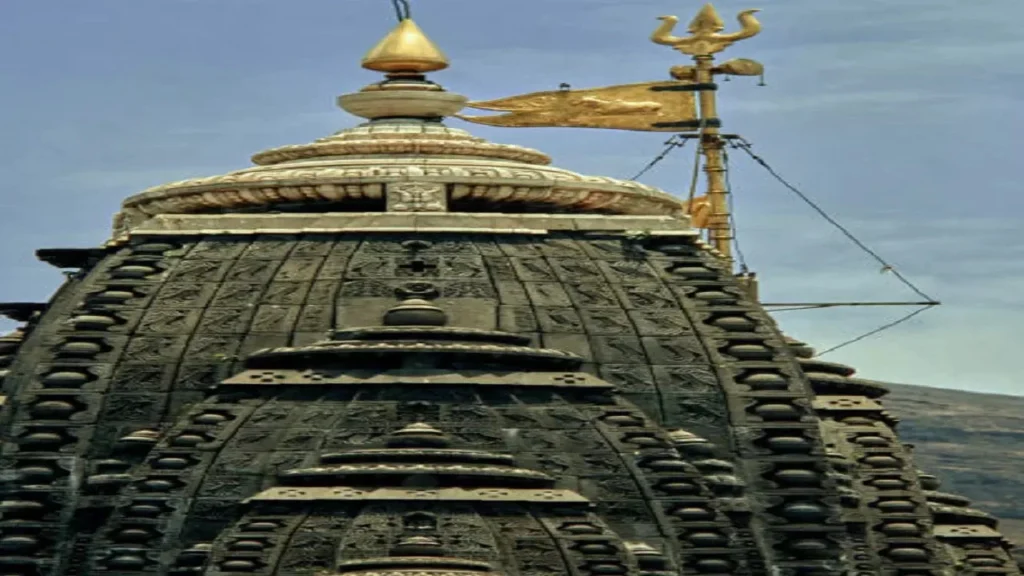
What sets the Trimbakeshwar Jyotirlinga apart is its extraordinary structure, featuring three distinct faces that symbolize the Holy Trinity: Lord Brahma, Lord Vishnu, and Lord Rudra (Shiva). This manifestation of the Tridev within a single Lingam is a rare spiritual phenomenon, adding a unique layer of mystical charm to the temple’s atmosphere.
5. The Unusual Navel-stone

Deep within the sanctum sanctorum rests the revered “Sphatik Shila,” a sacred stone that symbolizes the cosmic navel of Lord Shiva. Enveloped in exquisite silver sculpting, this artifact is not just a visual marvel but is also believed to be a powerhouse of spiritual vibrations that resonates throughout the shrine.
6. The Astonishing Reverse Flow of River Godavari

One of the most awe-inspiring mysteries associated with Trimbakeshwar is the sporadic reverse flow of the Godavari River. In a feat that defies the ordinary, priests perform specific rituals that are said to redirect the holy waters, causing the river to flow against its natural course.
7. Trimbakeshwar’s Mythical Connection to the Ramayana
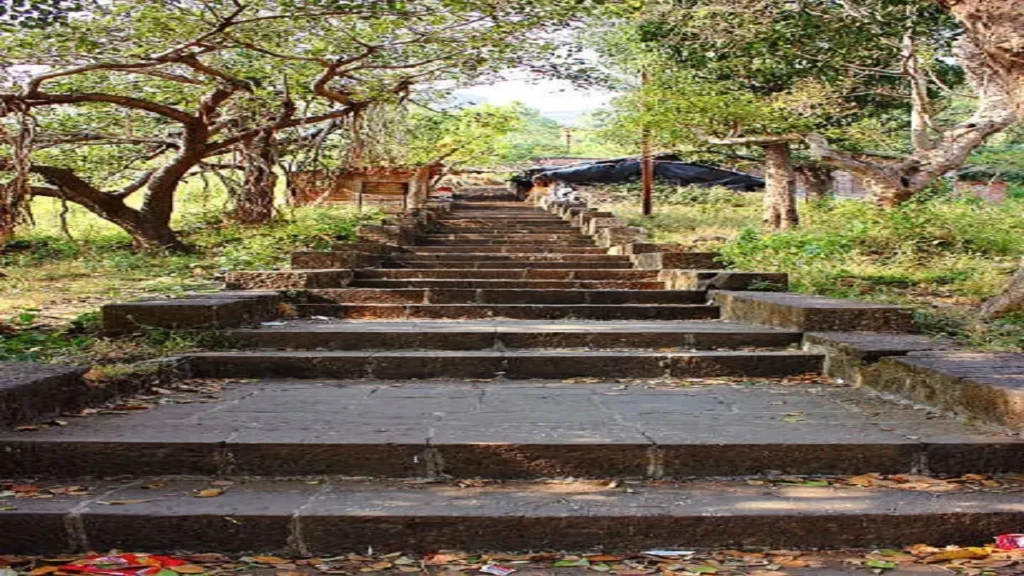
According to Hindu mythology, Trimbakeshwar served as a sacred refuge for Lord Rama and Goddess Sita during their period of exile (vanavasa). The site holds further reverence as the location where Rama is believed to have performed the crucial Pind Daan ceremony to secure the liberation of his ancestors’ souls.
8. The Auspicious Kushavarta Kund

Adjacent to the main structure lies the sacred Kushavarta Kund, a holy pond where devotees perform a vital purification ritual. Taking a holy dip in these waters before entering the temple is believed to cleanse the soul completely and absolve one of past sins.
9. The Secret Underground Shrine

Concealed deep within the temple complex lies an underground chamber known as the Garbhagriha. Revered as the original sanctum sanctorum, this hidden subterranean space holds an intense and immense spiritual significance for devotees.
10. The Echoless Sound within the Sanctum Sanctorum
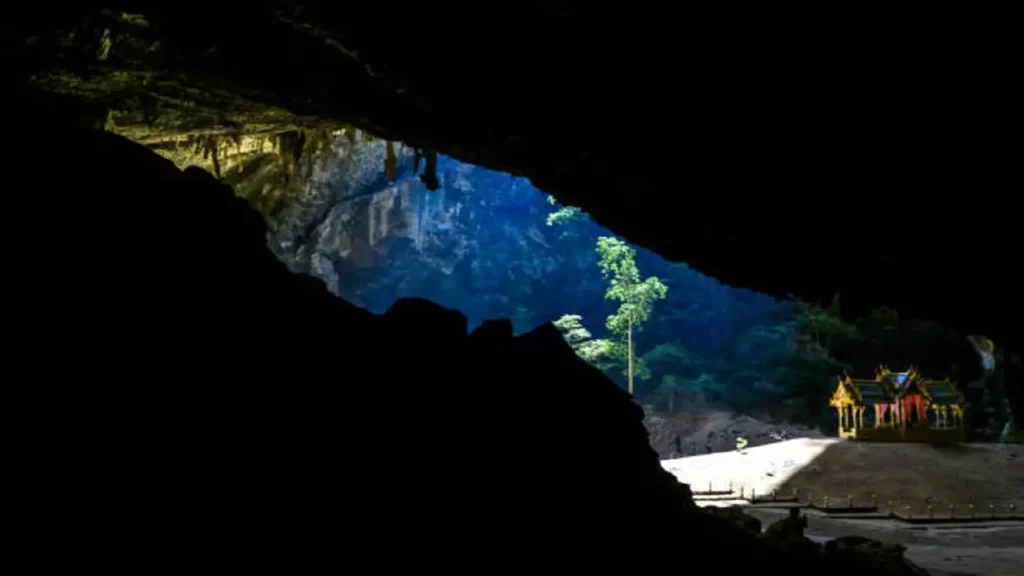
Upon entering the sanctum sanctorum, visitors encounter a profound and unique acoustic phenomenon: absolute silence. The complete absence of echoes or reverberations creates an atmosphere that is both serene and extraordinarily conducive to deep meditation and worship.