


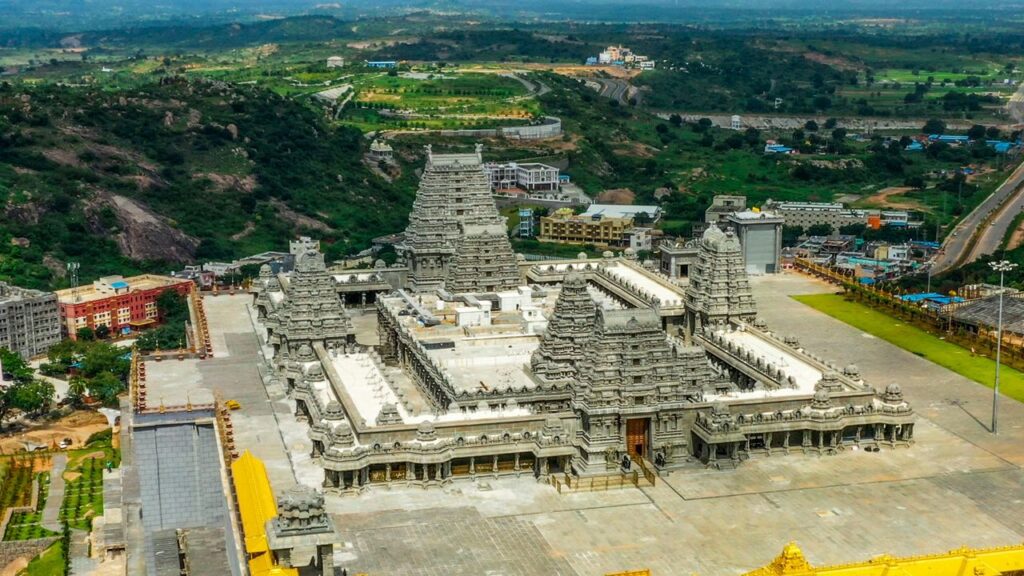
Yadagirigutta Temple, also known as Yadadri Sri Lakshmi Narasimha Swamy Temple, is a sacred Hindu shrine near Hyderabad dedicated to Lord Narasimha, an incarnation of Lord Vishnu.
Introduction: Where Faith Rises from the Hills of Telangana
Nestled amidst the serene hills of Telangana, around 60 kilometers from Hyderabad, stands a sacred shrine that has drawn devotees for centuries Yadagirigutta Temple, now widely known as Yadadri Sri Lakshmi Narasimha Swamy Temple. This is not merely a place of worship; it is a living spiritual landscape where mythology, devotion, and divine experience converge.
Pilgrims who climb the sacred hill often describe a unique sense of calm and power, as if the very air carries the presence of Lord Narasimha. Unlike many temples built by kings, Yadagirigutta is revered as a Swayambhu kshetra, where the Lord is believed to have manifested on His own, responding to the intense penance of a sage.
Mythological Origins: Sage Yadarishi and the Divine Manifestation
The spiritual foundation of Yadagirigutta Temple lies in an ancient legend preserved in local Sthala Puranas and oral tradition. According to belief, Sage Yadarishi, son of the great sage Rishyasringa, performed severe penance in these hills, seeking the darshan of Lord Narasimha Vishnu’s fierce yet compassionate incarnation.
Moved by the sage’s devotion, Lord Narasimha appeared before him and blessed the hill as His eternal abode. Over time, the hill came to be known as Yadagirigutta, literally meaning “the hill of Sage Yada.” The Lord manifested here in five distinct forms, symbolizing protection, courage, wisdom, compassion, and divine justice.
This divine self-manifestation is the reason Yadagirigutta is regarded as one of the most spiritually potent Narasimha kshetras in South India.
The Five Forms of Lord Narasimha at Yadagirigutta
One of the most unique aspects of Yadagirigutta Lakshmi Narasimha Swamy Temple is the belief that the Lord resides here in five sacred forms, collectively known as the Pancha Narasimha Kshetra:
- Jwala Narasimha – The fiery form representing divine protection and destruction of evil
- Yogananda Narasimha – Symbol of meditation, wisdom, and inner peace
- Gandabherunda Narasimha – The powerful form signifying invincible strength
- Ugra Narasimha – The fierce protector of devotees
- Lakshmi Narasimha – The benevolent form with Goddess Lakshmi, granting prosperity and grace
Devotees believe that worship at Yadagirigutta helps overcome fear, chronic obstacles, planetary afflictions, and long-standing difficulties in life.
Historical Evolution of Yadagirigutta Temple
While the temple’s origins are rooted in mythology, historical evidence suggests that Yadagirigutta has been a center of worship since at least the early medieval period. Rulers from the Chalukya and Kakatiya dynasties are believed to have supported temple activities and pilgrim facilities.
Unlike large imperial temples, Yadagirigutta evolved organically shaped by devotion rather than royal grandeur. Over centuries, it remained a modest yet deeply revered shrine, visited by saints, scholars, and common devotees alike.
It was only in recent decades that the temple began receiving wider national attention, eventually leading to its transformation into Yadadri, one of India’s most ambitious temple redevelopment projects.
Temple Architecture: Tradition Rooted in Sacred Geometry
The architecture of the Yadadri Temple follows the principles of Dravidian temple design, aligned with Agamic traditions. The sanctum (Garbha Griha) is carved directly into the hill, reinforcing the belief that the deity is Swayambhu.
Key architectural features include:
- A majestic Rajagopuram reflecting classical South Indian style
- Multiple mandapams designed for rituals and pilgrim movement
- A spiritually aligned Vimana symbolizing cosmic order
- Stone carvings narrating Vaishnava legends and Narasimha iconography
Every structural element is designed to enhance spiritual energy flow rather than mere visual appeal.
Yadadri Temple Renovation: A Modern Revival of an Ancient Kshetra
The transformation of Yadagirigutta into Yadadri Temple marks one of the most significant temple redevelopment projects in modern India. Undertaken by the Government of Telangana, the vision was to preserve spiritual authenticity while providing world-class facilities for pilgrims.
Key highlights of the redevelopment include:
- Use of traditional black granite stone
- Agama-compliant construction methods
- Enhanced pilgrim infrastructure
- Improved accessibility without disturbing sacred geography
Today, Yadadri is often referred to as the “Tirupati of Telangana”, symbolizing both devotion and architectural excellence.
Daily Rituals, Sevas, and Festivals
The temple follows a strict schedule of Vaikhanasa Agama rituals. Daily worship includes:
- Suprabhata Seva
- Abhishekam
- Archana
- Maha Nivedana
- Evening Aarti
Major festivals celebrated with grandeur:
- Brahmotsavam
- Narasimha Jayanti
- Vaikunta Ekadasi
These occasions attract thousands of devotees from across India.
Yadagirigutta Temple Timings & Darshan Information
- Temple Opening Time: Early morning (around 4:00 AM)
- Temple Closing Time: Late evening
- Best Time for Darshan: Early mornings on weekdays
Special darshan tickets and sevas are available during peak seasons.
How to Reach Yadagirigutta Temple
By Road:
Well connected from Hyderabad via NH routes and frequent TSRTC buses.
By Rail:
Nearest railway station: Raigir
By Air:
Nearest airport: Rajiv Gandhi International Airport, Hyderabad
Adequate parking and local transport facilities are available at Yadadri.
Best Time to Visit Yadagirigutta Temple
- October to March: Pleasant weather and ideal for pilgrimage
- Festival Days: Spiritually vibrant but crowded
- Weekdays: Best for peaceful darshan
Pilgrim Tips for a Meaningful Visit
- Dress modestly and traditionally
- Follow temple rules strictly
- Avoid peak hours if elderly or with children
- Photography restrictions apply inside temple premises
Why Yadagirigutta Is Spiritually Unique
Unlike many Narasimha temples associated with dramatic legends, Yadagirigutta represents the gentler, yogic, and compassionate side of Lord Narasimha. Devotees often speak of mental clarity, relief from fear, and renewed faith after visiting this sacred hill.
Frequently Asked Questions (FAQ)
Is Yadagirigutta Temple a Swayambhu kshetra?
Yes, the deity is believed to have self-manifested in the hill.
What is Yadagirigutta famous for?
It is renowned for Lord Lakshmi Narasimha Swamy and its powerful spiritual energy.
How far is Yadagirigutta from Hyderabad?
Approximately 60 km.
Which form of Vishnu is worshipped here?
Lord Narasimha in multiple divine forms.
Is Yadadri Temple newly built?
The shrine is ancient, but the temple complex has been extensively redeveloped.
Can elderly devotees visit easily?
Yes, facilities and transport arrangements have been improved.
What is the best day to visit Yadagirigutta?
Weekdays, especially early mornings.
Is photography allowed inside the temple?
No, photography is restricted within inner temple areas.
Conclusion: A Timeless Sanctuary of Faith
The Yadagirigutta Temple, now shining as Yadadri, is more than a pilgrimage destination it is a reminder of how devotion can transform geography into divinity. Rooted in ancient legend and renewed for future generations, this sacred hill continues to call devotees seeking protection, peace, and divine grace from Lord Narasimha.