


By kirtankar.com
Nestled at the foothills of the Sahyadri mountains and graced by the holy Krishna River, Wai is a town where spirituality meets cinematic beauty. Often overshadowed by its famous neighbors, Panchgani and Mahabaleshwar, Wai is a hidden gem known as the “Dakshin Kashi” (Varanasi of the South) of Maharashtra.
Home to over 100 ancient temples and 7 majestic river ghats, Wai is not just a pilgrimage site; it is a living museum of Maratha architecture and the backdrop for some of India’s biggest blockbuster movies.
Why is Wai Called “Dakshin Kashi”?
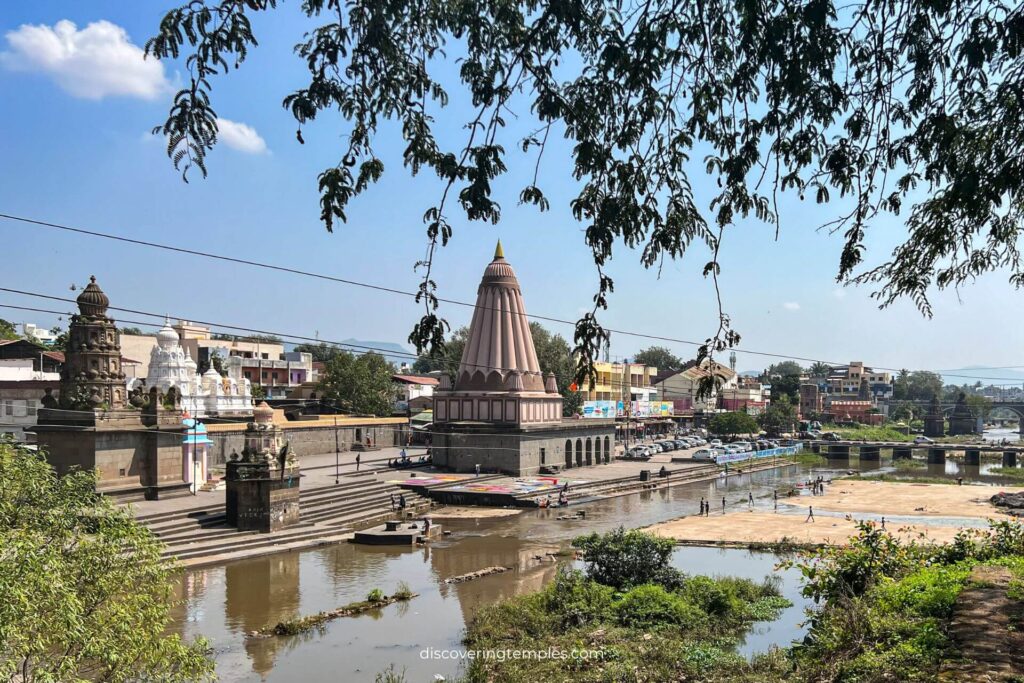
Just as Varanasi (Kashi) is famous for its ghats along the Ganges, Wai is renowned for its 7 historic ghats along the Krishna River. Built during the Peshwa era, these ghats are the finest examples of ancient town planning and Maratha heritage.
The 7 Ancient Ghats of Wai:
- Ganpati Ghat (The most famous and visited)
- Gangapuri Ghat
- Madhi Aali Ghat
- Brahmanshahi Ghat
- Dharmapuri Ghat
- Bhimkund Aali Ghat
- Ramdoh Aali Ghat
Walking along these ghats, with the sound of temple bells and the river flowing gently, offers a peace that is hard to find elsewhere.
Must-Visit Temples in Wai
1. Dholya Ganpati Mandir (The Giant Ganesha)
The crown jewel of Wai is the Dholya Ganpati Mandir located on Ganpati Ghat.
- History: Built in 1762 by Sardar Ganpatrao Bhikaji Raste.
- The Idol: The presiding deity is a massive monolithic idol of Lord Ganesha, standing 10 feet tall and 8 feet wide. In Marathi, “Dholya” affectionately translates to “fat” or “stout,” referring to the grand size of the idol.
- The Legend: Local folklore suggests the idol is “Jagrut” (alive) and continues to grow in size every year. While scientifically unproven, the noticeable space left around the idol in the sanctum fuels this fascinating belief.
- Architecture: The temple is designed to withstand the flooding of the Krishna River, a testament to the engineering wisdom of the 18th century.
2. Kashi Vishweshwar Temple
Located right next to the Dholya Ganpati temple, this shrine is dedicated to Lord Shiva.
- Significance: It is often called a replica of the Kashi Vishwanath temple in Varanasi.
- Architecture: The temple boasts the classic Hemadpanthi style of architecture. The Nandi (bull) here is carved from the same black stone as the Dholya Ganpati idol.
- Highlights: Don’t miss the intricate stone carvings on the shikhara (spire) and the unique “Snake Mandala” puzzle carved into the window frames. The heavy stone walls create a natural echo, making the chanting of “Om Namah Shivaya” a powerful sonic experience.
3. Other Significant Temples
- Dhundi Vinayak Mandir: The oldest temple in Wai (11th-12th century), featuring a Swayambhu (self-manifested) idol.
- Siddheshwar Shiva Temple: Perched on a small hill, it offers a panoramic view of the town and river.
- Koteshwar Shiva Temple: Famous for its rare, antique Maratha-style frescos (wall paintings) that are still visible today.
Beyond Temples: The “Extra Points” You Didn’t Know
Wai: Bollywood’s Secret Shooting Location
If the stone steps and river banks look familiar, it’s because you’ve likely seen them on the big screen. Wai offers a rustic, authentic Indian village vibe that filmmakers love.
- Famous Movies Shot Here: Swades, Gangaajal, Omkara, Dabangg, Singham, Chennai Express, and Bajirao Mastani.
- Photo Tip: The view from Ganpati Ghat is the exact spot where Shah Rukh Khan sat in the movie Swades. It’s a perfect spot for photography lovers.
Nana Phadnavis Wada (Menawali)
Just 3 km from Wai lies the village of Menawali, home to the wada (mansion) of Nana Phadnavis, the legendary statesman of the Maratha Empire.
- The Big Bell: The Shiva temple on the Menawali Ghat houses a massive 650 kg bell. This bell was captured by Chimaji Appa from a Portuguese church in the Battle of Vasai (1739).
- Heritage Stay: The wada is a beautiful example of Peshwa architecture and is still inhabited by the Phadnavis descendants.
Nature & Adventure
- Dhom Dam: Located roughly 9 km from Wai, this earthfill dam offers boating, camping, and stunning sunset views over the backwaters.
- Pandavgad Fort: For trekkers, a hike to this nearby fort offers a thrill and a history lesson, with caves believed to be used by the Pandavas.
Practical Travel Guide
Best Time to Visit
- October to February (Winter): The weather is pleasant (15°C – 25°C), perfect for exploring temples and ghats.
- Monsoon (June – September): The town turns lush green, and the river is full, but heavy rains might hinder travel.
How to Reach Wai
- By Air: The nearest airport is Pune (PNQ), about 85 km away.
- By Train: The nearest major railway station is Satara (40 km) or Pune (85 km).
- By Road: Wai is well-connected. It is just a 35 km drive from Mahabaleshwar and 15 km from Panchgani.
What to Eat?
Wai offers authentic Maharashtrian cuisine.
- Must-Try: Pithla Bhakri (chickpea flour curry with flatbread), Bharli Wangi (stuffed brinjal), and the local Kanda Bhaji near the ghats.
- Sweet Treat: Don’t leave without buying the famous Hard Penda (a sugary sweet) which is a specialty of the Satara region.
Frequently Asked Questions (FAQ)
Q: How far is Wai from Mahabaleshwar? A: Wai is very close, only about 33 km (approx. 1 hour drive) from Mahabaleshwar. It makes for a perfect day trip.
Q: Is Wai safe for solo travelers? A: Yes, Wai is a small, religious town with friendly locals. It is generally very safe for solo travelers and families.
Q: Which festival is famous in Wai? A: Apart from Ganesh Chaturthi, the Krishna Mai Utsav is the biggest local festival. It celebrates the river Krishna as a mother goddess and involves a procession on the ghats.
Conclusion Wai is more than just a stopover; it is a destination that holds the soul of Maharashtra. Whether you are a history buff, a spiritual seeker, or a Bollywood fan, the ancient ghats of Wai have a story waiting for you.