
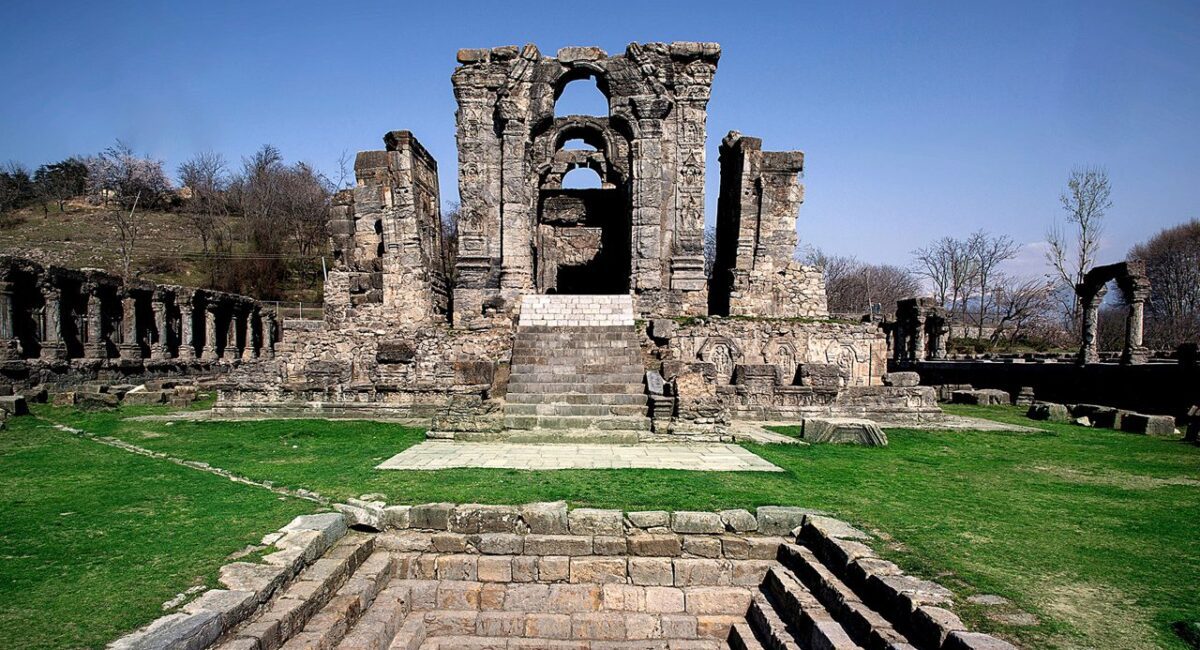
Martand Surya Mandir: The Magnificent Sun Temple of Kashmir
Nestled in the picturesque valley of Kashmir lies one of India’s most remarkable archaeological treasures the Martand Surya Mandir. This ancient sun temple stands as a testament to the architectural brilliance and spiritual devotion of medieval Kashmir, captivating historians, archaeologists, and travelers alike with its grandeur and historical significance.
The Historical Legacy of Martand Surya Mandir
The Martand Surya Mandir, also known as the Martand Sun Temple, was built during the 8th century CE under the patronage of King Lalitaditya Muktapida of the Karkota Dynasty. Constructed between 725-756 CE, this magnificent temple was dedicated to Surya, the Hindu sun god, reflecting the deep reverence for solar worship prevalent in ancient Kashmir.
The temple’s name “Martand” itself is derived from Sanskrit, meaning “Sun God” or one of the twelve Adityas (solar deities) in Hindu mythology. For centuries, the Martand Surya Mandir served as a major pilgrimage site and a center of religious and cultural activities in the Kashmir Valley.
Architectural Marvel of Ancient Kashmir
The architectural splendor of Martand Surya Mandir showcases the exceptional craftsmanship of ancient Kashmiri artisans. Built primarily using limestone blocks, the temple complex exemplifies the classical Kashmiri style of temple architecture with distinct Indo-Greek influences.
Temple Complex Layout
The Martand Surya Mandir was constructed on a plateau overlooking the Kashmir Valley, offering breathtaking panoramic views. The temple complex consists of:
- A central shrine positioned on a raised platform
- A spacious colonnaded courtyard measuring approximately 220 feet by 142 feet
- 84 intricately carved columns forming a peristyle around the courtyard
- Multiple smaller shrines surrounding the main sanctum
- An elaborate entrance gateway facing west
Distinctive Architectural Features
What makes the Martand Surya Mandir truly remarkable is its unique architectural style that blends local Kashmiri traditions with Gandharan and classical Indian temple architecture. The temple featured trefoil arches, fluted columns, and elaborate pediments elements rarely seen together in other Indian temples of that era.
The main shrine originally housed a magnificent idol of Surya, though it no longer exists today. The temple’s walls were adorned with intricate carvings depicting various deities, celestial beings, and geometric patterns that demonstrate the sophisticated artistic sensibilities of the period.
The Destruction and Current State
Despite its magnificence, the Martand Surya Mandir faced systematic destruction in the medieval period. Historical accounts suggest that the temple was demolished in 1389 CE by Sultan Sikandar Butshikan, known as the “iconoclast,” who ordered the destruction of numerous Hindu and Buddhist temples across Kashmir.
The destruction of Martand Surya Mandir took over a year to complete, as the temple’s robust construction made it extremely difficult to demolish. Even after extensive destruction, the remaining ruins continue to showcase the temple’s original grandeur and architectural sophistication.
Today, the Martand Surya Mandir stands in ruins, yet these remnants speak volumes about its former glory. The Archaeological Survey of India (ASI) has taken custody of the site and continues preservation efforts to protect this invaluable heritage.
Visiting Martand Surya Mandir
Located approximately 64 kilometers from Srinagar in the Anantnag district of Jammu and Kashmir, the Martand Surya Mandir remains an important tourist and heritage site.
How to Reach
- By Air: The nearest airport is Srinagar International Airport, about 70 kilometers away
- By Road: Well-connected by road from Srinagar and Anantnag
- Best Time to Visit: April to October, when weather conditions are favorable
The temple site is situated at an altitude of about 2,135 meters above sea level, offering visitors spectacular views of the surrounding mountains and valleys. The ruins are particularly stunning during sunrise and sunset, when the golden light illuminates the ancient stones.
Cultural and Historical Significance
The Martand Surya Mandir holds immense importance in understanding Kashmir’s rich cultural heritage and religious history. As one of the finest examples of Kashmiri temple architecture, it provides valuable insights into:
- The sophisticated urban planning and architectural knowledge of ancient Kashmir
- The prominence of sun worship in medieval Hindu society
- The cultural exchanges between Kashmir and other regions through architectural influences
- The craftsmanship and engineering capabilities of 8th-century artisans
Scholars and researchers continue to study the Martand Surya Mandir to unravel more about Kashmir’s glorious past and the socio-religious practices of that era.
Conservation Efforts and Future Prospects
The Archaeological Survey of India has undertaken various conservation measures to preserve the remaining structure of Martand Surya Mandir. However, the site faces challenges from natural weathering, seismic activity in the region, and the need for comprehensive restoration work.
Heritage conservationists emphasize the importance of protecting this irreplaceable monument for future generations. There have been discussions about potential restoration projects, though any such work must balance preservation with maintaining the site’s historical authenticity.
The Enduring Legacy
Even in its ruined state, the Martand Surya Mandir continues to inspire awe and wonder. It stands as a powerful reminder of Kashmir’s pluralistic heritage and the region’s significant contributions to Indian art, architecture, and culture.
For visitors, walking through the ruins of Martand Surya Mandir is like stepping back in time each carved stone and standing pillar tells a story of devotion, artistic excellence, and the passage of centuries. The temple’s silhouette against the Himalayan backdrop creates an unforgettable image that captures the essence of Kashmir’s timeless beauty.
Conclusion
The Martand Surya Mandir represents more than just an ancient temple; it embodies the architectural genius, spiritual devotion, and cultural richness of medieval Kashmir. Despite centuries of weathering and deliberate destruction, the temple’s ruins continue to command respect and admiration.
As one of India’s most significant archaeological sites, the Martand Surya Mandir deserves greater recognition and protection. Whether you’re a history enthusiast, architecture lover, or spiritual seeker, visiting this magnificent sun temple offers a profound connection to India’s glorious past and Kashmir’s enduring cultural legacy.
The stones of Martand Surya Mandir may be weathered and broken, but the spirit of the craftsmen who built it and the devotees who worshipped there continues to resonate through the ages, making it an eternal symbol of human creativity and faith.

Leave a Comment