


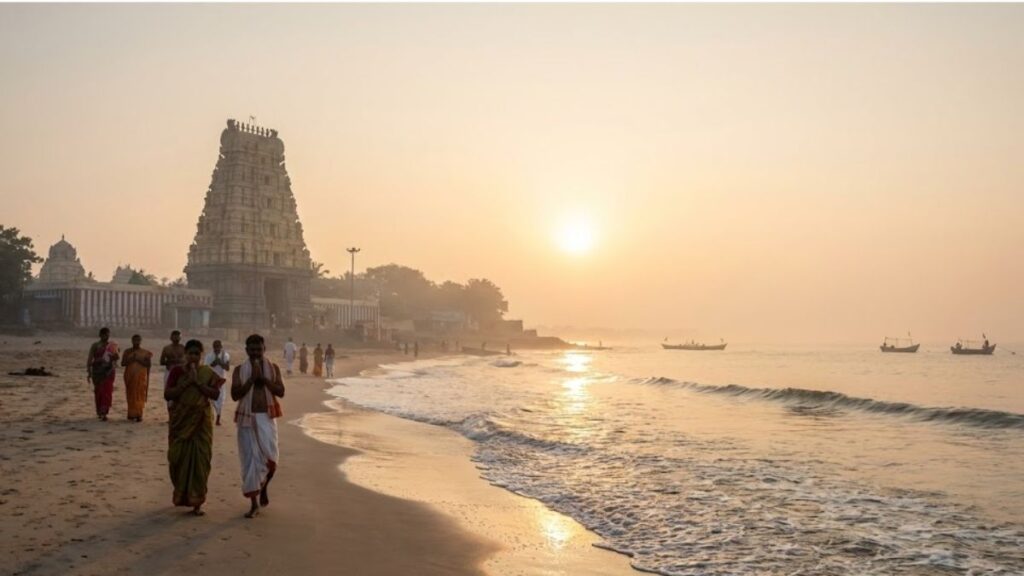
Antarvedi Temple
Imagine standing at the edge of the world, where the mighty Godavari River (Vashista branch) silently surrenders into the roaring Bay of Bengal. The air is thick with salt and camphor, and the sound of waves blends with the rhythmic chanting of Om Namo Narayanaya.
Welcome to Antarvedi, the “Kashi of the South.”
Located in the lush Konaseema region of Andhra Pradesh, the Antarvedi Lakshmi Narasimha Swamy Temple isn’t just a place of worship; it is a spiritual frontier where mythology meets nature in its most raw, beautiful form. Whether you are a devout pilgrim or a traveler seeking solace, the “Anna Chelli Gattu” (the affectionate meeting place of the Brother Sea and Sister River) promises an experience that lingers in the soul long after you leave.
The Legend: Why Lord Narasimha Chose this Coast
Legends say that eons ago, a demon named Raktavilochana (the one with bloody eyes) terrorized this land. He had a terrifying boon: every drop of his blood that touched the ground would birth a new demon. The sage Vashista prayed to Lord Narasimha for protection.
To defeat the demon, the Lord summoned Maya Shakti to catch every drop of blood with her tongue before it hit the earth (similar to the Raktabija legend). After vanquishing the evil, the ferocious Lord calmed down here, accompanied by Goddess Lakshmi.
Unlike many temples where the deity faces East, the Lord at Antarvedi faces West, gazing eternally at the sea, protecting the coast.
A Temple Surrounded by Nature’s Theatre
What makes the Antarvedi Temple truly unforgettable is its setting.
- To one side, the Godavari flows wide and patient
- Ahead, the Bay of Bengal stretches endlessly
- Beneath your feet, the land feels both fragile and sacred
The soundscape is hypnotic waves breaking softly, temple bells echoing, conch shells during aarti. Sunrise and sunset here feel ceremonial, even if no ritual is being performed.
Antarvedi Temple History & Cultural Significance
Local tradition traces the temple’s origins to ancient times, with strong links to Vaishnavism and coastal pilgrimage routes. Over centuries, fishermen, traders, saints, and kings have all passed through Antarvedi, leaving behind layers of oral history and devotion.
The temple rituals follow traditional Vaikhanasa Agama practices, preserving a ritual purity that many modern temples have lost. Festivals here are intimate yet powerful, with the deity treated not as an idol but as a living presence.
The “Anna Chelli Gattu” Phenomenon
One of the most emotionally stirring sights at Antarvedi is the Sangamam (confluence). Locals call it Anna Chelli Gattu (Brother-Sister Embankment).
- The Miracle: You can distinctly see the two waters meet the tranquil, greenish fresh water of the Godavari and the turbulent, salty blue water of the Bay of Bengal.
- The Ritual: Pilgrims believe that taking a holy dip here washes away sins and skin ailments. It is customary to take a dip in the sea first, followed by a cleansing dip in the river.
Antarvedi Temple Timings & Rituals
To plan your visit perfectly, timing is everything. The temple follows strict Agama Shastra rituals.
| Event | Time |
| Temple Opening | 06:00 AM |
| Nijaroopa Darshan | 06:00 AM – 08:00 AM |
| Abhishekam | 08:00 AM – 09:30 AM |
| Sarva Darshan (Morning) | 09:30 AM – 12:30 PM |
| Temple Closing (Break) | 12:30 PM – 02:30 PM |
| Sarva Darshan (Evening) | 02:30 PM – 07:30 PM |
| Temple Closing | 07:30 PM |
Note: Timings may change during festival days like Ratha Saptami (Jan/Feb) or Narasimha Jayanti.
Essential Travel Guide
1. How to Reach & Distances
Antarvedi is well-connected but requires a bit of travel into the interiors of the East Godavari district.
- From Rajahmundry: 100 km (3 hours by road via Ravulapalem).
- From Kakinada: 110 km.
- From Vijayawada: 180 km.
- By Train: The nearest major railway station is Narsapur (approx. 20 km away, but requires a ferry crossing) or Palakollu.
2. Dindi Resorts to Antarvedi Temple Distance
Many tourists prefer staying at the luxurious Dindi Resorts (AP Tourism) and making a day trip to the temple.
- Distance: The distance from Dindi Resorts to Antarvedi Temple is approximately 25–30 km.
- Drive Time: It takes about 45 minutes to 1 hour through scenic coconut groves and paddy fields.
3. Accommodation: Where to Stay?
Finding rooms near Antarvedi Temple can be tricky as options are limited compared to Tirupati.
- Temple Accommodation: The Devasthanam offers basic rooms and a TTD Choultry. These are affordable but fill up fast. You must book these upon arrival at the temple office (Counter timings: 6 AM – 9 PM).
- Private Lodges: There are a few private guest houses like Vasishta Haritha near the beach.
- Official Website: While there are many information portals, the most reliable source for booking AP Tourism hotels is the Andhra Pradesh Tourism Official Website. For temple-specific queries, in-person enquiry is currently the most reliable method as online quotas are irregular.
Tips for a Divine Experience
- Dress Code: Traditional wear is highly recommended. Men should ideally wear Dhoti/Pyjamas with upper cloth; women in Sarees or Chudidhars.
- The Lighthouse: Don’t miss the Antarvedi Lighthouse near the beach. Climbing to the top offers a breathtaking panoramic view of the river merging into the sea.
- Boat Ride: Hire a local boat to take you to the magnificent island temple of Rajya Lakshmi on the other side of the bank.
Frequently Asked Questions (FAQs)
Q: Is there an official website for online booking of Darshan?
A: Currently, the Antarvedi temple official website for direct darshan booking is often under maintenance or integrated with the broader Endowments Department portal. It is best to buy tickets at the counter.
Q: Can we stay at Dindi and visit Antarvedi?
A: Absolutely. Dindi offers premium housekeeping and boating experiences. The Dindi resorts to Antarvedi temple distance is short enough for an easy morning drive.
Q: Is the sea safe for bathing?
A: The currents at the Sangamam can be strong. It is advised to bathe only in designated safe zones and avoid venturing deep, especially during high tide.
Q: What is the best time to visit?
A: The winter months (November to February) are ideal. The weather is pleasant for the beach and temple queues.
There is a silence in Antarvedi that speaks louder than words. It is where the river completes its journey, and perhaps, where you might begin yours.